When Money Governs Politics: Power, Corruption and the Crisis of Public Choice

Money is the nerve centre of existence as we know it. It shapes how societies function and determines the scope of individual freedom – freedom to choose, plan and act. Unless one belongs to the rare minority that rejects material considerations entirely, money remains the dominant currency of agency.
Today, almost every aspect of life is transactional. Value exchange – primarily monetary – structures our decisions, relationships and aspirations. We celebrate wealth culturally and socially, and we measure success through economic metrics. Yet, paradoxically, economics is not the primary focus of most political parties in our country.
We have seen wealth created and accumulated; we know about the real potential of the country – enough has been written, researched and shared in speeches. But we have only seen it being appropriated for the personal gain of a few in positions of power and authority. Our political landscape is marked by wealthy politicians, expensive propaganda and costly elections – contrasted with poor outcomes in national peace, security and development.
In September, the country’s youth rose in anger against a system corroded by corruption. The Gen Z movement cost lives. Across the nation, people hoped that the system would begin to correct itself – that, finally, the public mandate would prevail, opportunities would emerge, and entrenched monopolies, favouritism, and corruption would be dismantled. But as we approach November, uncertainty and unrest persist.
The challenge, it appears, extends beyond willpower, technocracy and expertise to cut corruption from its root. Dismantling corruption requires a systemic shift in mindset. It requires that we understand that no one is above the law or the political process. It requires reducing institutional asymmetry and enabling better decision-making that includes the needs and aspirations of both ordinary citizens and professionals. It requires an understanding that leadership cannot be engineered to produce predetermined outcomes; it must also accommodate dissent and opposition.
The economy is in crisis, regardless of expert disagreements. The reality is that ordinary people are struggling under the weight of political instability. Our deficiencies do not stem from a lack of political or technical talent; they stem from a lack of rights, access and fairness.
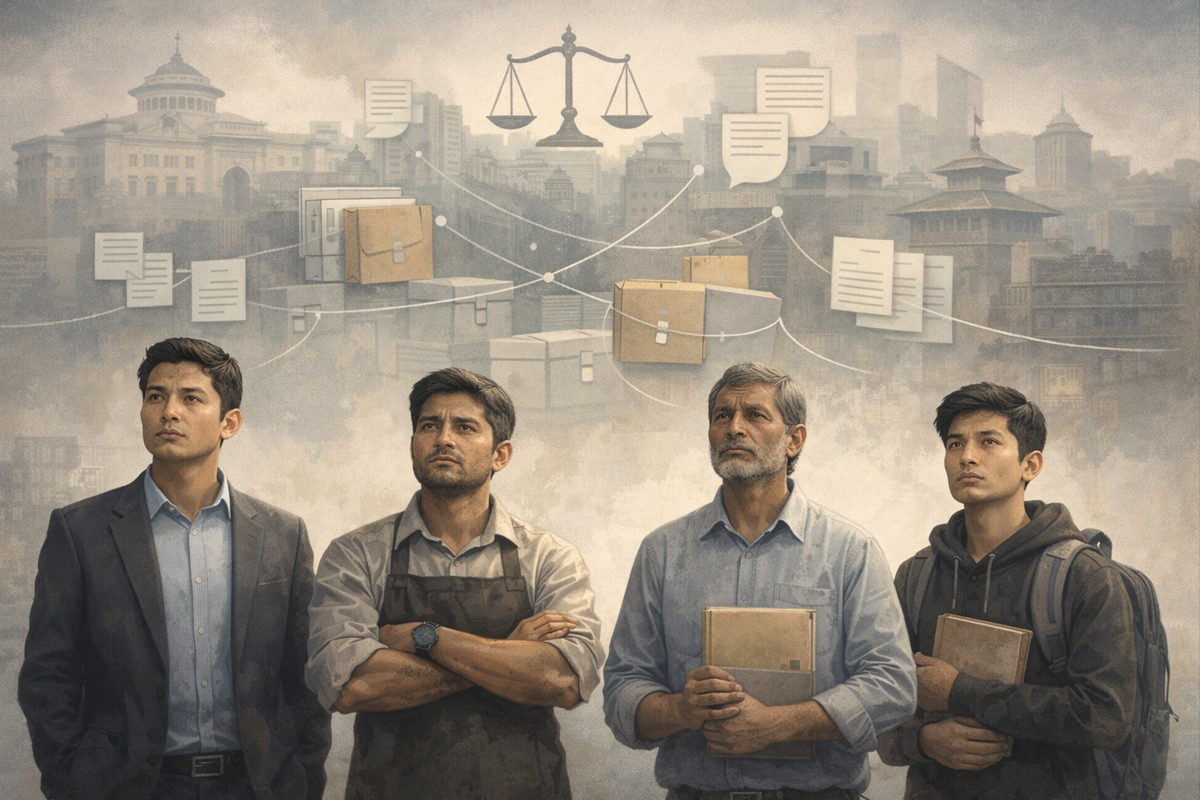
Much is being said about the aspirations of Gen Z, but what do other demographic groups want? What would the average citizen choose? What would the parent who lost a child in the protests, the protestor now living with a disability, the business owner who bears the scars of arson and looting, the worker waiting for a delayed paycheque, those still compelled to migrate abroad, those still engaged in bribery, those who volunteered to lead an interim government but now only face pressure, those forced out of power, and those fighting their way in, want?
One observation captures the core issue clearly: Politics isn’t just about good ideas; it is shaped by interest groups, voter preferences and post-rationalisation. Often, the best policy is not the one selected. But that is not the deepest problem. The real threat emerges when experts make decisions for, rather than with, the public, transforming experts into rulers.