White House adviser Michael Kratsios to lead US delegation to India AI Impact Summit

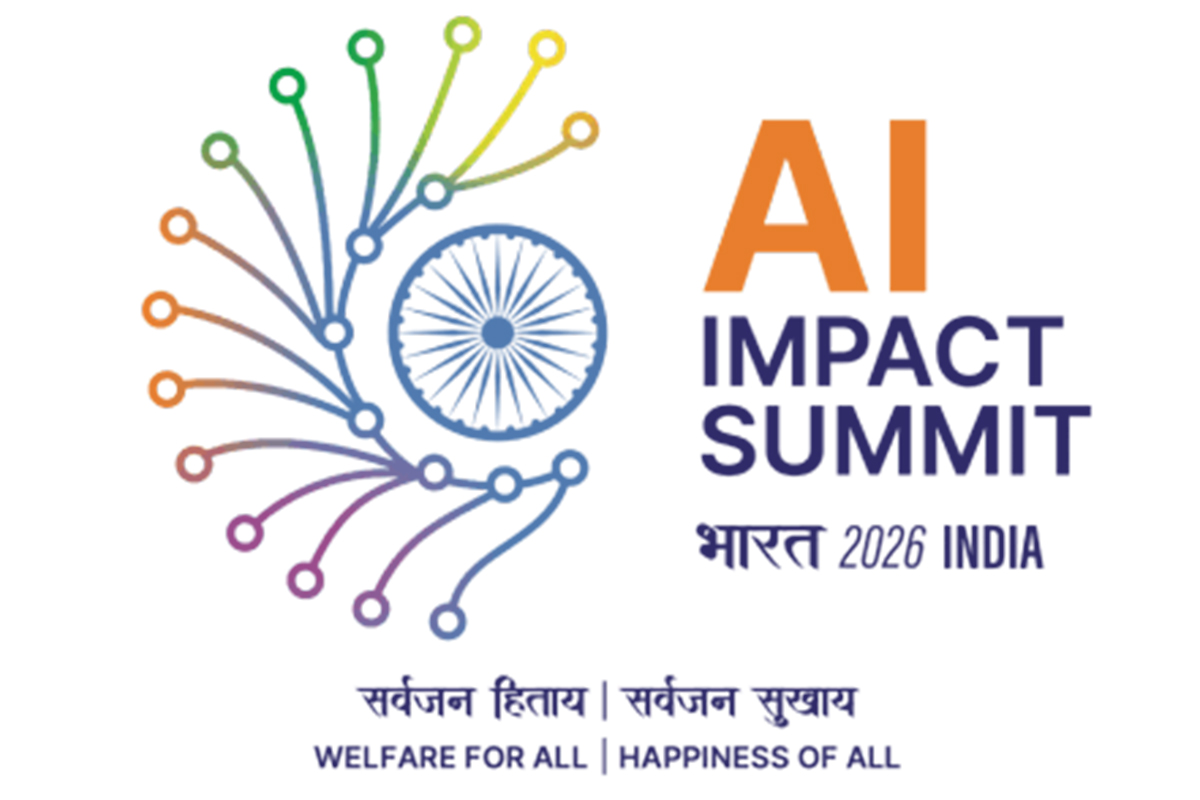
WASHINGTON DC: Michael Kratsios, assistant to US President Donald Trump and director of the White House Office of Science and Technology Policy, will lead the US delegation to the India AI Impact Summit in New Delhi later this month, his office said.
Looking forward to leading the U.S. delegation to the AI Impact Summit in India this month.
— Director Michael Kratsios (@mkratsios47) February 5, 2026
America is setting the gold standard for AI innovation and we want to share it with our global partners.@UnderSecE, @TradeGov U/S Kimmitt, @BISgov U/S Kessler, & @skrishnan47 will join… pic.twitter.com/vfVDucy0Xj
Kratsios posted on X, “Looking forward to leading the US delegation to the AI Impact Summit in India this month. America is setting the gold standard for AI innovation and we want to share it with our global partners.”
The announcement follows a POLITICO report by Katherine Long and Cheyenne Haslett stating that Kratsios will use the summit to update attendees on President Trump’s America AI Exports programme, established by executive order in July to promote the United States’ technology stack worldwide.
The US delegation will include Undersecretary of State for Economic Affairs Jacob Helberg, Undersecretary of Commerce for International Trade William Kimmitt, and Undersecretary of Commerce for Industry and Security Jeffrey Kessler. Kratsios added on X that “@UnderSecE, @TradeGov U/S Kimmitt, @BISgov U/S Kessler, & @skrishnan47 will join @USAmbIndia on Team USA in Delhi.”
The India AI Impact Summit will take place from February 16 to 20 at Bharat Mandapam in New Delhi. It is the first global AI summit hosted in the Global South.
The five-day programme covers policy, research, industry, and public engagement, and is built around three foundational pillars, or “Sutras”: People, Planet, and Progress.
Organisers expect global leaders, policymakers, technology companies, innovators, and experts to discuss AI’s role in governance, innovation, and sustainable development. Discussions will be organised around seven “Chakras”: Human Capital; Inclusion for Social Empowerment; Safe and Trusted AI; Resilience, Innovation and Efficiency; Science; Democratising AI Resources; and AI for Economic Growth and Social Good.
The accompanying India AI Impact Expo, covering more than 70,000 square metres, will feature over 300 exhibitors from 30 countries across more than 10 thematic pavilions, demonstrating AI’s move from research and pilots to large-scale deployment.
The summit has received more than 700 proposals and will include sessions on all seven Chakras, as well as the release on February 17 of the AI Compendium, which documents real-world AI applications in priority sectors.
The event aligns with India’s development-focused approach to AI under the IndiaAI Mission and Digital India initiative, emphasising practical, people-centred outcomes. It underscores AI’s contribution to stronger governance, better public service delivery, and inclusive growth, including in healthcare, agriculture, education, finance, and judicial accessibility.
Recognising AI’s strategic importance, the Government of India has prioritised AI compute infrastructure, indigenous models, and large-scale capacity building to support responsible adoption.
The programme also includes pre-summit events and regional AI conferences in Meghalaya, Gujarat, Odisha, Madhya Pradesh, Uttar Pradesh, Rajasthan, Kerala, and Telangana, the outcomes of which will shape the main summit agenda.
Flagship initiatives include AI for ALL: Global Impact Challenge, AI by HER: Global Impact Challenge, YUVAi: Global Youth Challenge, and a Research Symposium on AI and its Impact on February 18. The AI Impact Expo will provide a business platform linking innovators and investors.
Supported by the Ministry of Electronics and Information Technology, IndiaAI Mission, Software Technology Parks of India, and Digital India, the summit seeks to strengthen governance frameworks, advance responsible AI, build skills and workforce readiness, and foster partnerships between government, academia, start-ups, and industry.
Expected outcomes include practical AI deployment in priority sectors, better policy coordination, and the establishment of India as a global hub for AI innovation and deployment, in line with the vision of a digitally empowered and technology-driven nation.