US and Japan Announce $40 Billion Nuclear Project and Major Energy Investments

WASHINGTON: The United States and Japan have unveiled a major $40 billion plan to build nuclear reactors in Tennessee and Alabama, marking a significant step in their growing energy and economic partnership.
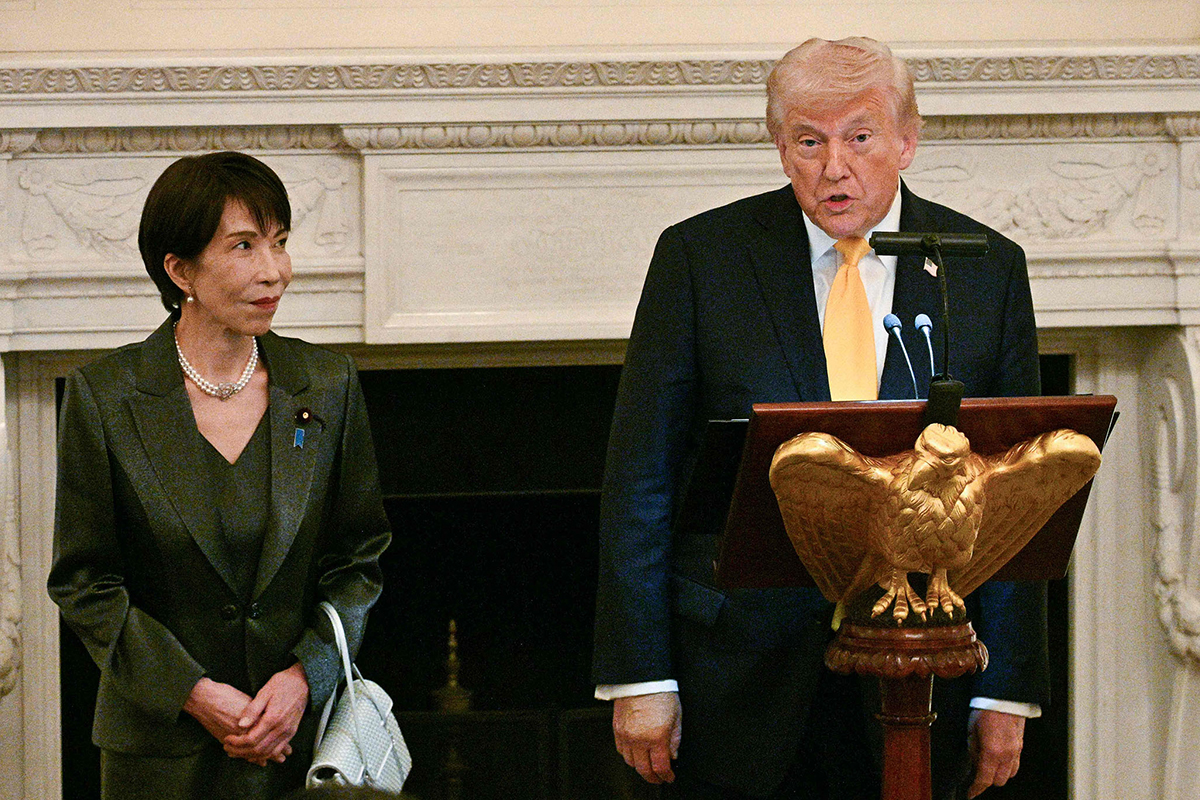
The announcement came after talks in Washington between US President Donald Trump and Japanese Prime Minister Sanae Takaichi. The meeting follows Japan’s earlier commitment to invest $550 billion in the United States by 2029 under a new trade agreement.
As part of Thursday’s joint statement, both countries confirmed that the nuclear project will focus on small modular reactors (SMRs), a newer type of reactor designed to provide stable and efficient power. The reactors will be developed by GE Vernova Hitachi and are expected to help stabilise electricity prices while strengthening technological leadership.
In addition to nuclear energy, the two nations also revealed plans to invest $33 billion in natural gas power plants in Pennsylvania and Texas, further expanding energy production.
This latest announcement builds on earlier commitments made in February, when the first round of projects under the joint investment fund included $36 billion for three major infrastructure developments.
Leaders from both countries said the projects aim to boost economic growth and strengthen long-term cooperation. They described the partnership as a step towards a “new golden age” in US–Japan relations.
Alongside energy investments, Washington and Tokyo also agreed to work more closely on securing supplies of critical minerals—key materials used in advanced technology and clean energy. This comes amid concerns over China’s strong control in the global supply chain.
The plan includes discussions on coordinated trade policies and pricing systems for selected minerals, as well as joint efforts to explore deep-sea resources.
One focus area is near Japan’s remote Minamitorishima Island, located around 1,950 kilometres southeast of Tokyo. The area is believed to contain large deposits of rare-earth minerals. Earlier this year, a Japanese research vessel began collecting samples from the seabed to study these resources.
The new agreements highlight deepening cooperation between the two countries in energy, technology and resource security.
By RSS/AFP