Regional Conference on Deep Regenerative Agriculture concludes in Lumbini

-1775719869.jpg)
LUMBINI: A regional conference on deep regenerative agriculture concluded on Wednesday after three days of talks aimed at transforming farming systems in the Eastern Himalayas.
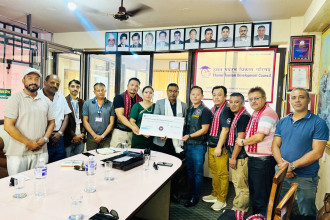
The Regional Conference on Deep Regenerative Agriculture (REGAGRI) was held at Lumbini Buddhist University from April 6 to 8 and brought together more than 100 participants from Nepal, India, Bhutan and Myanmar.
Jointly organised by Lumbini Buddhist University, Nepal Genebank, WWN and WWF with financial support from The Rockefeller Foundation, the conference provided a platform for farmers, researchers, policymakers, academics, development partners and private sector representatives to share knowledge on indigenous wisdom, agroecology and regenerative practices.
Keynote speaker Dr Ghana Shyam Gurung, Country Representative of WWF Nepal, framed the discussions in a presentation titled 'Harnessing shared wisdom and partnership for Deep Regenerative Agriculture.' Delegates discussed the challenges facing agriculture and focused on restoring soil, water, air and biodiversity while strengthening community resilience and food and nutrition security.
-1775719868.jpg "Regional-Conference-on-Deep-Regenerative-Agriculture,-Lumbini,-REGAGRI,-WWF-Nepal-(4)-1775719868.jpg")
-1775719867.jpg "Regional-Conference-on-Deep-Regenerative-Agriculture,-Lumbini,-REGAGRI,-WWF-Nepal-(2)-1775719867.jpg")
-1775719868.jpg "Regional-Conference-on-Deep-Regenerative-Agriculture,-Lumbini,-REGAGRI,-WWF-Nepal-(5)-1775719868.jpg")
-1775719867.jpg "Regional-Conference-on-Deep-Regenerative-Agriculture,-Lumbini,-REGAGRI,-WWF-Nepal-(3)-1775719867.jpg")
-1775719868.jpg "Regional-Conference-on-Deep-Regenerative-Agriculture,-Lumbini,-REGAGRI,-WWF-Nepal-(7)-1775719868.jpg")
-1775719868.jpg "Regional-Conference-on-Deep-Regenerative-Agriculture,-Lumbini,-REGAGRI,-WWF-Nepal-(6)-1775719868.jpg")
Deliberations covered deep regenerative agriculture, agrobiodiversity conservation, climate-resilient mountain farming, eco-spiritual agricultural practices and market systems for nutrition and health. The scientific programme featured sessions on agroecological practices, seed conservation, climate adaptation and regional challenges specific to South Asian populations.
The conference adopted a holistic CRAFTSWALS framework — culture, religious values, agrobiodiversity, forest biodiversity, tradition, spiritual and astrology, water and renewable energy, air and environment, land, and social systems — and emphasised the importance of balancing agrobiodiversity conservation with sustainable use of local crops, livestock and medicinal herbs. Indigenous knowledge and eco-spiritual traditions were recognised as vital to achieving this balance.
As part of the REGAGRI initiative, participants showcased community-based conservation practices, repatriation of local landraces and efforts to strengthen agroecological resilience across the region. Delegates also explored the potential for establishing a Himalayan Seed Vault to ensure long-term conservation of genetic resources in mountain regions.
The meeting concluded with the endorsement of a Regional Declaration and Way Forward on Deep Regenerative Agriculture, which outlines commitments to strengthen on-farm conservation of native agrobiodiversity, promote diverse site-specific farming systems, enhance regional collaboration, develop supportive policies, scale up regenerative practices and create enabling markets for local products.
Key outcomes included strengthened regional partnerships, enhanced stakeholder capacity, identification of research and policy priorities, and a shared vision for resilient, inclusive and nature-positive agricultural systems. The conference will publish proceedings, journal articles and outreach materials to disseminate its findings.
“Deep regenerative agriculture is about returning to our roots and reconnecting with traditional knowledge, skills, and our relationship with land, food, and well-being,” Dr Gurung said. “In going back, we uncover deeper wisdom from the past, while thoughtfully integrating modern agricultural systems to enhance productivity and resilience for the future.”
The event closed with a call for collective action by governments, academic institutions, development partners and farming communities to advance deep regenerative agriculture as a pathway to food and nutrition security, environmental sustainability, cultural integrity and long-term well-being.