Chinese scientists take major step towards building space solar power station

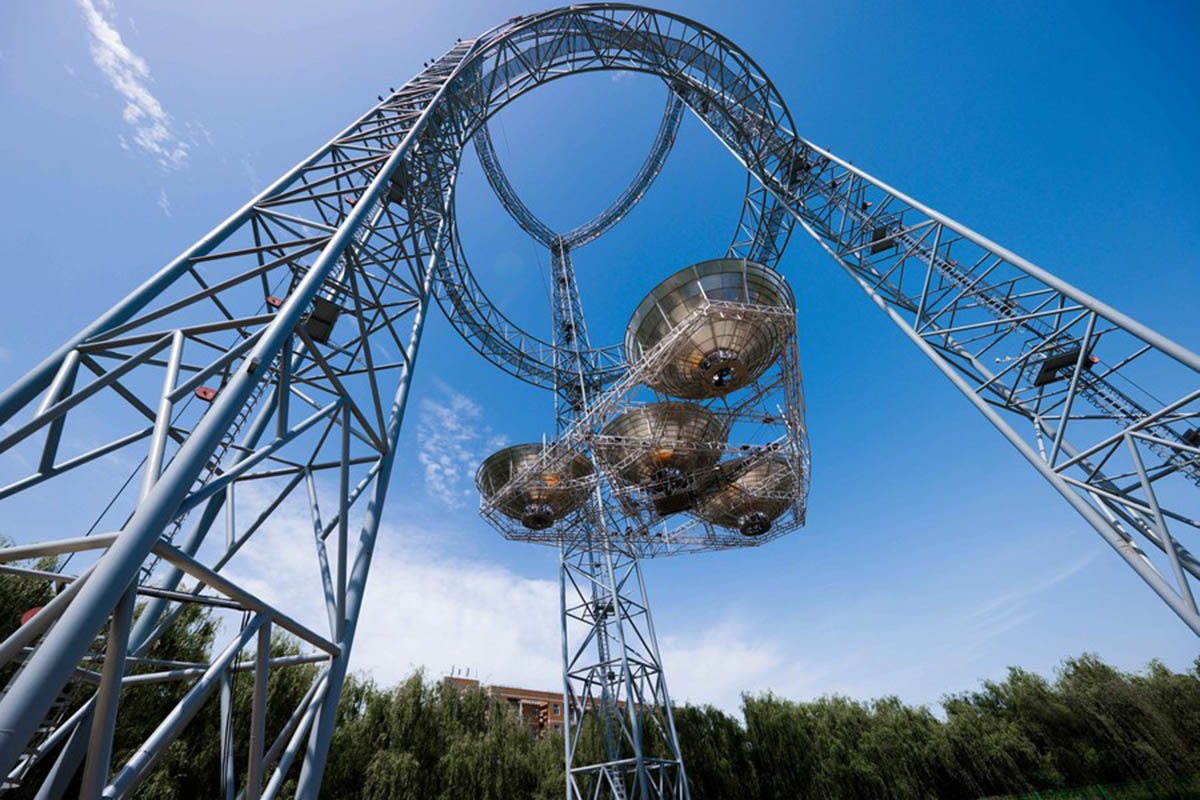
XI'AN: Chinese scientists have taken a major step towards building a space solar power station, a giant power plant in orbit that could one day send energy back to Earth or to spacecraft, researchers said.
A team from Xidian University in north-west China’s Shaanxi Province has made significant progress on the Sun Chasing project, known as Zhuri in Chinese, by developing a ground-based test system for wireless power transmission that can charge multiple moving targets simultaneously.
In recent tests, the system achieved a wireless power transmission efficiency of 20.8% from direct current to direct current over a distance of 100 metres and delivered 1,180 watts of power. The team has also built a wireless charging system for drones; in a trial, a drone flying at 30 kilometres per hour received 143 watts of stable power from 30 metres away.
A space solar power station would consist of a huge array of solar panels placed in orbit. It would collect sunlight in space, where the Sun always shines, and convert that energy into microwaves or lasers to beam down to Earth or directly to satellites and spacecraft. Supporters say this could supply uninterrupted power for space missions and help to alleviate energy shortages on the ground.
The Sun Chasing project began in 2018 with the construction of a ground test system. By June 2022, the researchers had completed what they say was the world’s first full-link, full-system ground validation system for a space solar power station. The project has now moved to phase two, which aims to tackle the challenges of generating high power in space and transmitting it efficiently over long distances.
Duan Baoyan, an expert at Xidian University and an academician of the Chinese Academy of Engineering, said recent breakthroughs include improving the efficiency of solar energy collection and conversion, increasing the precision of microwave beam control to reduce energy loss, and making transmitting and receiving antennas smaller and lighter, which is critical for space application.
The team has also solved the problem of powering multiple moving targets at once using a single transmitter, which could allow one space power station to supply electricity to several satellites or ground vehicles at the same time, Duan added.
Duan noted there is still a long way to go before a space solar power station becomes commercially viable. The next step, he said, is to conduct in-orbit tests, and he expressed the hope that the project will contribute Chinese wisdom and solutions to global energy change and sustainable development.
(With inputs from Xinhua/RSS)

-1784290467.jpg)