68th GBM in India strategises APO Vision 2030 implementation for productivity transformation, enhanced regional cooperation

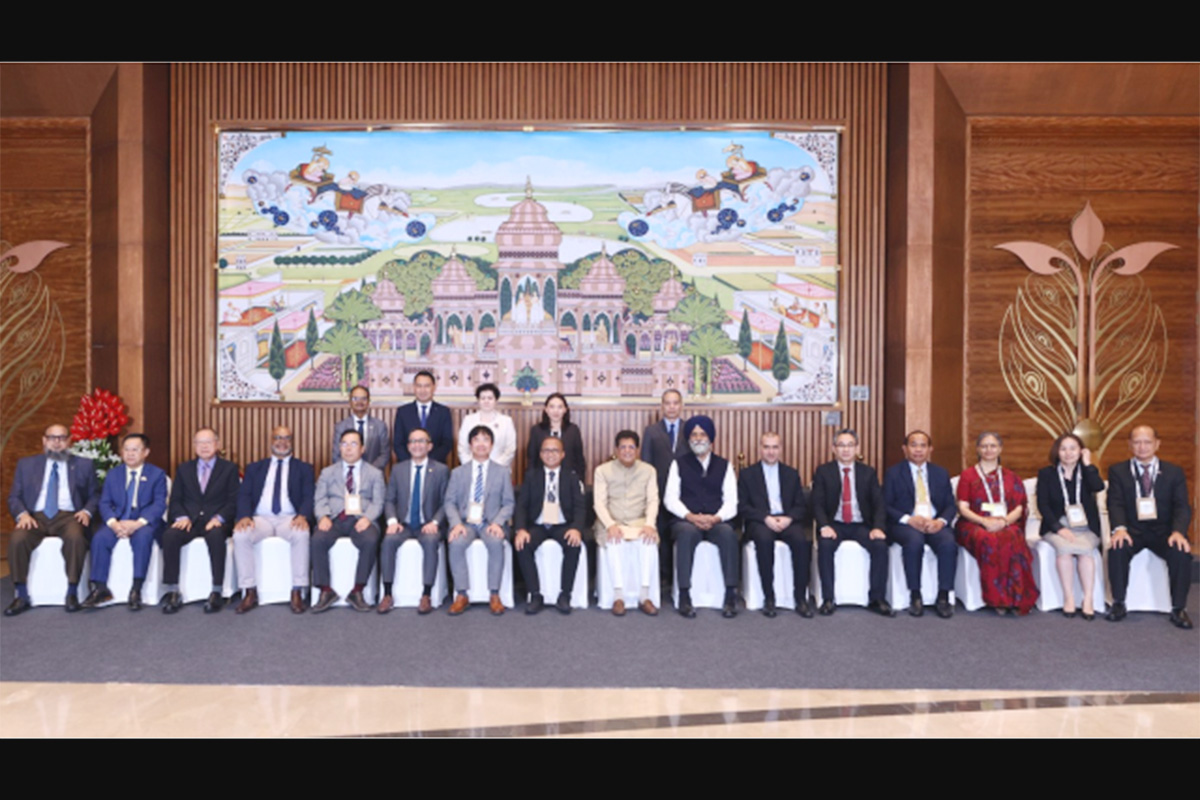
NEW DELHI: The Asian Productivity Organization (APO) held its 68th Governing Body Meeting (GBM) in New Delhi from May 20 to May 22, hosted by the Government of India during the APO’s 65th anniversary year.
Delegates focused on implementing APO Vision 2030 and rolling out the member-driven Strategic Partnership Programme (SPP) as the organisation’s new result-oriented implementation approach.
Meanwhile, sixty-three delegates from 19 member economies attended, joined by eight observers from Bhutan, Kazakhstan, Uzbekistan, the Global Green Growth Institute, the International Labour Organization (ILO) and the United Nations Industrial Development Organization. The presence of nonmember observers reflected growing regional and international engagement with the APO.
At the session, the APO chairmanship passed from India to Indonesia. Acting APO Director for Indonesia Prof Anwar Sanusi assumed the chair for 2026–27. The Islamic Republic of Iran and Japan took the First and Second vice-chair roles, with Acting APO Director for Iran Dr Mostafa Goharifar and Acting APO Director for Japan Fumio Yamazaki carrying out vice-chair duties on behalf of their directors.
Speaking at the inaugural session, Piyush Goyal, India’s Minister of Commerce and Industry, attended as Guest of Honour and said, “Productivity is a strategic driver of resilience, innovation, sustainability and inclusive growth amid rapid global economic and technological change.” He highlighted India’s reforms in manufacturing, logistics, digital public infrastructure, MSME support and Green Productivity as examples of productivity-led development.
Outgoing APO Chair and APO Director for India Amardeep Singh Bhatia emphasised the operational shift towards the SPP and the need for institutional modernisation, stronger governance and outcome-based regional cooperation. Neerja Sekhar, Director-General of India’s National Productivity Council, underlined the role of productivity institutions in supporting transformation, resilience, digital adoption, Green Productivity and measurable impact. Incoming APO Chair Prof. Anwar Sanusi reaffirmed the organisation’s commitment to strengthening productivity, innovation, sustainability and regional cooperation across Asia and the Pacific.
Delegates held detailed discussions on governance and administration, including review of annual and financial reports, appointment of auditors, recommendations from the APO Vision 2030 Steering Committee and the preliminary budget for the 2027–28 biennium. The Secretariat’s performance, management and compliance were examined, along with a possible transition from IFRS to IPSAS, election procedures for the APO Secretary-General, rules for nonmember participation and the APO Awards Programme.
The meeting also introduced the APO’s new flagship Genuine AI Action (GAIA) initiative, aimed at promoting artificial intelligence and its applications to boost productivity across member economies.
Following the session, the 68th GBM concluded with delegates reaffirming their commitment to implementing APO Vision 2030 and strengthening the APO’s role as a platform for productivity-led, inclusive, sustainable and resilient development. In a Vote of Thanks, APO Alternate Director for Lao PDR Vilakone Philomlack said Lao PDR looked forward to hosting the 69th GBM in 2027.
The APO, established in 1961, is a regional intergovernmental organisation that supports productivity improvement in the Asia-Pacific through policy advice, capacity building and knowledge sharing to promote sustainable socioeconomic development.