Why Emotional Branding Wins: Insights from Deepal’s Ramesh Danekhu

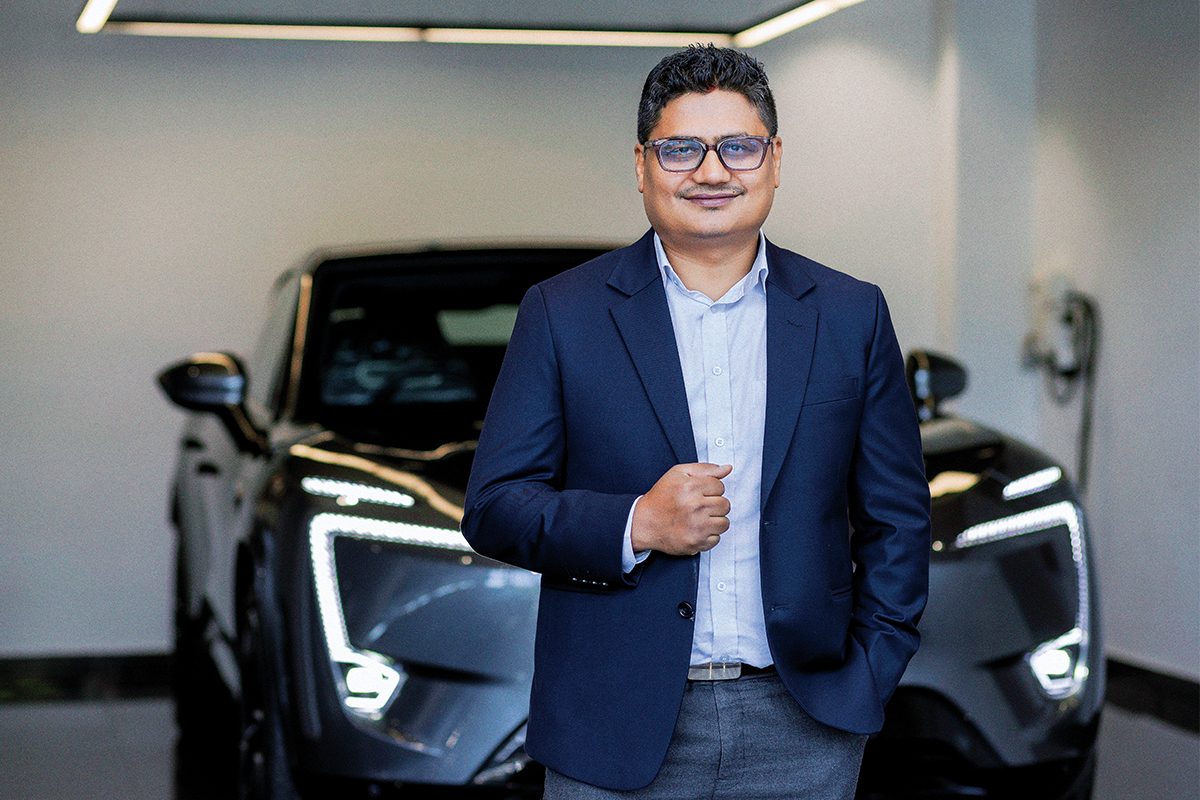
Ramesh Danekhu, Assistant General Manager – Marketing & Communications, Deepal, MAW Vriddhi
Ramesh Danekhu, Assistant General Manager – Marketing & Communications for Deepal and AVATR at MAW Group, has built his career around the power of storytelling. He began in the newsroom as a journalist, where he learned a principle that would later shape every brand he helped build: the right story, told at the right moment, moves people.
With more than 15 years of experience across brands such as Yamaha, Skoda, Fiat, JCB and Jeep, Danekhu has developed expertise in integrated campaigns, media management and public relations, alongside a commercial sharpness that distinguishes brand-building from mere brand spending.
His work with Deepal, however, became the defining chapter of his career. In a market crowded with global competitors, legacy trust and widespread scepticism around EVs, he took on the challenge of introducing an unfamiliar Chinese electric vehicle brand to Nepal. Within two years, Deepal emerged as the country’s number one luxury EV brand, securing more than 800 customers and 33% segment leadership.
From introducing 3D projection mapping at the S07 launch and Nepal’s first anamorphic projection for the S05 unveiling to bringing cricket icon Paras Khadka on board as brand ambassador, Danekhu has consistently pushed the boundaries of experiential marketing. In doing so, he has helped turn Deepal into one of the most talked-about automotive brands in Nepal.
Despite the scale of innovation, Danekhu’s philosophy remains simple: brands that create genuine emotional connections are the ones people remember.
Today, as AGM – Marketing & Communications for Deepal and AVATR at MAW Group, he continues to follow the same principle that guided him in the newsroom years ago: make people feel something real, and they will never forget the brand behind it. In this issue of Business 360, Danekhu reflects on his professional journey and shares insights into the evolving world of marketing and mobility.
Marketing today is as much about storytelling as it is about sales. How do you balance both?
Storytelling is not the opposite of sales; it is the foundation of it. When a story resonates, it builds trust, and trust is what converts.
At Deepal, we faced a real barrier: Nepali consumers were sceptical about Chinese EVs. Features and discounts alone would not change perceptions. What made the difference was a compelling story backed by genuine experience.
We positioned Deepal within the worlds of aspiration, culture and modern lifestyle. Paras Khadka became our brand ambassador because he represents ambition and national pride, values closely aligned with the brand. We invited Brian Lara to Kathmandu as a guest of Deepal, associating the brand with global sporting excellence. We brought Sonu Nigam to perform in Kathmandu, linking Deepal with glamour, culture and celebration. Alongside these headline collaborations, influencers across technology, lifestyle, entertainment and luxury became authentic brand advocates, sharing lived experiences rather than scripted endorsements.
Every campaign was designed with commercial impact in mind. Storytelling and sales are not competing forces. When executed well, they become one and the same.
How has consumer behaviour in Nepal evolved over the last few years, and how has your team adapted to it?
Today’s Nepali consumer arrives informed. They have already watched YouTube reviews, compared specifications online and completed most of their decision-making process before stepping into a showroom. Traditional push advertising no longer works the way it once did.
We adapted by adopting a digital-first approach focused on real ownership stories, educational car guides and content built around the questions consumers were already searching for. More importantly, we redesigned the entire customer journey, not just the marketing but the overall experience.
At Deepal, we decided early on that we were not simply selling cars; we were curating experiences. Every touchpoint had to justify its presence, from the first digital interaction to the showroom visit, test drive, delivery and aftersales relationship.
The showroom itself was designed not as a transaction space, but as a brand experience centre. We invested heavily in hospitality, ambience and personalised interaction. While others focus on selling features, we focus on creating memories. That is what transforms customers into long-term advocates.
Leadership in marketing often requires both creativity and data-driven decision-making. What is your approach?
I see creativity and data the way a musician sees sheet music and improvisation. Neither works effectively without the other.
In practice, I operate across two parallel dimensions: emotional and rational marketing. Emotional marketing is about association - connecting Deepal with luxury, aspiration, culture and prestige. When Sonu Nigam performs at your event or your showroom hosts a perfume-making session or a style consultation evening, you are not merely promoting a car; you are building a premium identity in the consumer’s mind. That emotional positioning creates desire and justifies value in ways that specifications alone cannot.
The rational side is driven by data: lead quality, conversion rates, cost per acquisition and share of voice. Data tells us whether the emotional connection is translating into commercial success. The challenge is ensuring both dimensions work together without one overpowering the other.
Can you share a campaign or strategy that exceeded expectations, and what made it successful?
Every MAW product launch has been designed to demonstrate that automotive reveals in Nepal can match international standards.
The S07 launch introduced 3D projection mapping for the first time in Nepal. The E07 launch raised the benchmark for scale in the country’s automotive event space. The S05 unveiling featured Nepal’s first anamorphic illusion effect, turning the reveal itself into a highly shareable experience before the vehicle was even introduced.
We do not simply launch products; we create moments that people continue talking about long after the event ends.
The S05 campaign delivered strong commercial results as well. Within nine months, the model secured 33% segment leadership in a highly competitive category.
However, one of the defining moments for Deepal came during the NADA Auto Show 2025, where we unveiled Nepal’s first flying taxi - the Deepal eVTOL - alongside humanoid and robotic dog demonstrations. The activation generated record footfall, a significant rise in inquiries and bookings, and repositioned Deepal and MAW Group as forward-looking mobility brands rather than traditional automotive companies. The earned media value alone far exceeded the investment.
What are some of the biggest challenges in marketing automobiles and mobility solutions in Nepal today?
One challenge that often goes overlooked is that marketing a legacy ICE brand and marketing an EV brand are fundamentally different disciplines. Legacy brands benefit from decades of trust, familiarity and road presence. EV brands, by contrast, must build that trust from the ground up while simultaneously educating consumers on technology, infrastructure and long-term reliability.
Nepal’s automotive market is also increasingly crowded, with many brands offering similar features, pricing and messaging. In that environment, differentiation becomes critical, not through specifications alone but through identity.
Our focus was to make Deepal feel like a brand with a distinct culture, personality and promise. That emotional distinction became our competitive advantage.
How do you ensure collaboration and alignment between marketing and other departments such as sales, operations and management?
Alignment must be intentionally designed; it cannot be assumed. I involve other departments early in the planning process, not simply to inform them, but to genuinely incorporate their perspectives.
When sales teams contribute to campaign messaging, they become stronger advocates for it in the field. When operations teams understand launch timelines in advance, service readiness improves before the first customer arrives.
We also align around shared metrics such as lead quality, conversion rates and customer satisfaction, ensuring everyone is invested in the same outcome. With management, I focus conversations on business impact rather than marketing activity. That approach creates trust and gives us the flexibility to take bold creative risks when necessary.
What qualities do you value most when building and managing a high-performing marketing team?
Curiosity comes first because everything else can be taught. I also value commercial awareness; people who care not only about whether the work looks good but whether it delivers measurable results.
Creative courage is equally important. Some of Deepal’s most distinctive campaigns began as ideas that initially sounded unconventional. Finally, I look for ownership: people who treat every brief as if it were their own business and who approach problems with solutions already in mind. That mindset is shaped by culture, not instruction.
In an age of short attention spans, what makes a brand message truly memorable?
Emotion. Consumers may forget features within hours, but they remember how a brand made them feel.
At Deepal, the content that resonated most strongly was never purely specification-driven. It was stories of people describing their ownership experience and emotional connection with the vehicle. That is the kind of content people share and discuss organically.
Simplicity also matters. One clear and compelling truth is far more powerful than multiple average claims. Consistency is equally important. The showroom experience, digital presence and aftersales service must all communicate the same narrative. Brand memory is not created through a single campaign; it is built through consistency across every touchpoint over time.
Looking ahead, what is your long-term vision for MAW’s marketing and brand presence in Nepal and beyond?
Our long-term goal is to transform customers into true brand advocates, people who not only purchase the product but actively recommend it, defend it publicly and feel personally connected to its journey. That level of loyalty cannot be bought; it must be earned through consistently exceptional experiences and a commitment to exceeding expectations at every stage of the customer relationship.
We will continue leading through experimentation and differentiation, focusing on experiences rather than products alone. We also intend to keep redefining what an automotive brand can represent culturally, socially and emotionally.
Beyond Nepal, I believe the Deepal journey offers a strong blueprint for challenger brands entering sceptical markets: build trust through experience rather than advertising, community rather than broadcast, and experimentation rather than convention. Those principles apply across industries, categories and geographies, and that is the kind of work I find most enduring