Master plan developed for long-term change in transport structure in Kathmandu Valley

KATHMANDU: A master plan has been developed to transform the transport structure of Kathmandu Valley, aiming to create a safe, orderly and sustainable public transport system.
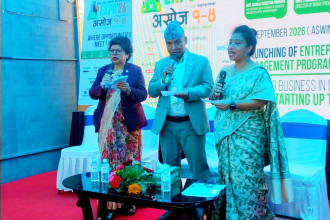
The master plan was made public in Kathmandu today.
The plan sets out 22 infrastructure programmes and 13 public transport improvement programmes to be implemented across short, medium and long-term phases, to establish a more organised and sustainable transport system by 2050. It proposes mass transit options, high-capacity public transport services and the expansion of existing highways.
Key stakeholders, including Arjun Jung Thapa of National Planning Commission (NPC), emphasised the need to strengthen east-west and north-south transport networks. The plan calls for new infrastructure to improve connectivity and traffic management through alternative routes and the restructuring of major intersections.
Ministry of Infrastructure Development (MoID) Joint Secretary Sushil Babu Dhakal said the plan includes structural reforms to make public transport more user-friendly, recommending a company model for transport operations and improved route management. Specific projects listed include new bridges, car parking facilities, cycling lanes and upgrades to major road intersections.
Integrated solutions proposed include underpasses, underground tunnels and overpasses to ease congestion in high-traffic areas. The projects include Maharajgunj and Chabahil–Gaushala underground routes, overhead bridges at Chabahil–Bagmati and Tripureshwor–Maitighar, a river corridor route along the Bishnumati, and a new Karmanasha bridge connecting Satdobato–Godawari.
Other measures include widening the ring road, bridge construction in Thapathali–Tripureshwor area, upgrading the Bagmati riverbank corridor and improvements to the Boudha Road intersection. The master plan aims to tackle long-term traffic problems in major congestion areas through underpasses, underground tunnels, sky roads and integrated operation of large buses.
The Japan International Cooperation Agency (JICA) underlined the necessity of a comprehensive transport strategy to manage rapid urbanisation and rising vehicle numbers. Coordinated by the MoID, the master plan seeks to create an efficient, safe and environmentally friendly urban transport system that ensures accessibility for all citizens.
By RSS

-1789922568.jpeg)