Energy minister urges preparedness to avert Super El Niño impacts

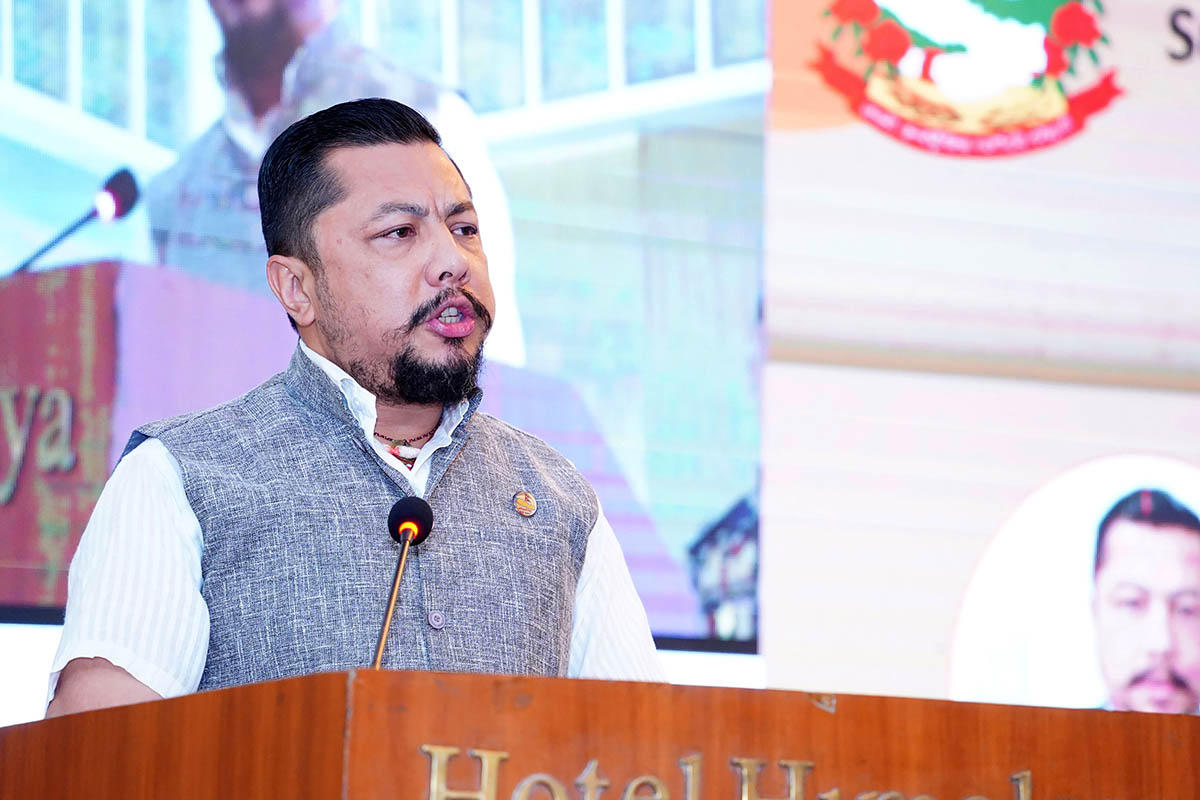
KATHMANDU: Minister for Energy, Water Resources and Irrigation, Biraj Bhakta Shrestha, has urged swift preparedness across water, food, irrigation and disaster resilience sectors to reduce the potential impacts of a Super El Niño.
Speaking at the opening of the national workshop ‘Super El Niño and Climate Risk: Impacts on Water, Food, Energy, and Disaster Resilience’ in Lalitpur, Shrestha warned that recent forecasts point to an increased likelihood of effects on rainfall, temperature, hydropower output, irrigation and food production in Nepal.
“As Kulekhani-1 is only one seasonal reservoir project in the 4,120 MW electricity system currently operational in Nepal, there is therefore a need to increase storage capacity in the energy sector,” the minister stated.
He said Nepal has made significant progress in energy trade, but reliance on imports rises during dry seasons, making the development of reservoir projects and storage capacity important for energy security.
On irrigation, Minister Shrestha noted most schemes draw on small and medium rivers and face water shortages in the dry season. He added that prolonged droughts have been affecting agricultural output and that it is now urgent to make farming more resilient to climate variability. The ministry has prepared the Tarai‑Madhesh Drought Resilience Strategy in response.
The ministry has established a ‘Water‑Energy Drought Monitoring’ mechanism, with participation from the Department of Hydrology and Meteorology, Department of Water Resources and Irrigation, Department of Drinking Water and Sewerage Management, Nepal Electricity Authority and Department of Electricity Development, to publish monthly updates from October to March.
Organised by the Secretariat of the Water and Energy Commission and the Department of Hydrology and Meteorology, the workshop brought together officials to discuss likely El Niño impacts on water, food and energy systems and measures for risk reduction.