
Civil rights groups demand coordinated govt response as over 900 die in floods

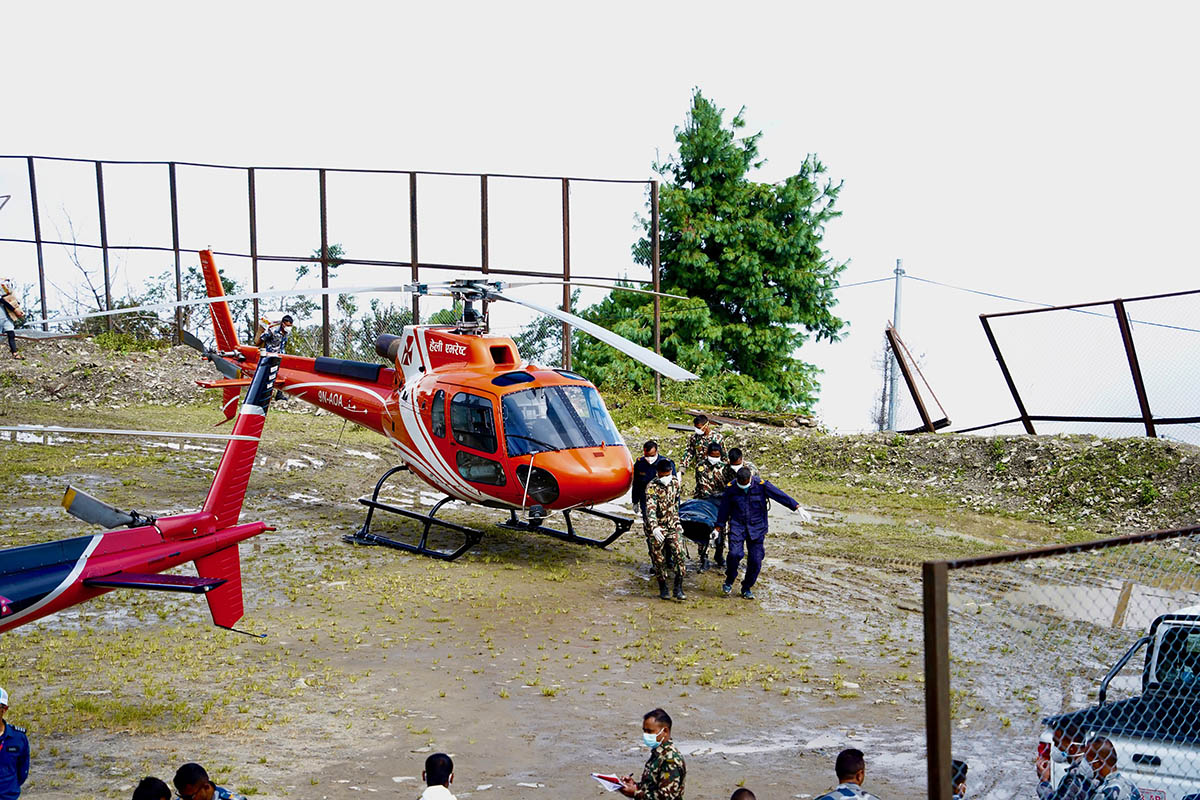
KATHMANDU: At least 900 people have died and 10,000 are recorded as injured or missing following catastrophic flooding in Nepal. The devastating toll prompted 31 civil rights figures on Monday to call on the federal government to urgently coordinate rescue, relief and rehabilitation efforts alongside local authorities.
The disaster was triggered on August 26 when an ice cliff collapsed on the northern slope of Mount Langtang, sending torrents of water through the Bhotekoshi and Trishuli rivers and devastating Rasuwa, Nuwakot and Dhading districts. Figures from National Disaster Risk Reduction and Management Authority (NDRRMA), cited in the group's statement, show that more than 4,000 people remain out of contact, while nearly 21,000 security personnel have been deployed for search, rescue and relief operations.
Hundreds of domestic and foreign citizens are among the casualties, with physical damage estimated in the hundreds of billions of rupees. The floodwaters destroyed public infrastructure, health facilities and educational institutions, while sweeping away dozens of concrete bridges, damaging dozens of kilometres of roads, submerging thousands of hectares of arable land, and affecting 12 hydroelectric projects generating nearly 900 megawatts.
In a joint statement, the signatories commended initial search and rescue operations by the Nepali Army, Nepal Police and Armed Police Force, Nepal (APF Nepal) but raised serious concerns over administrative delays and federal neglect of local government representatives.
"We take the federal government's disregard for local government representatives in rescue and relief work seriously," the activists stated in their joint statement. "Furthermore, we conclude that rescue and relief operations, as well as the rehabilitation of flood victims to be conducted in the near future, cannot be effective without the involvement and participation of local governments."
Highlighting lessons learnt during the 2015 earthquake and the Covid19 pandemic, the group noted that local governments play a crucial role in managing community-level response, relief distribution and reconstruction. They warned that the government's centralised one-door policy has restricted the effectiveness of civil society organisations, urging authorities to broaden community participation rather than limit non-governmental involvement.
Concerns were also raised regarding public health, information transparency and body management. The group supported the temporary burial of unidentified victims for public health reasons while urging respect for the victims' right to mourn. To prevent rumours and inaccurate reporting, they called for an integrated information system and unhindered media access. They also requested a specialised mechanism for the Prime Minister Relief Fund and urged the Speaker of the House to initiate a parliamentary committee to monitor the overall process.
The statement called attention to the broader impact of climate change in the Hindu Kush Himalaya region, urging Nepal and China to strengthen cross-border scientific mechanisms to monitor vulnerable glacial lakes along their shared border. The appeal was signed by prominent civil society figures, including Dr Bimala Rai Paudyal, Kanak Mani Dixit, Dr Gopal Krishna Siwakoti, Dr Prakash Bhattarai and Sushil Pyakurel, among others.


-1788157009.jpg)
-1788360288.jpeg)
-1788355643.jpeg)