FNCCI urges EU to focus on trade, investment as Nepal prepares for LDC graduation

KATHMANDU: Federation of Nepalese Chambers of Commerce and Industry (FNCCI) has urged that economic relations between Nepal and the European Union (EU) be directed towards trade, investment, technology transfer and private sector partnerships.
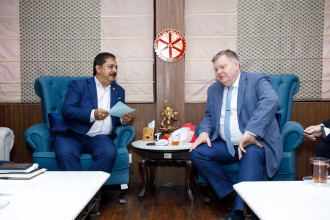
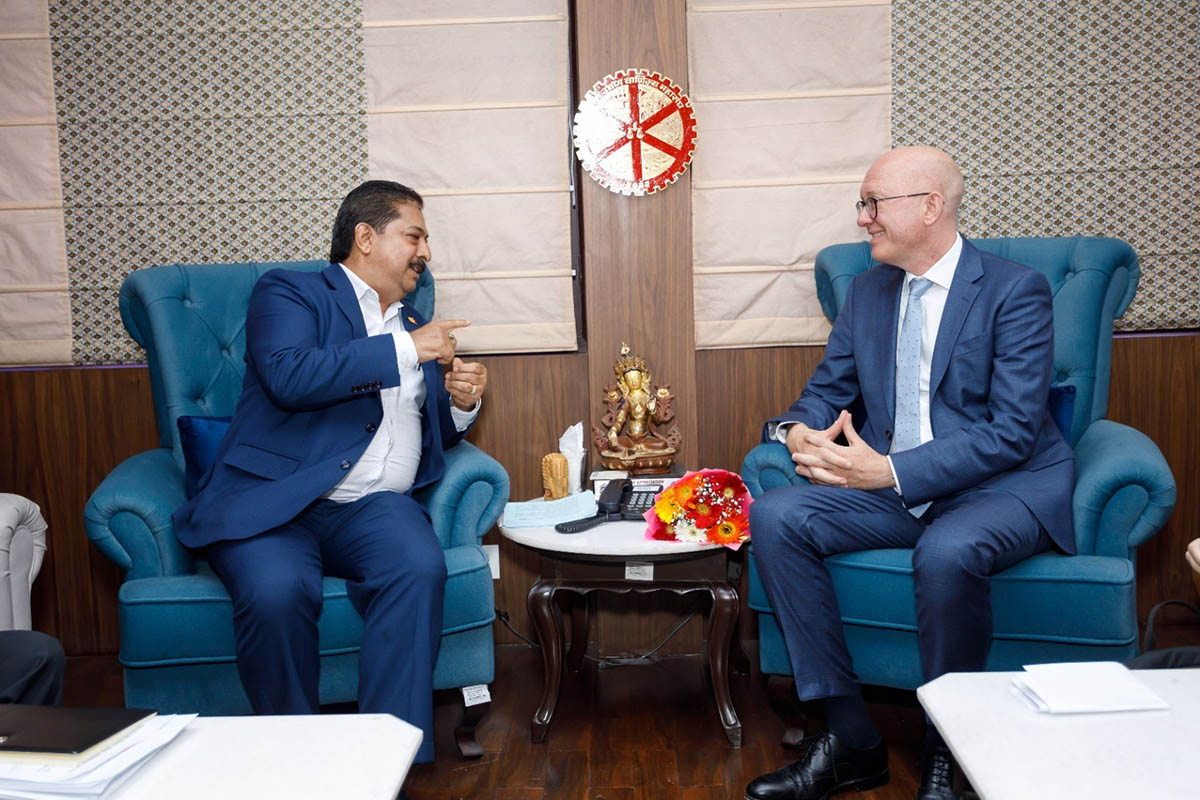
The appeal came during a meeting at the FNCCI Secretariat in Teku between FNCCI President Anjan Shrestha and European Union (EU) Ambassador to Nepal, Charles Whiteley.
With Nepal on the verge of graduating from least-developed country (LDC) status in 2026, President Shrestha said further assistance from the EU is required to ease the transition. He highlighted the need for support in trade facilitation, enhancing the competitiveness of Nepali products, testing and certification infrastructure, technical standards and export diversification.
To widen market access for Nepali goods, the FNCCI requested collaboration on capacity building related to European standards, quality, traceability and sustainability. Targeted export items include ready-made garments, carpets, felt, pashmina, tea, coffee, spices, handicrafts and plant-based products.
The umbrella organisation of private sector said there is ample potential to attract European investment in hydroelectricity, renewable energy, tourism, information technology, business process outsourcing, manufacturing, agricultural processing, infrastructure and digital services.
To improve the investment climate, President Shrestha remarked that policy stability, effective government services, simplified customs procedures and the effective implementation of policies are necessary.
Ambassador Whiteley said the EU will continue to provide support and cooperation for Nepal’s economic development and prosperity. He added that, because Nepal is at a crucial stage of graduating from least-developed country status, European support will continue for preparation, transition management and sustainable economic development.
Whiteley also said relations between Nepal and the EU should not be limited to development cooperation but can be expanded into trade, investment, technology, private sector engagement and economic partnerships.
Discussions also covered enhanced collaboration in the green and digital economy, climate-resilient infrastructure and the post-graduation trade transition. High-ranking embassy officials and the Director General of the FNCCI attended the meeting.