FNCCI President calls for effective involvement of private sector in policy-making

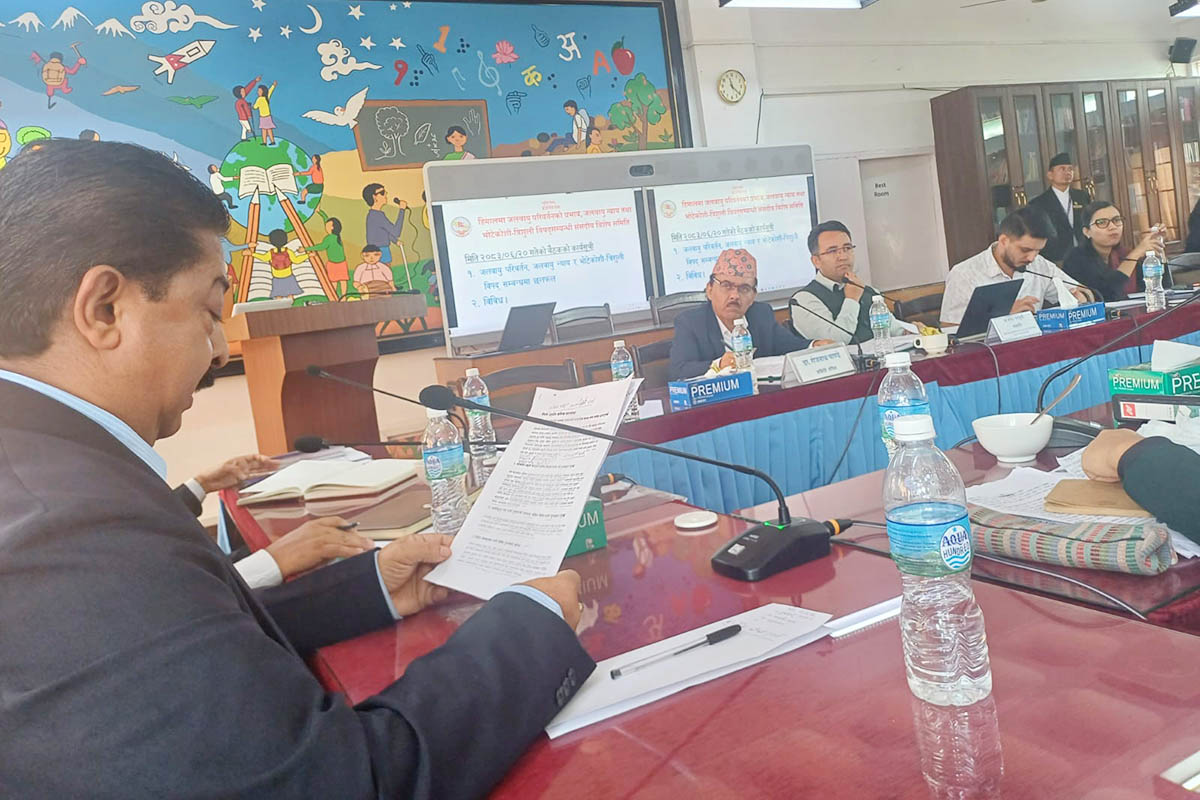
KATHMANDU: Federation of Nepalese Chambers of Commerce and Industry (FNCCI) President Anjan Shrestha has called for the effective involvement of private sector in policy-making and implementation processes. He warned that climate change is having a severe impact on businesses, infrastructure, and the wider economy.
Speaking on Tuesday at a meeting of the Parliamentary Special Committee at Singha Durbar, Shrestha emphasised that climate change and environmental disasters have caused significant direct and indirect losses to business operations. He called for effective collaboration between the government and the private sector to reduce risks and protect supply systems.
He said programmes for climate adaptation, disaster risk reduction and rehabilitation must be advanced as a priority, and that the private sector should increase investment in climate-adaptive business practices, green technology and sustainable production systems. "The role of the government alone is not sufficient in disaster risk reduction. It is necessary to institutionalise coordination and partnership among the private sector, local communities, provincial and local levels and relevant government bodies," he said.
The meeting, attended by Minister for Infrastructure Development Sunil Lamsal and Minister for Law, Justice and Parliamentary Affairs Sobita Gautam, focused on climate risks in the Himalayan region, climate justice and hazards facing settlements and infrastructure around the Bhotekoshi and Trishuli rivers.
Minister Lamsal told the committee that the government is preparing a new framework for infrastructure construction and is working to make procurement procedures more accessible and effective. He said continuous dialogue and collaboration with Chinese officials are under way to operate Nepal-China border crossings, and that work is progressing on industrial parks, satellite cities and a trading hub.
Minister Gautam said the drafting of various disaster-related laws is moving forward and that drafting and implementing necessary legislation with a focus on disaster management must be prioritised immediately.
Committee Chairperson Ganesh Parajuli said climate impacts in the Himalayas and climate justice issues must be linked to infrastructure development. He emphasised that structures built in risk-prone areas must be climate-resilient and sustainable, with priority given to protecting sensitive riverbank communities.
Participants at the meeting called for Nepal's climate risks to be presented more effectively on international platforms and for early warning systems for floods and landslides along the Bhotekoshi-Trishuli corridor to be improved. They also urged that hydropower and other infrastructure projects avoid adversely affecting natural river flows, that excessive natural resource exploitation be halted, and that coordination among federal, provincial and local levels be strengthened.
The committee concluded that climate change, climate justice, disaster risk reduction, infrastructure development and the role of the private sector should be advanced in an integrated manner. It said incorporating climate risks into mainstream development, constructing safe and sustainable infrastructure and encouraging private sector investment must form a crucial basis for future policies and programmes.
-1791368436.jpeg)
-1791367392.jpeg)
-1791357574.jpeg)