Nobel watchers guess who gets economics' top prize
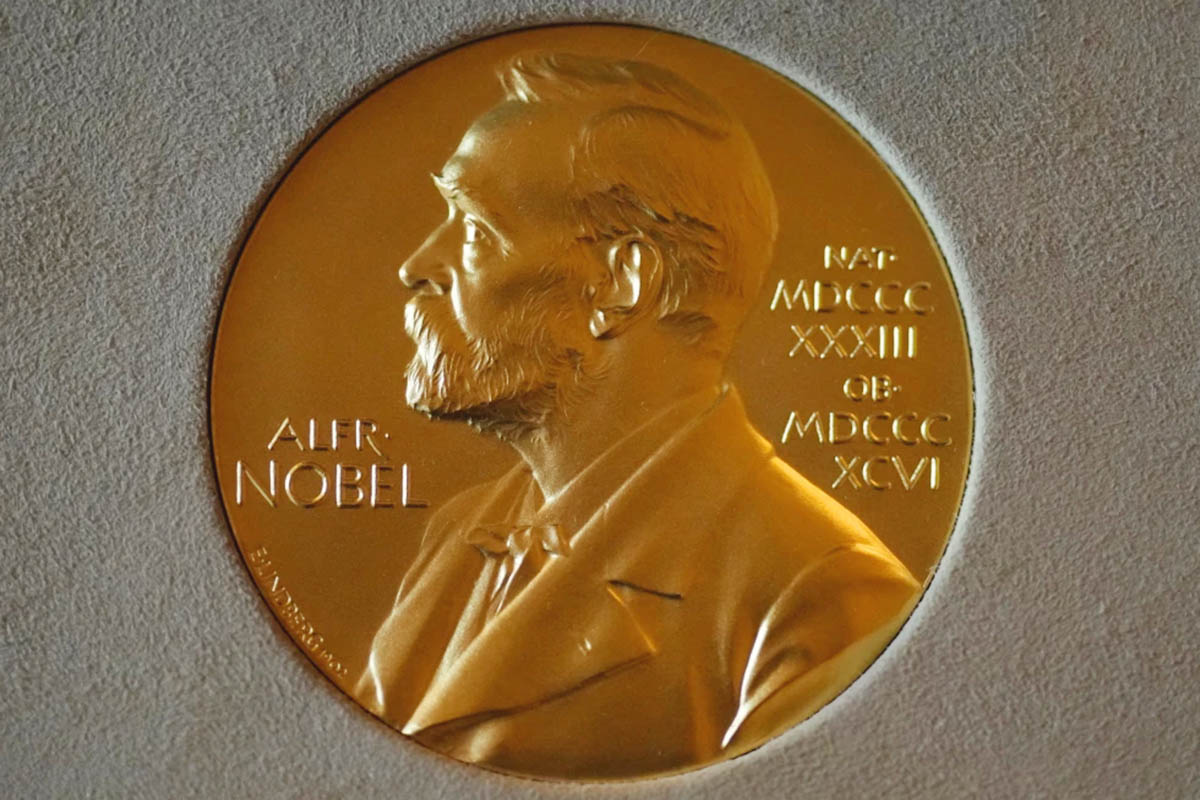
STOCKHOLM: Monetary policy, technology, behavioural economics and development are among the fields tipped for this year's Nobel economics prize, which on Monday brings the 2026 Nobel season to a close.
The winner or winners will be announced in Stockholm at 11:45am (09:45 GMT), three days after South African jurist Navi Pillay was awarded the Nobel Peace Prize.
Last year, the economics award went to American–Israeli Joel Mokyr, France's Philippe Aghion and Canada's Peter Howitt for research into how technology drives and affects growth.
That makes another prize for the same field unlikely this year, according to experts interviewed by AFP.
"There is obvious horse-trading between factions in the (Nobel) committee: 'I support your candidate this year if you support mine next year,'" Richard Tol, an economics professor at the University of Sussex, told AFP.
For Tol, the committee has been "signalling" that Americans Colin Camerer and George Loewenstein will win this year, "perhaps with Matt Rabin", pioneers in behavioural economics and how we make decisions.
Another "strong candidate" is Michael Woodford in the field of monetary policy, said David Pendlebury of research firm Clarivate, which predicts potential laureates by tracking highly cited academic work.
"It has been a while since that particular area has been recognised," Pendlebury noted.
Looking at past laureates also shows that the Nobel committee tends to honour research about 20 to 25 years after publication, and Woodford's key work was "a book published in 2003".
Societal issues
The long gap between publication and prize tends to help Nobel committees judge whether research has stood the test of time.
But Morten Pedersen of the University of Copenhagen said Nobel committee members also "have eyes and ears for what is going on in the world we live in".
"You can also see some political or topical trends that are not independent on the big questions in the society we focus on," he added.
While Pedersen opted to stay out of the guessing game, Tol said a committee keen to "send a political message" should choose American Anne Krueger and Indian–American Jagdish Bhagwati for their work on lobbying and corruption in governments.
Another contender, he added, would be Britain's Tim Besley, Italy's Guido Tabellini and the American Deirdre McCloskey for development economics.
According to a model developed by Tol, four other fields could be in line for this year's award.
One is information and networks, where Americans Sanford Grossman and Matthew Jackson could take home the prize.
Another is economic growth, with Americans Robert Barro and David Weil, along with Frenchman Gilles Saint-Paul, among leading candidates.
International trade is also in the running, where Americans Gene Grossman and Marc Melitz and Israel's Elhanan Helpman could be recognised.
Lastly, Americans Barry Eichengreen and Ken Rogoff, likely alongside Carmen Reinhart, are favourites in international economics.
More women
The economics prize is the only Nobel not among the original five established in the will of Swedish scientist Alfred Nobel, who died in 1896.
Officially called the Sveriges Riksbank Prize in Economic Sciences in Memory of Alfred Nobel, it was created through a donation from Sweden's central bank in 1968, leading detractors to dub it "a false Nobel".
Only three of its 99 laureates have been women, all honoured since 2000.
"Obviously, and well deserved, more women are getting the prize, even if it is still very few," Pedersen noted.
American economist Susan Athey, who explores how new technologies transform markets and public policy, is a favourite among bookmakers and has for years been on Nobel watchers' radar.
Tore Ellingsen, a professor at the Stockholm School of Economics and former chair of the Nobel economics committee, stressed 'gender balance and diversity should not come into play.'
"It is the scientific weight of the contributions and their practical importance that are decisive," he said.
So far, two women have been honoured during this year's Nobel season: Pillay, who won the peace prize on Friday, and Canadian‑Icelandic writer Anne Carson, the literature laureate.
The Nobel Prize in Chemistry was awarded to Frenchman Henri Kagan and Japan's Kenso Soai, and the Physics Prize to Belgian Francis Halzen.
And the first prize to be announced, in medicine, went to American Karl Deisseroth and Germans Peter Hegemann and Georg Nagel.
By RSS/AFP