NPC drafting 25-year development vision, vice-chair calls for decentralised investment

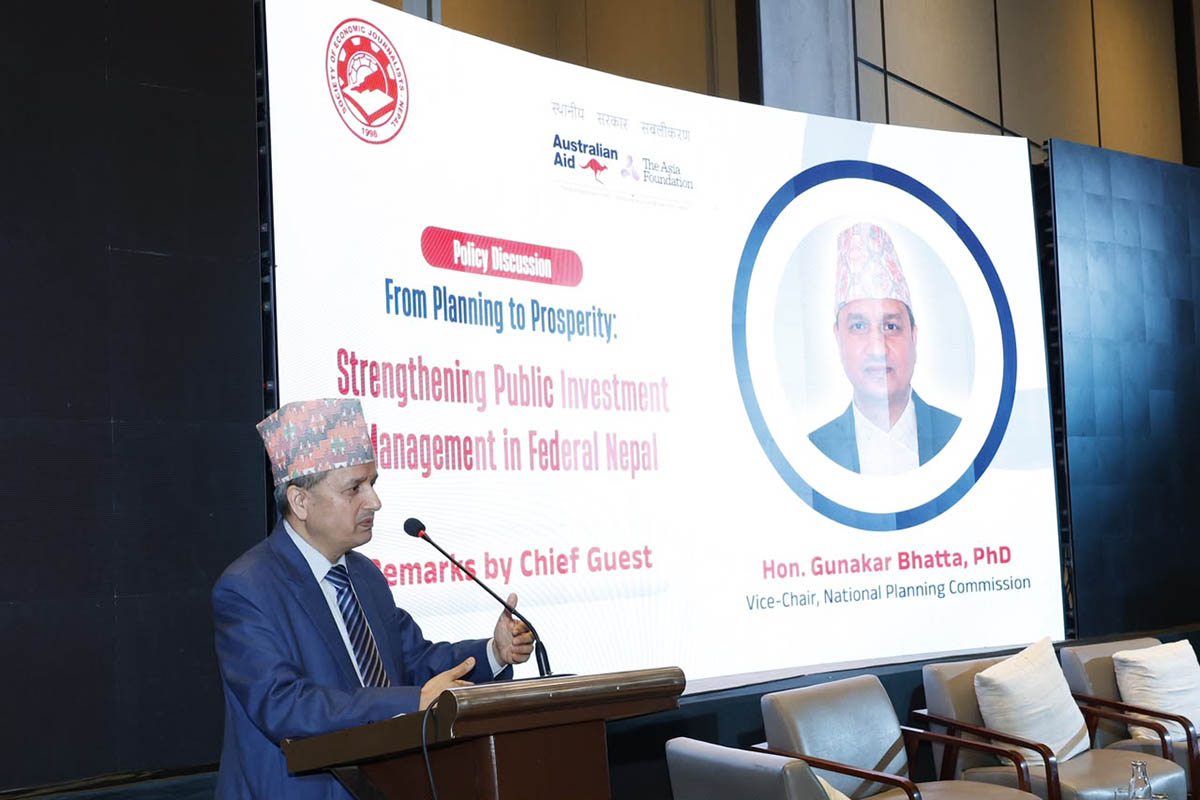
KATHMANDU: National Planning Commission (NPC) Vice-Chairperson Dr Gunakar Bhatta has called for investment and development programmes to be decentralised and diversified. He said concentrating projects in a single region has increased Nepal's economic and physical risks.
Speaking at a programme organised by the Society of Economic Journalists-Nepal (SEJON) in Kathmandu on Tuesday, Bhatta said the NPC is carrying out preparatory work to draft a 25-year Nepal Development Vision. He said sustained dialogue among the government, private sector and academia is necessary to achieve higher economic growth.
Bhatta said recent floods and landslides exposed the risks of locating multiple hydropower projects along the same river system. He said investment, whether public or private, should be spread across regions and sectors, with environmental risks, social returns and economic returns assessed before projects are undertaken.
He said the government should intervene only in cases of market failure and work in partnership with the private sector. He also identified geopolitical tensions affecting petroleum prices, climate change and artificial intelligence (AI) as major challenges facing Nepal.
Highlighting regional disparities, Bhatta said Bagmati Province's per capita income is around $2,600, compared with $1,000 to $1,100 in Karnali, Madhesh and Sudurpashchim provinces. He said greater private investment outside the Kathmandu Valley is needed to narrow the gap.
Presenting a working paper at the programme, former Chief Secretary Dr Baikuntha Aryal said Nepal should invest between 8% and 12% of gross domestic product (GDP) in infrastructure, compared with the current 4% to 5%.
Aryal said Nepal's average economic growth rate over the past 51 years stood at 4.27%, with double-digit growth achieved only once. He added that manufacturing's contribution to GDP has fallen below 5%, although the service sector accounts for more than 60% of the economy.
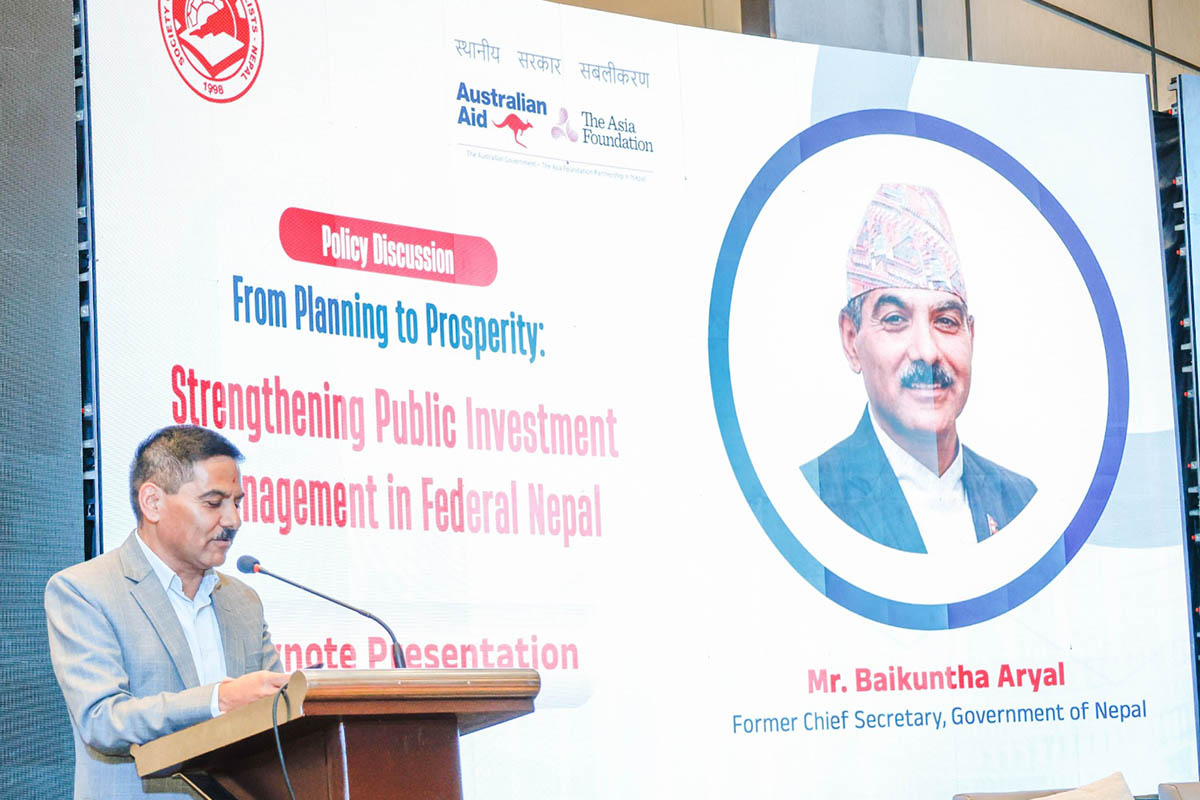
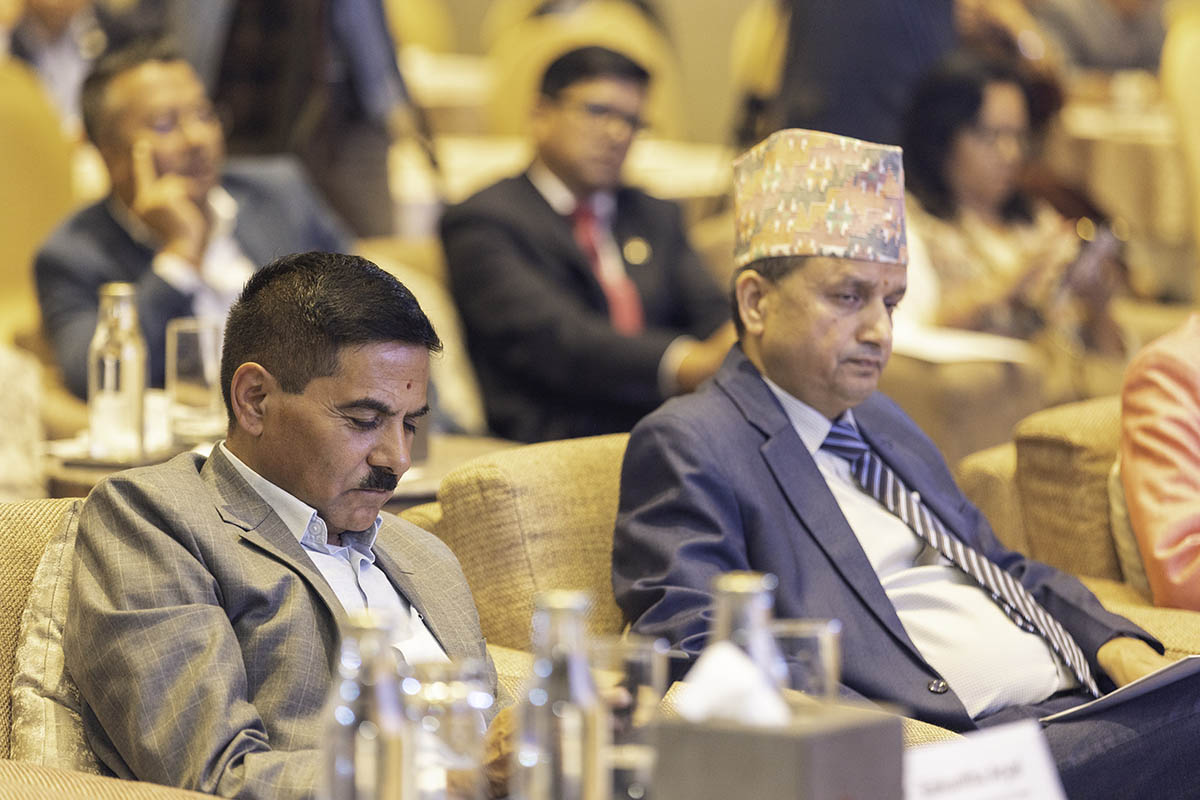
He said 16 of Nepal's 45 public enterprises are operating at a loss and questioned the continuation of loss-making state-owned enterprises engaged in commercial activities, except those linked to strategic, security and essential services.
Aryal also called for a clearer division of responsibilities between the government and private sector, saying the government should focus on infrastructure, regulation and security while the private sector undertakes commercial activities. He proposed stronger regulation, fixed sectoral priorities, a more investment-friendly policy environment, and the removal of duplication among federal, provincial and local governments.
During the panel discussion, industrialist Shashi Kanta Agrawal, director of Reliance Spinning Mills, said closed state-owned industries should be restructured before being reopened. He said investing further in outdated machinery at enterprises such as Hetauda Textile Industry, Butwal Dhago Karkhana and Birgunj Sugar Mills would be ineffective and urged the government not to compete with the private sector in industries such as textiles, yarn and sugar.
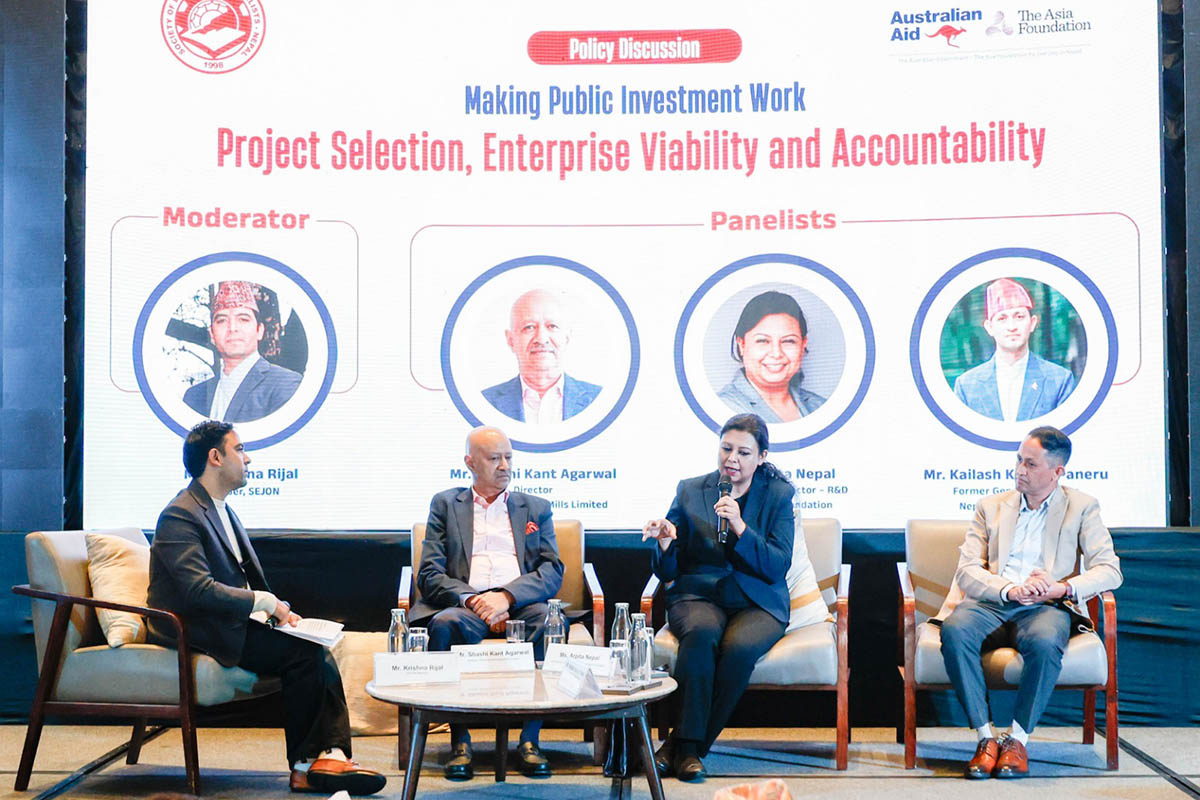
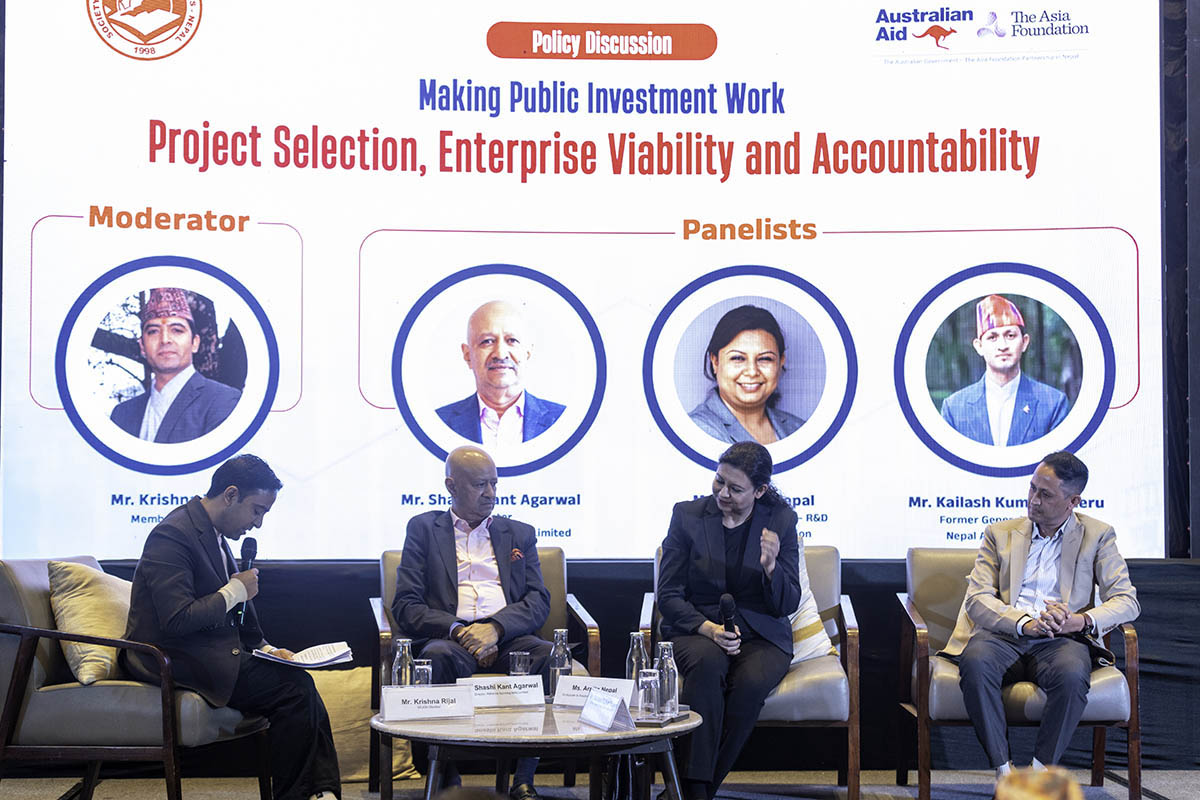
Agrawal also suggested converting land owned by defunct industries into parks or other public-use infrastructure.
Arpita Nepal, co-founder and research director at Samriddhi Foundation, said Nepal lacks a clear legal definition of public investment. She proposed establishing an asset management company to manage sick enterprises and facilitate divestment, and said reforms should begin with transparent funding of political parties.
Former Nepal Aushadhi Limited General Manager Kailash Kumar Paneru called for greater commercial autonomy for public enterprises involved in public health services. He said Nepal Aushadhi Limited helped maintain supplies of Paracetamol and Jeevan Jal during the Covid19 pandemic and dengue outbreaks, and urged the government to reduce ministerial interference in its operations.