Nepal calls for investment in green hydrogen fertiliser industry at Nepal Pavilion during COP31

ANTALYA, TÜRKIYE: Nepal has called on domestic and international investors, financial institutions, development partners and technology providers to participate in the development of a green hydrogen-based chemical fertiliser industry.
The government aims to produce 500,000 metric tonnes of green urea annually within the next five years through the proposed project.
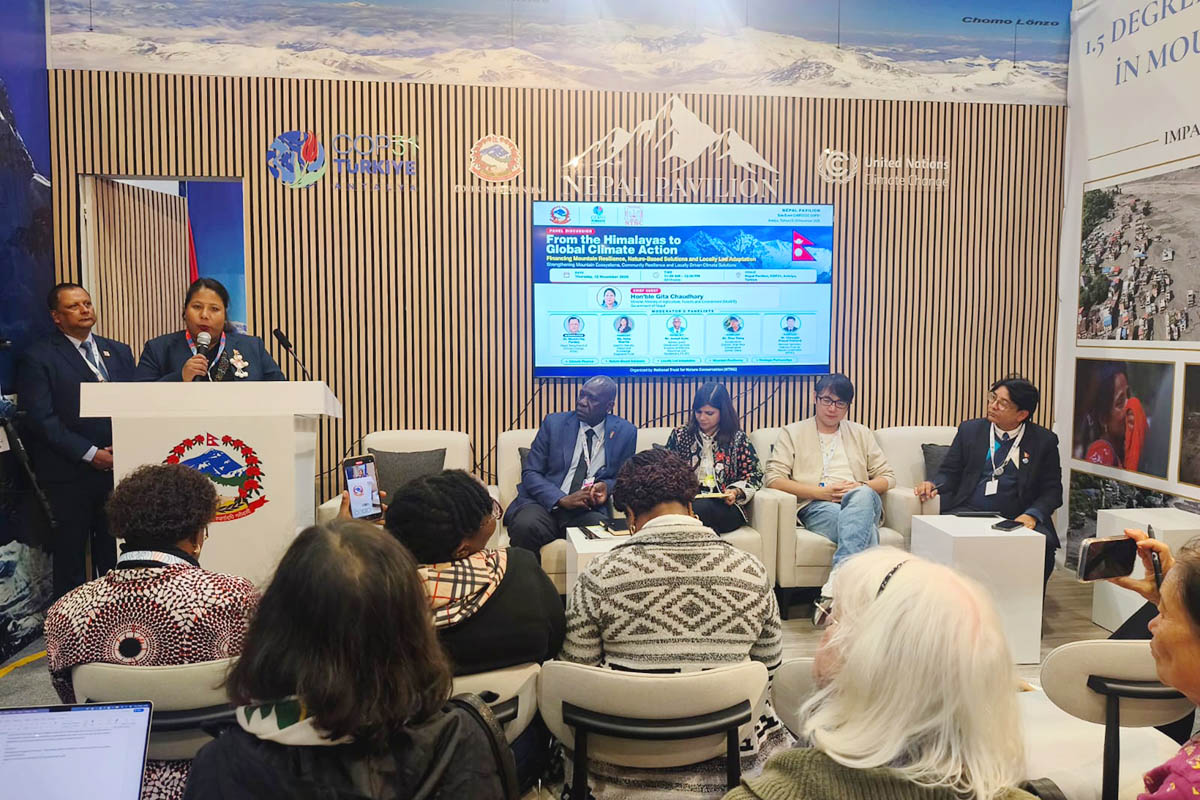
The call was made at an event held on Thursday at the Nepal Pavilion during the United Nations Climate Change Conference (COP31). Speaking at the event, Minister for Agriculture, Forests and Environment Gita Chaudhary said the government is committed to establishing a green hydrogen-based fertiliser industry powered by Nepal's hydropower and other clean energy sources.
She said the government would provide land for the proposed plant, supply electricity at concessional rates to maintain competitiveness, grant tax exemptions on imported equipment and machinery, and make necessary policy and legal arrangements to support the project. Minister Chaudhary also urged investors and technology providers to submit concrete proposals.
The programme, organised by the Ministry of Agriculture, Forests and Environment in collaboration with Kathmandu University, focused on plans to establish an industry capable of producing about 500,000 metric tonnes of green urea annually from green hydrogen and green ammonia. Minister Chaudhary attended as chief guest, while Kushal Gurung moderated the session.
Dr Ram Lama, member of the House of Representatives who chaired the session, said proposals from national and international investors would be assessed in line with the government's "Concept, Details and Modalities for Development of Commercial Green Urea Production Plant in Nepal" before the implementation process moves ahead.
He said the project's commercial viability would depend on access to affordable and reliable electricity, as well as assurances on markets and pricing for the fertiliser produced. He said a fertiliser purchase agreement would be necessary to provide confidence to investors. He also said government support through a Viability Gap Fund would help reduce initial investment risks and improve the project's financial feasibility.
Lama called on the domestic and international private sector, investors, financial institutions, development partners and technology providers to come forward with investment and implementation proposals.
During the event, Dr Biraj Singh Thapa, Registrar of Kathmandu University, presented the technical feasibility of producing green hydrogen, ammonia and urea using Nepal's clean hydropower resources. He said the proposed industry offers opportunities for industrial development, clean energy utilisation and agricultural self-reliance. He added that Kathmandu University is prepared to support the project through workforce development, technical assistance and capacity-building initiatives.
Inesh Manandhar of the Asian Development Bank said discussions on possible investment and cooperation could proceed once the project's technical and economic feasibility is established. Sungte Kim of the Global Green Growth Institute said the project should be commercially sustainable and capable of attracting long-term investment, adding that carbon finance could help improve its economic viability and encourage private sector participation.
According to the organisers, the project could reduce Nepal's reliance on imported chemical fertilisers, increase domestic use of hydropower, support green industrialisation, encourage the development of hydrogen-based technologies and create employment opportunities. It is also expected to contribute to carbon emission reduction, industrial decarbonisation, circular economy practices and innovation in clean energy technologies.
The project is expected to improve the availability of fertiliser for farmers, supporting food security, agricultural productivity and Nepal's goal of greater self-reliance in agriculture.