Nepal, India urged to redefine cultural ties for younger generations

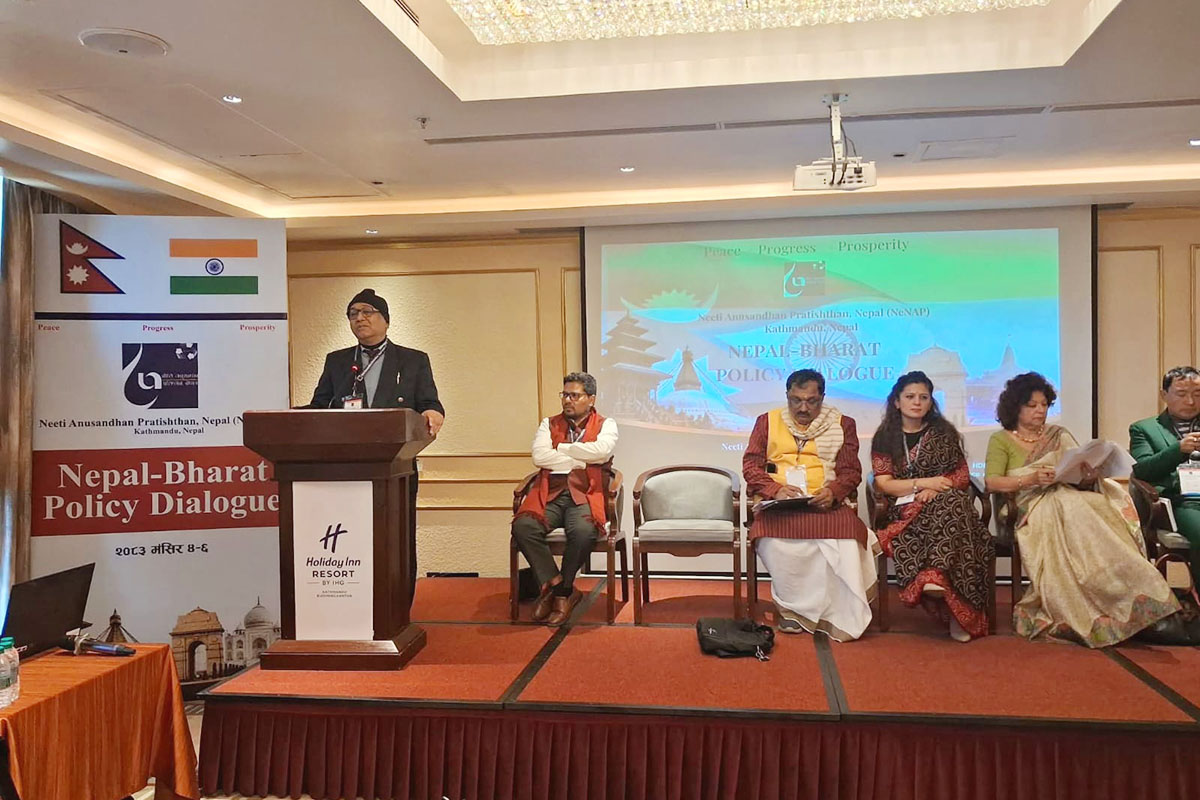
KATHMANDU: Cultural experts and academics from Nepal and India have called for a redefinition of bilateral cultural relations. They said future cooperation should reflect the changing aspirations and outlook of younger generations.
The call was made during a policy dialogue on Asian cultural heritage organised by Neeti Anusandhan Pratisthan, Nepal (NeNAP), in Kathmandu on Sunday.
Speaking at the event themed 'Nepa-Bharat Policy Dialogue', representatives from cultural and academic institutions of both countries said Nepal and India should move beyond their historical relationship and develop policies suited to contemporary realities.
Rami Niranjan Desai of the India Foundation said the cultural relationship between Nepal and India needed to be redefined in view of the changing expectations of younger generations. She said policies should be adjusted to keep pace with these changes.
Professor Madhuri Sukhija of India called for institutionalising cultural, educational and sporting ties between the two countries. She proposed joint academic programmes, saying existing cooperation in education and sports had helped strengthen bilateral relations.
Sukhija, who also heads the Indian Council for Cultural Relations (ICCR) at Kathmandu University, said rapid technological advancement had created a need for new policies to deepen connections between younger generations.
"Heritage alone is not enough in changing times; we need new policies to strengthen our relationship," she said.
Professor Sarup Prasad Ghosh, director of India's Maulana Abdul Kalam Azad Institute of Asian Studies, said greater attention should be paid to employment and skills development among young people.
While noting that the Indian government had prioritised skill enhancement, he said brain drain and migration remained growing challenges and called for policy interventions to address social issues affecting the younger generation.
Anand Kumar Srivastava, director of India's Vidyan Ganga Basin Foundation of Research and Sustainable Policy, said Nepal and India should make better use of their demographic advantage, with young people accounting for more than 40% of their populations.
He said youth migration and brain drain were common challenges and that joint efforts were needed to address them.
According to Srivastava, political stability in Nepal had created a favourable environment for closer cooperation with India. He also suggested that Nepal could expand the market for its organic products in India, creating opportunities for young entrepreneurs.
Nepali researcher Ashok Rai Pyasi said it was important to familiarise young people with their traditions and cultural roots, noting that cultural heritage is transmitted from one generation to the next.
He also suggested that Nepal and India could collaborate to help young people develop creative abilities and professional skills.
Professor Srinivasa Varakhedi of India's Central Sanskrit University stressed the importance of preserving the authenticity of cultures and traditions that originated in Nepal and India. He said these traditions remained alive and continued to enrich the wider Asian region.