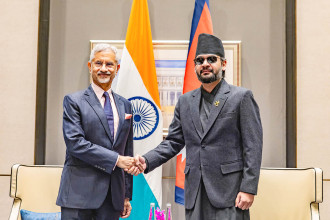
FNCCI urges greater Indian investment to strengthen Nepal-India economic ties

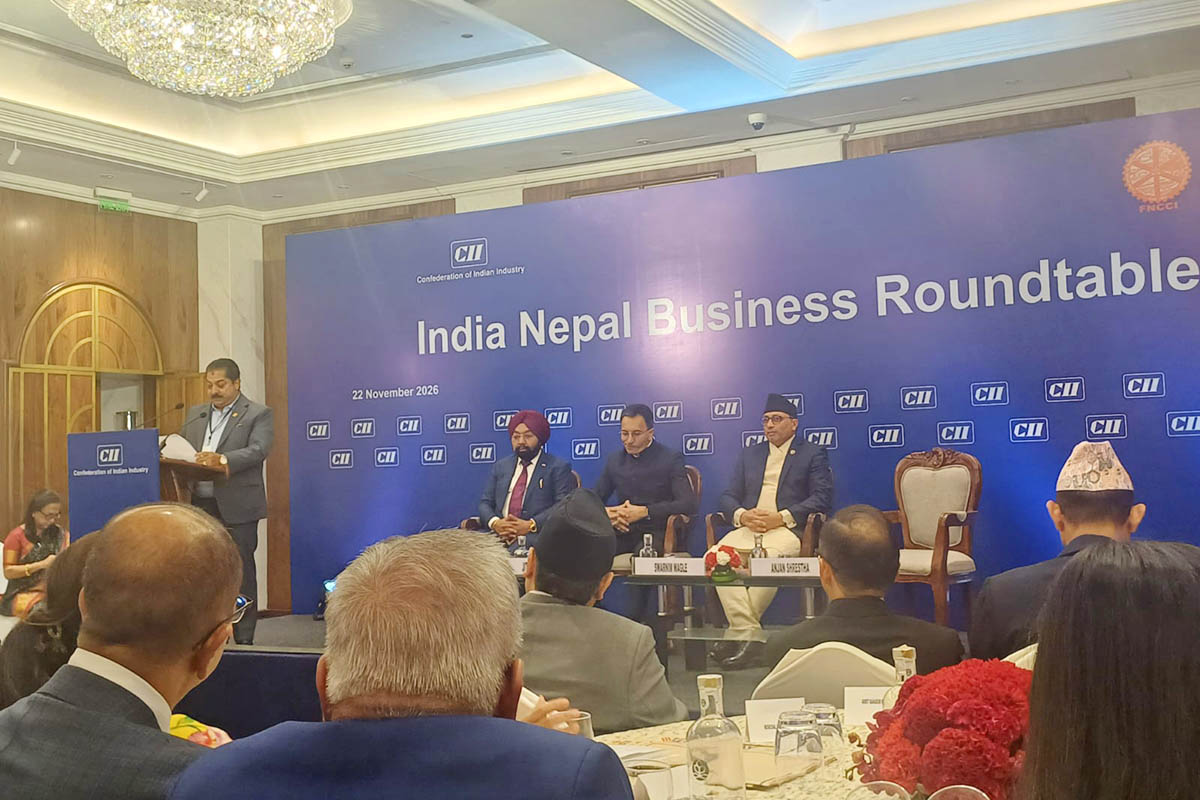
KATHMANDU: Nepal-India economic ties should be elevated through greater trade, investment and economic cooperation, Federation of Nepalese Chambers of Commerce and Industry (FNCCI) President Anjan Shrestha said. He urged Indian investors to seize investment opportunities in Nepal.
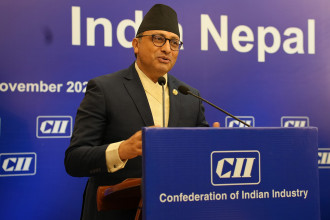
Speaking at the India Nepal Business Roundtable in New Delhi on Sunday, Shrestha said Nepal was open to investment and called for greater participation by Indian businesses through investment, joint ventures and commercial collaboration. The programme was jointly organised by FNCCI and the Confederation of Indian Industry (CII) during Prime Minister Balendra Shah's State visit to India.
Shrestha said India is Nepal's largest trading partner and a major source of foreign investment. Bilateral trade reached about $9.4 billion last year, while more than 80% of Nepal's exports go to India. Indian investment accounts for around one-third of Nepal's total foreign direct investment, he added.
Shrestha said Nepal earned Rs 29 billion last year from electricity exports to India and Bangladesh, with revenue rising 68% from the previous year.
"Despite such close economic ties, Indian private sector investment in Nepal has not been able to come in as expected. The government has moved forward with policy and legal reforms to improve the investment environment in Nepal. Provisions for automatic approval in 102 industries for foreign investment and a one-stop service centre have been put into operation. Likewise, the amendment process for approximately 500 clauses across 59 Acts has been moved forward. Therefore, we invite you all for investment," he said.
Shrestha said cooperation in trade, transit, connectivity, infrastructure, energy, investment and technology was essential to strengthen the Nepal-India economic partnership.
He called for broader market access for Nepali products in India, mutual recognition of quality certification bodies, effective use of Indian ports and railway services, and the development of Bhairahawa, Nepalgunj and Dodhara-Chandani as commercial and logistics hubs.
He also proposed expanding the Ayodhya-Janakpur railway service, railway connectivity up to border check posts, additional flights to Bhairahawa and Pokhara, and wider use of digital payment systems. He stressed the importance of public-private partnerships in developing expressways, airports, industrial parks and urban infrastructure.
Highlighting Nepal's hydropower potential of more than 40,000 megawatts, Shrestha said the agreement between Nepal and India to trade 10,000 megawatts of electricity over the next decade should be implemented. He also sought greater Indian investment in tourism, agro-processing, pharmaceuticals, cement and information technology, alongside technology transfer and capacity development through joint investments.
Shrestha said a secure and efficient border management system was crucial to expanding trade and investment. He added that cargo tracking, sealing and timely customs clearance should be ensured, while the government's Private Investment Protection and Promotion Strategy would provide policy stability and protection for investments.
The FNCCI president also raised concerns over challenges faced by Nepali industries in the Indian market, particularly relating to jute, steel and Bureau of Indian Standards (BIS) certification.
He said India's anti-dumping duty on Nepali jute products and a proposed countervailing duty could affect thousands of farmers and workers in eastern Nepal. He also noted that Nepali steel exports to India fell by more than 60% in the last fiscal year after India imposed a safeguard duty on Nepali steel products.
"I would like to thank India as the BIS certification process is gradually becoming easier. However, delays in certificate renewal and complexities regarding certification of raw materials remain. To resolve these issues, I propose forming a joint task force on trade remedies and quality standards between FNCCI and CII to submit common recommendations to the governments of both countries," he said.
Shrestha said the growth of Nepali industries would create additional markets for Indian industries, as Nepal imports a large volume of goods from India. He noted that India aims to become a developed nation by 2047, while Nepal has set goals of building a $100 billion economy and raising per capita income to $3,000 within the next five to seven years. He said cooperation between the private sectors of both countries was essential to achieving those goals.
Likewise, Finance Minister Dr Swarnim Wagle also urged Indian investors to invest in Nepal and said the government would undertake necessary reforms to support investment. He said legal reforms were being simplified and encouraged existing investors to expand their investments. He added that the government was taking measures to ensure investment security and facilitate the repatriation of profits.
India's Union Minister of State for Commerce and Industry Jitin Prasada said India remained supportive of Nepal's economic development and noted investment potential across multiple sectors in Nepal.
READ ALSO: