FIU-Nepal publishes report analysing Hundi trends, methods, risks

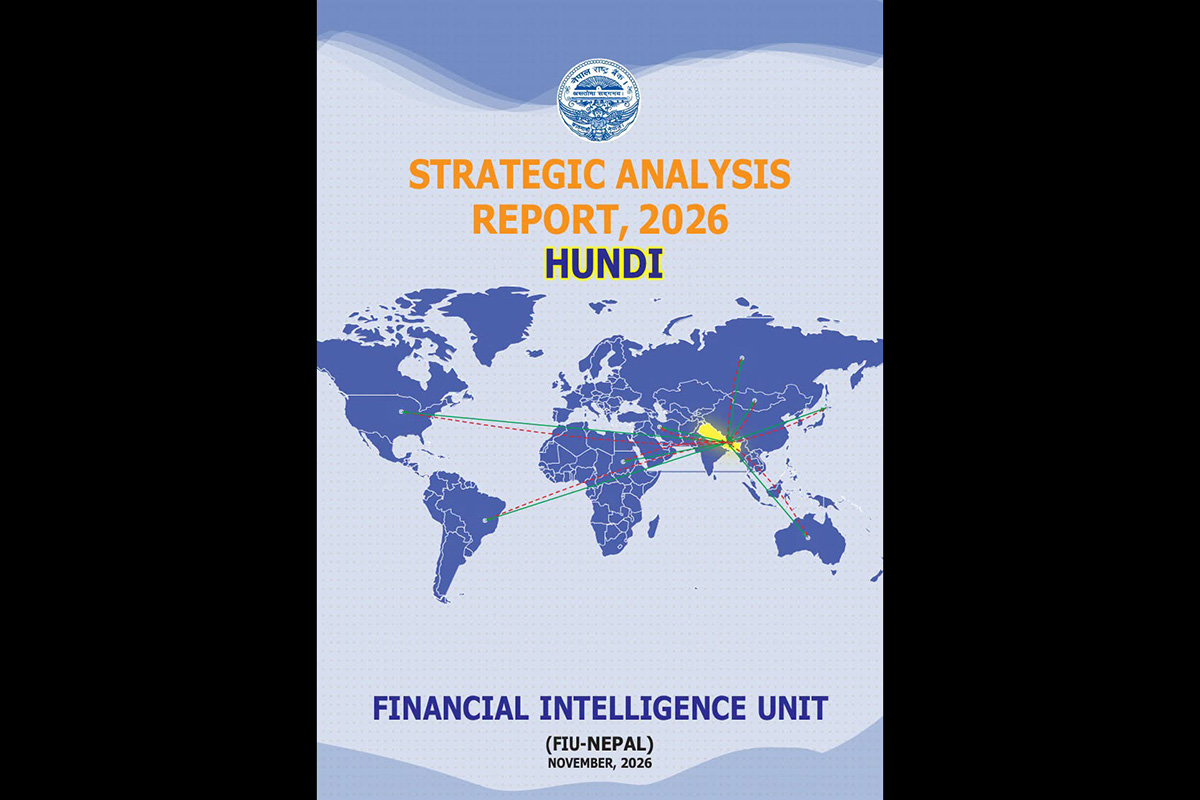
KATHMANDU: The Financial Intelligence Unit (FIU-Nepal) under Nepal Rastra Bank (NRB) on Friday published a report titled 'Strategic Analysis Report, 2026: Hundi'. The report analyses trends, typologies and methods related to Hundi transactions.
According to a press note issued by NRB, the report is not focused on any specific case, entity or individual but on identifying and analysing trends, typologies and methods associated with Hundi transactions. The central bank said the report aims to enhance understanding of the risks of money laundering and financial investment in terrorist acts linked to Hundi transactions, update red-flag indicators related to such transactions, and recommend measures for relevant agencies and stakeholders to control Hundi activities.
The report analyses Suspicious Transaction Reports and Suspicious Activity Reports (STRs/SARs) related to Hundi received through FIU-Nepal's goAML system from January 2, 2025, to July 2026. The analysis found that people aged 25 to 44, retail traders and sub-agents involved in remittance transactions were more frequently associated with Hundi-related transactions.
It also provides recommendations for reporting entities, regulators and supervisors, law enforcement agencies, and policy-making and coordination bodies. The recommendations include improving the quality of STRs/SARs, strengthening risk-based supervision, enhancing inter-agency coordination, building technical capacity and expanding public awareness.
The report identifies several methods linked to Hundi transactions in Nepal, including the use of mule accounts, splitting cash deposits to avoid reporting thresholds, using legal persons, cryptocurrencies, cash movement for payments, remittance sub-agents and digital technologies.
According to the press note, studies conducted by various international organisations have identified risks of laundering assets acquired through criminal activities such as human trafficking, drug trafficking, corruption and tax evasion through Hundi transactions, alongside financial investment in terrorist acts.
It added that while Hundi transactions have traditionally been settled through bilateral offsetting and settlement through value, the use of formal bank-based channels and digital-based channels for settlement has increased in recent years.