
Private sector urges government to defer Nepal's LDC graduation

-1764566061.JPG)
KATHMANDU: Nepal’s private sector and government bodies are split over the country’s graduation from a Least Developed Country (LDC) to a developing country in November 2026. The private sector is asking the government to defer the move, warning that the economy is not prepared for the shocks that would follow graduation.
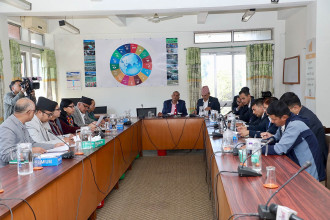
Business leaders, economists and policymakers raised their concerns at a series of policy dialogues organised by South Asia Watch on Trade, Economics and Environment (SAWTEE) in Kathmandu on Friday, citing that the loss of LDC‑specific international support could hit key industries at a vulnerable moment.
Participants observed that Nepal's production capacity, competitiveness and investor confidence are still low, although graduation is a significant milestone representing increases in human assets and decreased economic vulnerability. The private sector emphasised that micro, small and medium‑sized businesses are struggling as a result of recent internal disturbances, such as slowing growth, Gen-Z protests, excess liquidity and protracted post‑pandemic recovery.
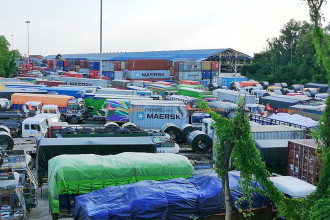
Panellists from private sector said that goods reliant on imported raw materials, like soya beans and palm oil, continue to skew Nepal's export basket. Traditional exports that already struggle with high logistics costs and infrastructure obstacles, such as black cardamom, carpets, clothing and pashmina, are worried about losing concessional financing, duty‑free and quota‑free facilities, and preferential market access.
-1764566062.JPG "SAWTEE-(13)-1764566062.JPG")
-1764566061.JPG "SAWTEE-(10)-1764566061.JPG")
Industry leaders, including Federation of Nepalese Chambers of Commerce and Industry (FNCCI) Senior Vice President Anjan Kumar Shrestha and Confederation of Nepalese Industries (CNI) President Birendra Raj Pandey, argued that Nepal needs a meaningful transition period similar to what Bangladesh is exploring. “Micro, small and medium‑sized enterprises (MSMEs) are already struggling to recover from Covid19 pandemic, have been under additional pressure due to recent protests and slowing economic growth, and investors' confidence remains low, and the liquidity in the central bank tells everything about this,” FNCCI Senior Vice President Shrestha stated.
They urged the government to request at least a three‑year deferral or extended transition window to restore investor confidence, implement overdue reforms and strengthen export resilience. They highlighted that the private sector contributes over 80% of GDP and employment, stating that confidence crisis in business would affect the whole economy.
Garment Association Nepal President Pashupati Dev Pandey said the question is not when to decide to graduate but how ready the country is. “This is a little challenging at the moment when even the government is considering suspending existing support, such as export cash incentives,” he added.
Nepal Carpet Manufacturers and Exporters Association President Balram Gurung said, “Nepal needs to improve its competitiveness because it lags behind other nations that export carpet.”
Exporters and manufacturers said production costs in Nepal remain up to 30% higher than competitors in India and Bangladesh due to high transport expenses, inadequate labs, road blockages, unreliable energy and outdated technologies. Without improvements in quality, productivity and technological upgrading, several leaders, warned that Nepal’s products may lose their foothold in markets such as Europe and the US.
Government representatives acknowledged the multiple shocks Nepal has faced since the graduation decision — earthquakes, the Covid19 pandemic and recent domestic unrest — but emphasised the need to prepare rather than retreat.
-1764566061.JPG "SAWTEE-(12)-1764566061.JPG")
-1764566060.JPG "SAWTEE-(1)-1764566060.JPG")
-1764566060.JPG "SAWTEE-(3)-1764566060.JPG")
-1764566061.JPG "SAWTEE-(4)-1764566061.JPG")
Darshana Shrestha of the Federation of Woman Entrepreneurs’ Associations of Nepal (FWEAN) emphasised that while graduation is a source of pride for the nation, the private sector is concerned about whether the loss of preferential market access will raise the price of Nepali goods, which are already high because of low competition.
Experts at the event offered mixed views. Some economists argued that both the government and private sector have failed to diversify into higher‑value industries and new opportunities suited to Nepal’s geography and resources, and cautioned businesses against dwelling solely on past setbacks, urging greater innovation and focus on emerging sectors such as ICT. Others suggested that while deferral may not be necessary, extending the post‑graduation transition period could help smooth the shift.
Underscoring the need to increase productivity and ensure scalability across sectors, Dr Kalpana Khanal, Senior Research Fellow at the Policy Research Institute, said that Nepal still struggles with an investment gap and surplus liquidity. She further underlined that Nepal must aggressively negotiate with trading partners and seek to extend its trade regimes to lessen the effects of LDC graduation.
Concluding the discussion, SAWTEE panellists Madhu Kumar Marasini, Senior Fellow at SAWTEE, and Rabi Shankar Sainju underscored the need for a clear national roadmap, stronger stakeholder coordination, diversification of products and markets, and targeted measures to enhance the competitiveness of SMEs.
Participants agreed that although graduation brings pride and long‑term benefits, Nepal must urgently address structural constraints to ensure that industries are not left unprotected during the transition.

-1788413020.jpg)