
Finance minister urges collective effort to remove Nepal from FATF grey list

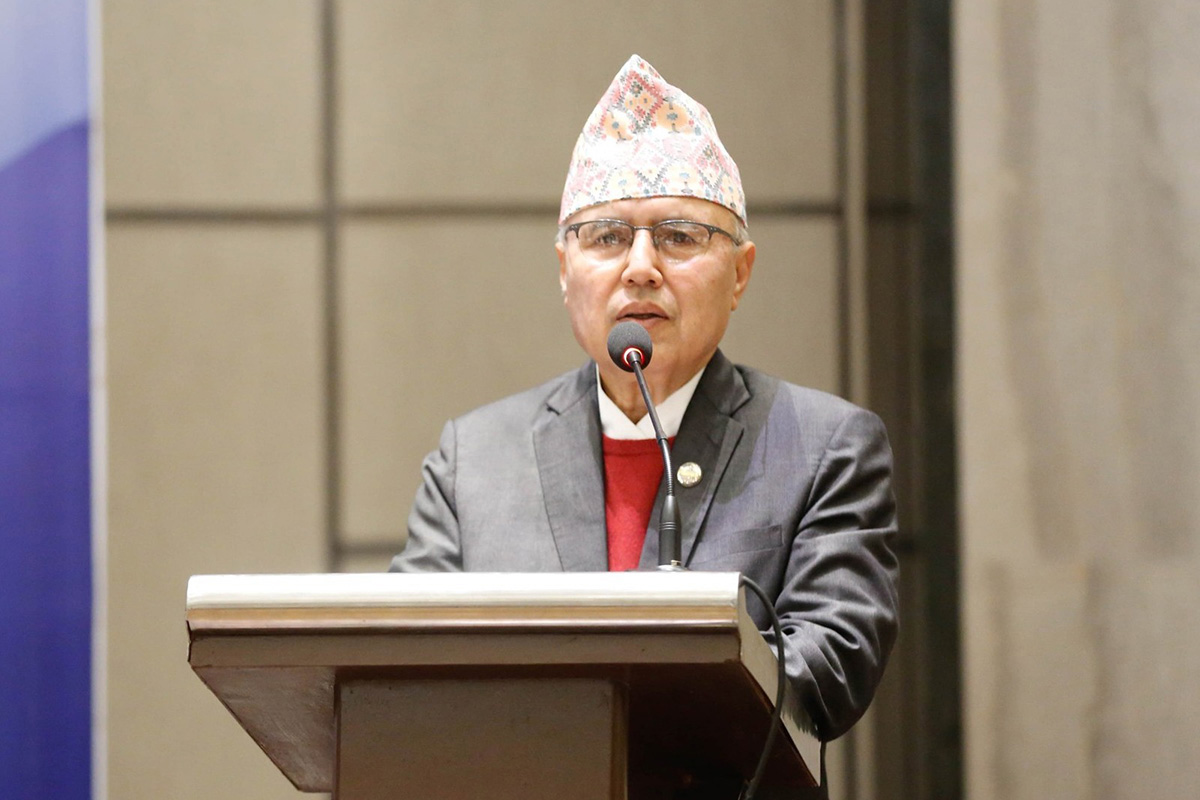
KATHMANDU: Finance Minister Rameshore Prasad Khanal has urged all stakeholders and authorities to work together to remove Nepal from Financial Action Task Force (FATF) Grey List for money‑laundering.
Speaking at a programme to mark National Anti‑Money Laundering Day-2082 BS, themed 'Money Laundering Prevention: Transparency and Fiscal Discipline', he said a solid foundation must be created to secure Nepal’s removal from the Grey List within a year by completing required reform measures.
He added that the government’s economic reforms are not driven by international pressure but aim to build corruption‑free institutions, promote transparency and good governance, and strengthen the national economy. He argued that weak confidence in Nepal’s financial system has reduced foreign investment and underlined the need for reforms to create an investment‑friendly environment.
Expressing hope that reforms would be completed by the end of 2026, the finance minister called for more effective investigation, prosecution and action in money‑laundering cases, with cases prepared on strong evidence and provisions for prompt seizure of property. He also raised concerns about transparency in the financial and capital markets and said a rule requiring corporate transactions above Rs 500,000 to use the banking system has been in effect since January 15. He added that the cash‑transaction ceiling will not be increased despite private sector concerns.
Meanwhile, Minister for Law, Justice and Parliamentary Affairs Anil Kumar Sinha said the situation is an opportunity for self‑reflection and reform. He said an action plan has been formulated to remove Nepal from the Grey List within a year and called for its effective implementation through collective effort.
Furthermore, Attorney General Sabita Bhandari said Nepal has made a clear international commitment to prevent money‑laundering and that priority has been given to relevant laws. She urged effective implementation of a risk‑based monitoring and regulation system in line with FATF standards and called for more effective, evidence‑based investigation and prosecution. She added that her office was undertaking the actions required of the Attorney General to secure removal from the Grey List.
Likewise, Nepal Rastra Bank (NRB) Deputy Governor Bam Bahadur Mishra warned that international financial institutions could tighten transactions with Nepal while it remains on the Grey List, potentially causing social and economic problems, travel restrictions for Nepali citizens and higher remittance costs. He said the international community would view Grey List status as a weakness in controlling financial crime and urged effective reforms.
In addition, Gajendra Kumar Thakur, Director‑General of Department of Money Laundering Investigation (DMLI), said eliminating money‑laundering is not the responsibility of a single agency and called for collective action. He said more than 50 government agencies and over 80,000 indicator organisations are involved and warned that terrorist activities and illegal transactions could account for 3 to 5% of GDP.
He added that Nepal’s economy remains largely cash‑based, that the information economy’s share is substantial, and that modern systems are poorly regulated. He highlighted shortages of skilled personnel and technology, lax implementation of existing laws, and higher money‑laundering risk in the real‑estate sector and in transactions of silver and gold. He called for legal reforms, strengthened investigative capacity, expanded international coordination, an integrated information‑partnership system, monitoring of the digital economy and greater use of technology to combat crime and cybercrime.
(With inputs from RSS)


-1789136854.jpg)