India eyes $200bn in data centre investments as it ramps up its AI hub ambitions

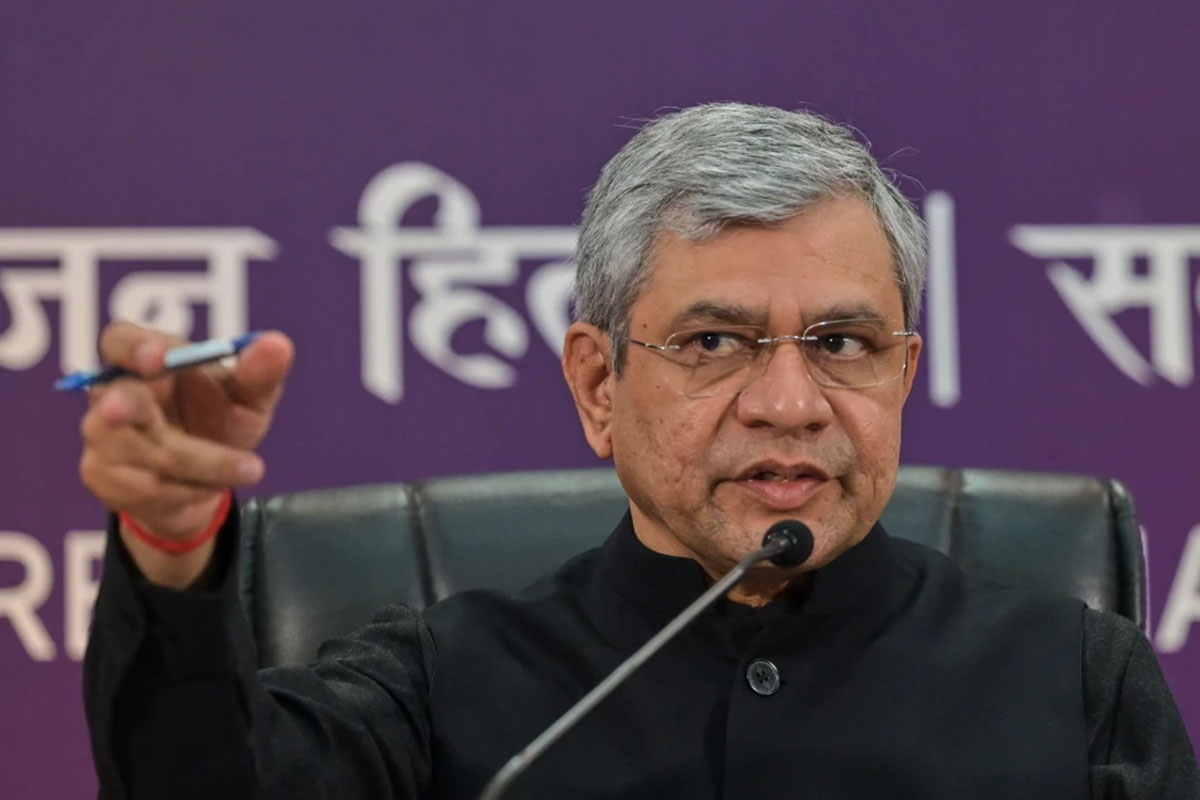
NEW DELHI: India is hoping to garner as much as $200 billion in investments for data centres over the next few years as it scales up its ambitions to become a hub for artificial intelligence, the country’s minister for electronics and information technology said on Tuesday.
The investments underscore the reliance of tech titans on India as a key technology and talent base in the global race for AI dominance. For New Delhi, they bring in high-value infrastructure and foreign capital at a scale that can accelerate its digital transformation ambitions.
The push comes as governments worldwide race to harness AI's economic potential while grappling with job disruption, regulation and the growing concentration of computing power in a few rich countries and companies.
“Today, India is being seen as a trusted AI partner to the Global South nations seeking open, affordable and development-focused solutions,” Ashwini Vaishnaw told The Associated Press in an email interview, as New Delhi hosts a major AI Impact Summit this week, drawing participation from at least 20 global leaders and a who’s who of the tech industry.

In October, Google announced a $15 billion investment plan in India over the next five years to establish its first artificial intelligence hub in the South Asian country. Microsoft followed two months later with its largest-ever Asia investment, a $17.5 billion commitment to advance India’s cloud and artificial intelligence infrastructure over the next four years.
Amazon has also committed $35 billion in investment in India by 2030 to expand its business, specifically targeting AI-driven digitisation. The cumulative investments are part of $200 billion in investments that are in the pipeline, and New Delhi hopes will flow in.
Vaishnaw said India’s pitch is that artificial intelligence must deliver measurable impacts at scale rather than remain an elite technology.
“A trusted AI ecosystem will attract investment and accelerate adoption,” he said, adding that a central pillar of India’s strategy to capitalise on the use of AI is building infrastructure.
The government recently announced a long-term tax holiday for data centres as it hopes to provide policy certainty and attract global capital.
Vaishnaw said the government has already operationalised a shared computing facility with more than 38,000 graphics processing units, or GPUs, allowing startups, researchers and public institutions to access high-end computing without high upfront costs.
“AI must not become exclusive. It must remain widely accessible,” he said.
Alongside the infrastructure drive, India is backing the development of sovereign foundational AI models trained on Indian languages and local contexts. Some of these models meet global benchmarks and, in certain tasks, rival widely used large language models, Vaishnaw said.
India is also seeking a larger role in shaping how AI is built and deployed globally as the country doesn’t see itself strictly as a “rule maker or rule taker,” according to Vaishnaw, but an active participant in setting practical, workable norms while expanding its AI services footprint worldwide.
“India will become a major provider of AI services in the near future,” he said, describing a strategy that is “self-reliant yet globally integrated” across applications, models, chips, infrastructure and energy.
Investor confidence is another focus area for New Delhi as global tech funding becomes more cautious.
Vaishnaw said the technology’s push is backed by execution, pointing to the Indian government's AI Mission program which emphasises sector-specific solutions through public-private partnerships.
The government is also betting on reskilling its workforce as global concerns grow that AI could disrupt white-collar and technology jobs. New Delhi is scaling AI education across universities, skilling programs and online platforms to build a large AI-ready talent pool, the minister said.
Widespread 5G connectivity across the country and a young, tech-savvy population are expected to help with the adoption of AI at a faster pace, he added.
Balancing innovation with safeguards remains a challenge, though, as AI expands into sensitive sectors such as governance, health care and finance.
Vaishnaw outlined a fourfold strategy that includes implementable global frameworks, trusted AI infrastructure, regulation of harmful misinformation and stronger human and technical capacity to hedge the impact.
“The future of AI should be inclusive, distributed and development-focused,” he said.
By RSS/AP