
Sapana Pradhan Malla assumes office as acting chief justice, becomes second woman to lead Nepal's judiciary

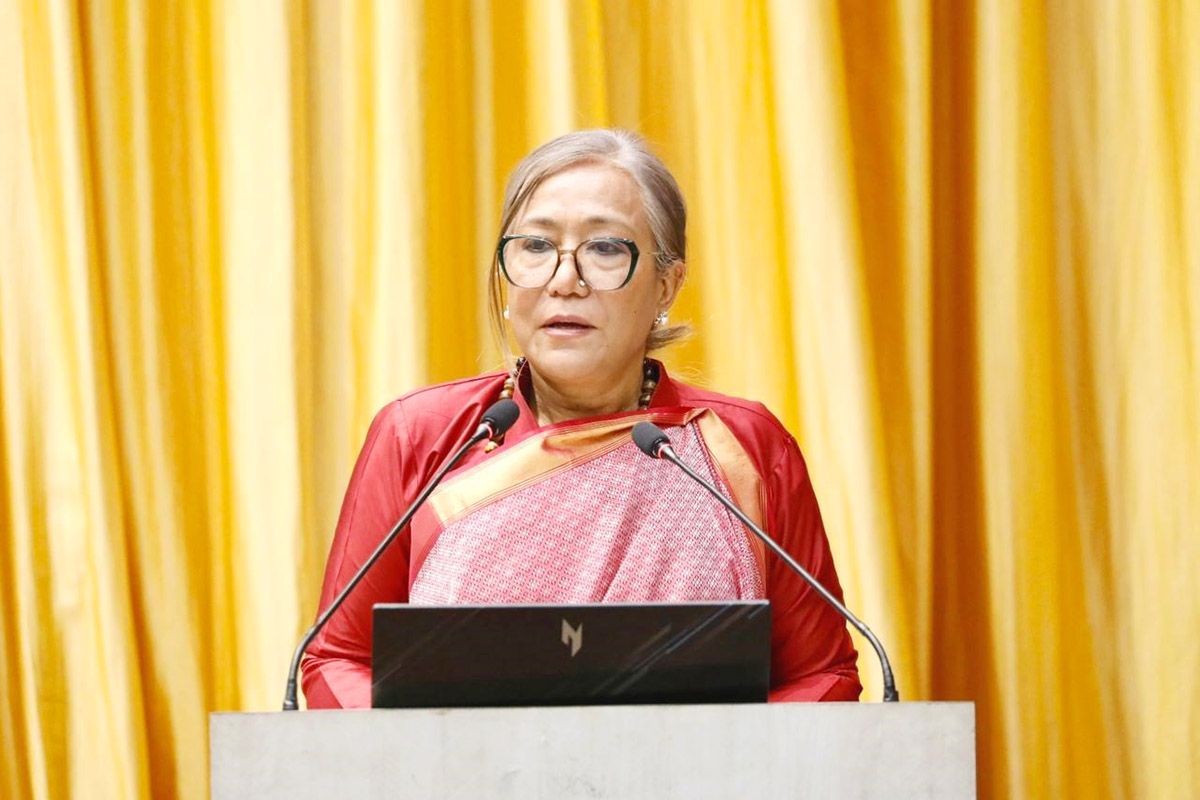
KATHMANDU: Justice Sapana Pradhan Malla has assumed office as Acting Chief Justice of the Supreme Court today. She is the second woman in the country’s history to head the nation’s highest judicial institution.
Justice Malla, the senior-most Justice of the Supreme Court, stepped into the role after Chief Justice Prakash Man Singh Raut retired on Tuesday, reaching the age limit of 65. In line with Article 129(6) of the Constitution, the senior-most Supreme Court Justice automatically assumes the position of Acting Chief Justice when the post falls vacant. Malla follows Justice Sushila Karki, who was the first woman to serve as Chief Justice of Nepal.
Her appointment comes at a time of institutional transition. Earlier, on March 10, the Judicial Council recommended six Supreme Court justices to the Constitutional Council as potential candidates for the position of Chief Justice. The list included senior-most Justice Malla alongside Justices Kumar Regmi, Hari Phuyal, Dr Manoj Kumar Sharma, Dr Nahakul Subedi and Til Prasad Shrestha.
According to constitutional provisions, a candidate must have served at least three years as a Supreme Court justice and be below the age of 65 to qualify for appointment as Chief Justice. The Constitutional Council is also required to recommend a new Chief Justice at least one month before the position becomes vacant. However, the recommendation process has been delayed by the dissolution of the House of Representatives on September 12, 2025; the Council has been unable to convene since then. With key positions such as Speaker, Deputy Speaker and Leader of the Opposition remaining vacant, the Council has not been able to take forward the nomination process.
The President appoints the Chief Justice only after parliamentary endorsement, following a hearing by the Parliamentary Hearing Special Committee. With the new parliamentary session set to begin this coming Thursday after a recent election and the process of electing the Speaker and Deputy Speaker still pending, it is expected that the formation of the hearing committee and consequently the appointment process of the Chief Justice may take several more weeks.
Malla was born on November 15, 1963, in Thapathali, Kathmandu, to Govinda Bahadur Pradhan and Radha Pradhan. She was appointed a Justice of the Supreme Court on August 1, 2016. She earned her Bachelor’s degree in Law from Nepal Law Campus, Tribhuvan University, followed by a Master’s degree in Law from Delhi University, India, and later pursued a Master’s degree in Public Administration at Harvard University in the United States.
Acting Chief Justice Malla began her active legal career 37 years ago and has two years’ teaching experience at Nepal Law Campus. She was conferred the title of Senior Advocate around 13 years ago. She has published more than a dozen research articles and other writings, nationally and internationally, on topics including protection of women’s rights, prevention of violence against women, social justice, investment in women and women’s property rights. Her initiatives and verdicts at the Supreme Court have established precedents with long-term impact on gender justice, the control of gender-based and domestic violence and constitutional matters.
Before joining the Supreme Court, she worked extensively on law, justice and human rights issues through involvement with various international organisations. She served as a member of the first Constituent Assembly from 2008 to 2013 and was an expert member of the UN Committee against Torture (CAT). She has also served as coordinator of the Women Judges’ Society and as General Secretary of the Global Judicial Institute on the Environment. As Chair of SAARC Law Nepal Study, she contributed to the formulation of plans and action programmes under the government’s 10th periodic plan and played a key role in legal reform efforts, contributing to major legislation such as the Human Trafficking and Smuggling (Control) Bill, National Commission Bill, Inheritance Rights Bill, Foreign Employment Bill, Law against Sexual Exploitation and the Gender Equality Bill.
During her tenure at the Supreme Court, she has led various committees, including the management and publication committee. If promoted to Chief Justice, she would retire on November 15, 2028.
By RSS



-1791464816.jpeg)