Processing indigenous herbs domestically and branding them boost Nepal's economy, experts say

KATHMANDU: Nepal can boost its economy by processing indigenous herbs domestically and branding them for export, experts say.
The Department of Plant Resources (DPR) has identified 819 herb species in the country, of which 33 have been prioritised for economic development. Around 120 species are being cultivated, and fragrance oil could be produced from more than 200 species.
The Trade and Export Promotion Centre (TEPC) reported that herbs worth Rs 2.4 billion were exported in the last fiscal year 2024/25, while on average, herbs worth Rs 1.24 billion are exported annually.
DPR Director General Sanjeev Kumar Rai said around 90% of herbs are exported in raw form. He said the herbs sector could drive economic growth through structural strengthening, innovative technology, research and public‑private collaboration, and that producing medicines from processed herbs within the country would build a strong foundation for prosperity.
Plant expert Nabin Joshi said the country could secure substantial income through the processing and branding of herbs. Kamlesh Kumar Agrawal, president of Nepal Chamber of Commerce (NCC), said the herbs sector could form the basis of industrial production and export and that herb exports could make the country prosperous.
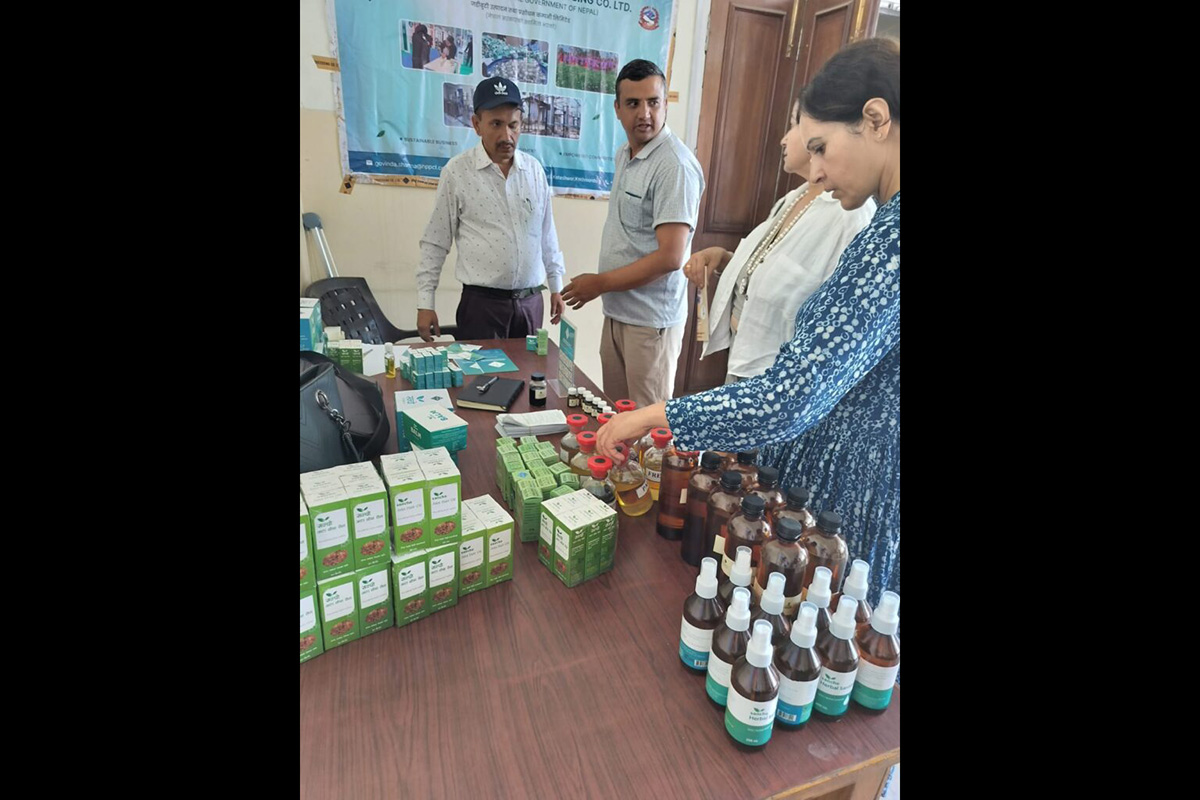
The Herbs Production and Processing Company already produces palmarosa, lemongrass, citronella and mentha, and markets products including Sancho, Himalayan Massage Oil and Shilajit Paste.
Federation of Community Forestry Users Nepal (FECOFUN) Chairperson Thakur Bhandari said the herbs sector would make an incomparable contribution to economic development if it received grants, facilitation and market management.
Plant specialists and business leaders said targeted investment in quality control, branding and domestic processing could turn Nepal’s biodiversity into a more valuable export industry.
(With input from RSS)