Vision for Nepal’s Economic Resilience


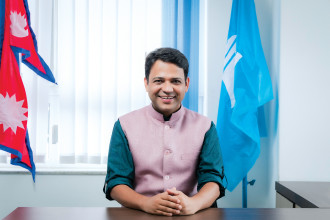
Kalpana Khanal, PhD, Senior Economist, Policy Research Institute
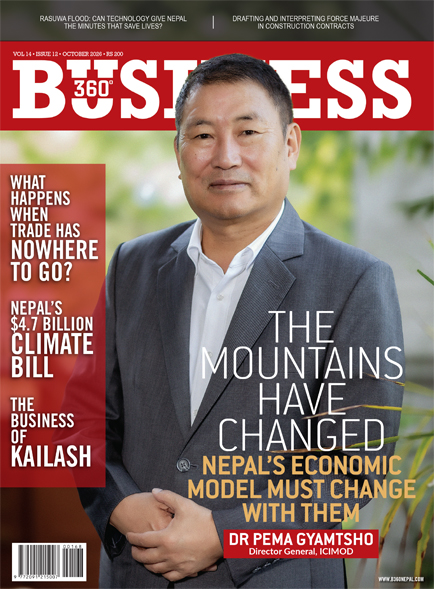
Dr Kalpana Khanal stands out as one of Nepal’s leading voices in economic policy and institutional reform. As a Senior Research Fellow and Head of the Centre for Economic and Infrastructure Policy Research at the Policy Research Institute, she plays a central role in shaping research that informs national policy decisions. With a strong academic foundation and a PhD focused on Nepal’s exchange rate policy, her work sits at the intersection of public policy, financial macroeconomics, and institutional development, areas that are critical to Nepal’s long-term economic stability.
Over the years, Dr Khanal has built a reputation for combining academic rigour with practical policy insight. Her research spans a wide range of issues, from structural economic reforms and remittance dynamics to public finance and infrastructure performance. She has consistently emphasised the importance of strategic investment, stronger institutions and human capital development as key drivers of Nepal’s growth. Before returning to Nepal, she spent nearly a decade teaching economics and finance at Nichols College in the United States, an experience that continues to shape her analytical approach and global perspective.
Beyond academia and policy circles, Dr Khanal actively contributes to public discourse through research publications, media engagement and policy dialogues. Her work reflects a deep engagement with Nepal’s evolving economic landscape, including debates around globalisation, migration and competitiveness. In conversation with Business 360, Dr Khanal speaks about Nepal’s economic trajectory, the challenges of structural reform, the role of remittances and what the country must prioritise to achieve sustainable and inclusive growth. Excerpts:
Nepal is officially graduating from the LDC category this November. While this is a milestone, the private sector is terrified of losing preferential market access. Do you believe Nepal’s ‘graduation readiness’ is a reality, or are we sleepwalking into an export crisis?
Nepal’s graduation from the Least Developed Country (LDC) category is a significant achievement but evidence suggests that ‘graduation readiness’ is only partially a reality and carries real risks if mismanaged. While Nepal has met the formal criteria for graduation, its economic structure, particularly its export base, remains fragile and highly dependent on preferential market access. Key export sectors such as garments, carpets and handicrafts rely on duty-free, quota-free access and flexible rules of origin. The removal or tightening of these provisions, especially in major markets like the European Union and the United Kingdom, could erode competitiveness and lead to contraction in employment-intensive industries.
This concern is reinforced by Nepal’s relatively low export orientation. Exports account for only about 7%-8% of GDP, far below the average for landlocked developing countries. Moreover, post-graduation trade regimes will impose stricter conditions, including higher value-addition thresholds and compliance requirements under schemes such as GSP+. At the same time, recent domestic shocks ranging from political unrest to weakened investor confidence, have further strained export capacity.
In this context, Nepal should proceed with graduation only if it secures credible, written assurances from major trading partners on transitional market access and implements immediate domestic mitigation measures such as liquidity support for export oriented and employment generating small businesses.
However, it would be inaccurate to view graduation as inevitably leading to an export crisis. There are emerging opportunities such as favourable tariff differentials in certain markets, potential diversification into Information and Communication Technology (ICT) and energy exports, and the possibility of attracting investment through improved policy frameworks. The real issue is not graduation per se but whether Nepal can actively manage the transition. Without proactive trade diplomacy and domestic reforms, the country risks ‘sleepwalking’ into an export slowdown. With those provisions, graduation can instead serve as a platform for structural transformation and long-term resilience.
-1776590742.jpg)
You have noted that graduation increases value-addition thresholds to 40%. For a Nepali business owner, this sounds like a cost hike. How can we pivot this from a ‘regulatory burden’ to a ‘job creation’ opportunity?
The increase in value-addition thresholds from around 30% to 40% or higher may initially appear as a cost burden for Nepali businesses but it can be strategically reframed as an opportunity for industrial deepening and job creation. Higher value-addition requirements essentially encourage firms to produce more of their input domestically rather than relying on imports. This shift can stimulate the development of local supply chains, intermediate industries and backward linkages, thereby expanding domestic economic activity.
From an employment perspective, this transition has significant potential. Nepal’s export sector is a major source of job creation, particularly for youth and women. Increasing local value addition means more stages of production, such as processing, packaging, quality control and logistics, are carried out within Nepal. This can generate new employment opportunities across the value chain. For instance, in the garment and textile sector, stricter rules of origin could incentivise investments in domestic spinning, dyeing and finishing industries, which are currently underdeveloped.
Having said that, this transformation will not happen automatically. To convert a regulatory requirement into a growth opportunity, targeted policy support is essential. Key interventions should include improving access to working capital for small and medium enterprises (SMEs), providing temporary wage subsidies to ease the adjustment burden, and supporting firms in meeting new rules of origin requirements through technical assistance. Additionally, investments in infrastructure, energy reliability and skills development are also critical to reduce production costs and enhance productivity.
Ultimately, the shift toward higher value addition represents a transition from preference-based competitiveness to productivity-based competitiveness. For Nepali businesses, this means moving up the value chain, improving quality and building domestic capabilities. If supported by coherent policies and strong public-private coordination, what initially appears as a regulatory constraint can become a powerful driver of job creation, industrial upgrading and long-term export sustainability.
You have urged the government to proactively negotiate trade regimes. If you were the lead negotiator for the Ministry of Commerce right now, what is the single most important clause you would fight for to protect Nepali micro, small and medium enterprises?
If I were leading trade negotiations for Nepal today, my top priority would be securing a time-bound, legally binding extension of LDC-equivalent preferential market access especially through relaxed rules of origin and continued tariff benefits for key exports. The core issue is not just tariffs but the survival of Nepal’s export ecosystem during a vulnerable transition period after LDC graduation. The most immediate risk comes from losing preferential access in major markets such as the EU, UK and Turkey, where even modest tariff increases are compounded by stricter compliance requirements. In particular, ‘double transformation’ rules for textiles and garments [(yarn to fabric to clothing) compared with the current single transformation (fabric to clothing)] could make it practically impossible for many Nepali exporters to qualify for preferences under schemes like GSP+, effectively shutting them out despite nominal access.
This challenge is especially acute for micro, small and medium enterprises (MSMEs), which dominate Nepal’s export sector and have limited capacity to absorb higher costs or adapt quickly to new regulatory standards. Many firms are already at risk of losing market share and jobs, worsened by low awareness of upcoming changes. To mitigate this, Nepal should negotiate a transitional derogation clause, lasting around five to seven years, that preserves near, Every Thing But Arms (EBA), level access while easing rules of origin and tariff conditions for priority sectors. Precedents such as the UK’s flexibility on origin rules demonstrate that such arrangements are feasible. This transitional buffer would allow firms time to upgrade production, strengthen domestic value chains and gradually meet stricter requirements.
Ultimately, this is not just a trade provision but a form of economic and social protection, preventing premature displacement of MSMEs and safeguarding employment while Nepal builds long-term competitiveness.
Nepal currently has record-high foreign exchange reserves (approaching $22 billion), yet domestic investment is stagnant. Is this ‘idle liquidity’ a sign of business fear regarding geopolitical instability, or a failure of our monetary policy corridor?
Nepal’s paradox of record-high foreign exchange reserves alongside stagnant domestic investment is best understood not as a single-policy failure but as a convergence of structural, behavioural and policy constraints. At one level, the accumulation of foreign exchange reserves, driven largely by remittance inflows, reflects external sector strength but domestic economic weakness. Remittances have been fuelling imports and consumption rather than productive investment, creating a structural imbalance where liquidity exists in the system but is not channelled into capital formation. This explains why reserves can rise even as industrial activity and private investment stagnate.
From a monetary policy perspective, financial sector depth alone does not guarantee real-sector growth. The transmission mechanism, from liquidity to credit to investment, is often weak in developing economies. In Nepal’s case, banks may be liquid, but credit demand is subdued, and financial institutions tend to prefer low-risk lending or government securities rather than financing new enterprises. This reflects not just a monetary corridor issue but a broader risk-averse financial ecosystem.
However, reducing the problem to ‘idle liquidity’ caused by central bank policy would be incomplete. The more compelling explanation lies in business sentiment and structural uncertainty. Investment decisions are shaped not only by interest rates but by policy stability, institutional credibility and expectations of future returns. In an environment marked by political instability, regulatory unpredictability and recent economic shocks, investors often adopt a ‘wait-and-see’ approach. This leads to a situation where liquidity accumulates in the banking system but entrepreneurial risk-taking remains suppressed.
Moreover, Nepal’s structural constraints, limited industrial base, high cost of doing business, and weak project pipeline further dampen investment absorption capacity. Historical patterns show that investors in Nepal often prefer safe, liquid assets over long-term productive investments, particularly when uncertainty is high. This behaviour reinforces the cycle of idle liquidity. In this sense, the current situation is less a failure of the monetary policy corridor and more a signal of deeper economic problem. The central bank can influence liquidity conditions but it cannot, on its own, create investment opportunities or restore business confidence. The bottleneck lies in the intersection of weak investment climate, risk perception and structural inefficiencies. Unlocking this liquidity will require more than interest rate adjustments. It demands credible policy reforms, political stability, improved project governance, and a clear pipeline of bankable investment projects. Until then, high reserves will remain a cushion for external stability but not a driver of domestic economic transformation.
With the March 2026 elections just over and global powers (US, India, China) watching closely, how can Nepal protect its economic policies from becoming ‘political footballs’ for regional influencers?
In the aftermath of the March 2026 elections, the central challenge for Nepal is not merely geopolitical balancing but institutional insulation ensuring that economic policy is guided by long-term national priorities rather than short-term political bargaining or external influence. Nepal’s vulnerability is less about geography and more about governance coherence and policy credibility. Nepal’s strategic location between major powers, India and China, and engagement with the United States is not inherently a liability. Rather, it becomes one when domestic institutions are weak, fragmented or inconsistent. Frequent government changes and policy reversals create openings for external actors to shape outcomes, often by aligning with shifting domestic coalitions. In such a context, economic policies whether related to infrastructure, trade or investment risk becoming ‘political footballs’, subject to renegotiation with every change in leadership.
Public discourse in Nepal often oscillates between suspicion of foreign influence and dependence on external support. This tension can be exploited politically, with economic agreements framed not on their merits but on perceived geopolitical alignments. Similarly, Nepal’s challenge is not choosing between powers but failing to articulate and defend a coherent national interest, particularly in sectors like water resources and infrastructure where external financing is prominent.
-1776590809.jpg)
For a clear pathway for Nepal, first, it must depoliticise core economic institutions including investment boards, regulatory agencies and major infrastructure authorities ensuring they operate with professional autonomy. Second, it should adopt transparent and competitive processes for all major economic engagements, whether with India, China, the United States or others, thereby reducing the perception and reality of favouritism. Third, Nepal needs to build broad domestic consensus on strategic sectors such as energy, trade corridors and digital infrastructure so that these are not renegotiated with every electoral shift. Ultimately, Nepal cannot eliminate geopolitical interest but it can discipline how that interest interacts with its economy. The goal is not to avoid engagement with global powers but to engage on Nepal’s own terms, through institutions and policies that are stable, predictable and nationally owned. When economic governance is credible and coherent, external influence becomes a factor to manage not a force that dictates outcomes.
How should Nepal leverage its hydropower surplus as a geopolitical tool without compromising its own industrial energy needs?
Nepal should focus first on meeting its own energy needs before committing to large electricity exports. Even with strong hydropower potential, the country still faces power shortages, seasonal supply changes and weak infrastructure that limit growth and rural access. Electricity is not just a product to sell. It is essential for building industries, improving farming and expanding services. Nepal needs to ensure reliable and affordable power for its own economy, so it does not become too dependent on low-value exports. At the same time, export plans should remain flexible. Since water levels change with the seasons, Nepal should sell electricity mainly when there is surplus, using short-term deals and flexible pricing instead of rigid long-term agreements. This helps protect domestic supply while earning better value.
Nepal should also use hydropower as part of a broader national strategy. By working with multiple countries instead of relying on just one, it can reduce dependence and strengthen its bargaining power. To do this well, the country must improve its institutions by making policies stable, decisions clear and systems efficient to attract investment and avoid delays. Hydropower projects should also support balanced development within Nepal, ensuring that benefits reach different regions and communities. Finally, Nepal should take part in wider regional energy markets, not just bilateral deals, to access more buyers and reduce risks. Overall, hydropower should be used as a tool to support Nepal’s development, strengthen its institutions and increase its strategic independence.
The protests of late 2025 showed a massive disconnect between the youth and the political class. From an economist’s view, what specific structural reform would do the most to restore competence over connections in the Nepali job market?
The most effective structural reform Nepal can implement to restore competence over connections is the creation of a national, merit-based skills-to-employment system. This system should include standardised skill certification by independent institutions, transparent and digital hiring processes (especially in the public sector), and strong job-matching platforms that connect workers’ verified skills with employer demand in the private sector. From an economist’s perspective, this reform directly improves labour market efficiency by reducing information gaps, ensuring better job-skill matching, and limiting the role of informal networks in hiring. In the context of the late 2025 youth protests, this responds clearly to the frustration of young people who feel that effort and ability are not rewarded fairly.
At the same time, for this reform to truly work in Nepal, it must be designed as an inclusive merit-based system. If access to quality education and training remains unequal, a purely merit-driven system could still favour those from more advantaged backgrounds. Therefore, the reform must be supported by expanded vocational training, apprenticeships and targeted investments in underserved regions so that all youth have a fair chance to build and demonstrate skills. By combining transparent hiring with equal access to skill development, Nepal can rebuild trust among its youth, reduce reliance on connections, and create a labour market that is both efficient and fair.
You have described Nepal’s dependence on remittances as a ‘Dutch Disease’. In a post-2026 economy, how do we incentivise a migrant worker to invest their savings in a Nepali startup rather than just high-end consumption or real estate?
Nepal’s heavy reliance on remittances has led to a pattern where money is mostly spent on consumption or real estate instead of productive businesses. To change this, the government must make startup investment safer and more attractive for migrant workers. Right now, many migrants see real estate as low-risk and startups as risky and unclear. To fix this, Nepal can introduce risk-sharing tools like co-investment funds and partial guarantees that reduce possible losses. At the same time, tax policies can be adjusted to encourage startup investment, such as offering tax benefits for investing in businesses while discouraging unproductive land and property holding.
Another major barrier is lack of trust and information. Many migrants are unsure about where and how to invest in Nepal. To solve this, the country should create simple and transparent investment platforms that provide reliable information, screen startups and reduce confusion. Programmes that connect migrants with local entrepreneurs can also help build trust and confidence. In addition, pooled investment funds can allow migrants to invest together, reducing individual risk and making it easier to participate.
-1776591093.jpg)
Finally, Nepal must also address social and practical factors. Many migrants invest in real estate because it is seen as a symbol of success and offers easy resale. To shift this mindset, the government and media can promote successful entrepreneurs and recognise diaspora investors who support businesses. At the same time, creating easier ways to sell or exit startup investments will make them more appealing. Overall, by reducing risk, improving information and changing incentives, Nepal can guide remittance money toward startups that create jobs and long-term growth.
You have famously stated we have 10 years to produce excellent human capital. With the current brain drain, are we already behind schedule? What is the one policy firewall we can build to keep talent at home?
Nepal is already under serious pressure in its goal of building strong human capital within the next decade. The scale of migration shows that the country is not just at risk of falling behind, it is already losing a significant share of its young and working-age population. Many leave because they cannot find stable, well-paying jobs at home, while those who stay often face unemployment or work that does not match their skills. This creates a double loss: talent leaves, and the talent that remains is underused. Although Nepal still has a window to benefit from its young population, that window is getting smaller, and without change, the country risks missing out on this opportunity. The problem is not simply about time running out; it is about the structure of the economy. Nepal’s growth has relied heavily on remittances, with limited expansion in industries that create productive and skilled jobs. This weak job market pushes young people to look abroad, making migration both a result of the problem and a cause of it. If this pattern continues, brain drain will not just be a short-term issue but a long-term barrier to growth, reducing innovation, productivity, and the country’s ability to compete.
The most effective policy firewall to retain talent is not to restrict migration but to make staying in Nepal a better and more rational choice. This requires building a strong domestic employment ecosystem where skills, finance and market opportunities are connected. In simple terms, Nepal must move from just producing graduates to creating clear pathways from education to good jobs. This includes supporting entrepreneurship, helping businesses grow and focusing on sectors that can offer competitive incomes, such as information technology, digital services, tourism and modern agriculture. When young people see that they can build a stable and rewarding career at home, the pressure to migrate naturally decreases. A key part of this firewall is supporting entrepreneurship and innovation. Many young people have ideas but lack access to finance, mentorship and business support. By improving access to credit, creating startup support programmes, and building networks between investors and entrepreneurs, Nepal can turn job seekers into job creators. This not only keeps talent in the country but also generates more employment for others. At the same time, improving infrastructure, digital access, and ease of doing business will make it easier for firms to grow and hire skilled workers.
Equally important is aligning the education and training system with market needs. Skills development should not happen in isolation; it must be directly linked to real job opportunities. Expanding vocational training, apprenticeships and industry partnerships can help ensure that young people gain practical skills that employers value. This reduces the gap between education and employment and increases the chances that graduates will find meaningful work within Nepal. Ultimately, the goal is not to stop people from leaving but to change the incentives so that staying becomes more attractive. A strong job market, clear career paths and support for innovation can create an environment where talent chooses to remain and contribute. If Nepal can build this kind of system, it can still turn its young population into a major strength.