NIICE hosts discussion on Nepal's foreign policy after abolition of monarchy


-1776604050.jpeg)
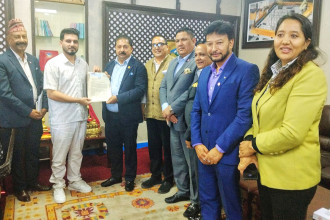
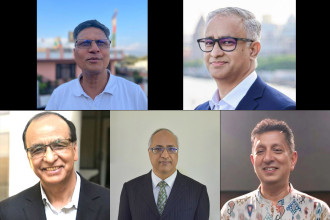
LALITPUR: Nepal Institute for International Cooperation and Engagement (NIICE) hosted a discussion on April 9 titled 'Foreign Policy Dynamics in a Post‑Monarchical Nepal'.
Sanju Gurung, a PhD candidate at Birkbeck, University of London, was the speaker. In his presentation, he explored changes in Nepal's foreign policy by analysing its mechanisms, outcomes and prospects, particularly following the transformation of the monarchy into the country's republican system.
Gurung emphasised the domestic origins of foreign policy, arguing that decision-making is highly influenced by internal political organisation and broader state-society relations rather than external interactions. He said, "The 1990 Constitution created a hybrid political system whose model was a twin‑pillar system where both the monarchy and parliamentary democracy existed."
-1776604050.jpeg "NIICE,-Nepal's-foreign-policy,-monarchy-(3)-1776604050.jpeg")
-1776604050.jpeg "NIICE,-Nepal's-foreign-policy,-monarchy-(2)-1776604050.jpeg")
He asserted that the monarchy remained a constituent part of the administration, retaining constitutional primacy and important prerogative powers passed on to it through the Panchayat system. According to him, this structure affected Nepal's foreign‑policy orientation, producing strategic balancing — for example, cultivating closer relations with China to counter perceived Indian influence.
Contrasting developments after 2006, Gurung explained that the abolition of the monarchy was a crucial juncture that transferred sovereignty to the people rather than to the dynasty. He observed that the new constitutional trajectory, which began with the 2006 Constitution and culminated in the 2015 Constitution, brought increased political plurality, decentralisation and dispersion of power, leading to multiple centres of decision‑making.
He added, "Such structural changes have resulted in a more democratic approach to foreign‑policy processes, with greater transparency and less secrecy than in the monarchical period. The shift from a two‑power system to a more centralised civil authority has greatly changed the mechanisms and decision‑making processes for foreign policy."
Gurung concluded that although Nepal's foreign policy has become more open and participatory, it still shows elements of change and continuity influenced by evolving domestic political dynamics and geopolitical realities.