Budget for upcoming FY will lay foundation for long‑term improvement: NPC member

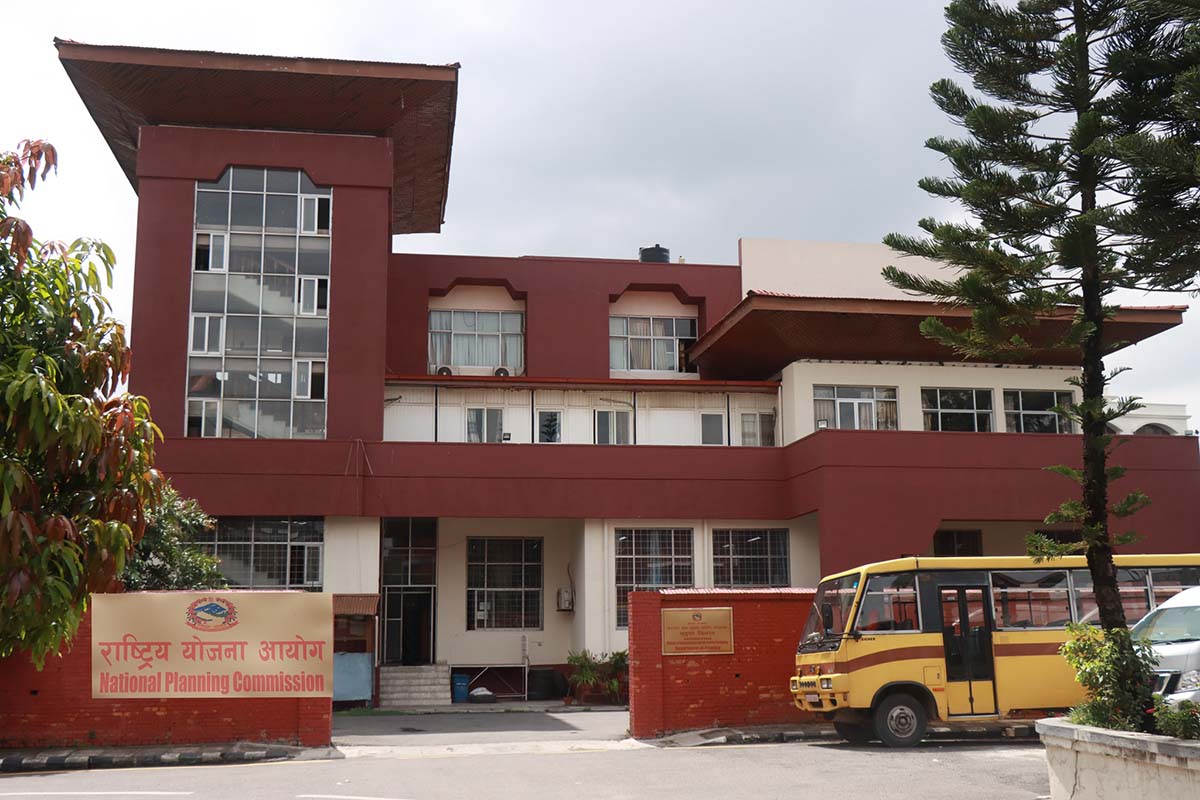
KATHMANDU: Budget for upcoming fiscal year 2026/27 will lay the foundation for long‑term improvement based on good governance, National Planning Commission member Dr Sanjay Acharya said. It will also create the groundwork for projects, programmes and policy reforms that are expected to generate multiplier effects in the national economy.
Speaking at a discussion programme on the budget in Kathmandu on Friday, Dr Acharya made the remarks at an event organised by the Management Association of Nepal (MAN).
He warned that the public’s high hopes for the current government should be tempered. “The general public has high hopes and expectations from the current government, but one should not expect that all problems can be solved with a single budget, as existing problems were not created overnight,” he said. He added that the NPC will change the methods and procedures for the equalisation and special grants and will encourage provincial and local governments to become self‑reliant in terms of resources.
Furthermore, Dr Acharya pointed to structural constraints that need addressing, noting that, compared with wages, labour productivity in Nepal is low and the high costs of transportation and logistics in trade have been discouraging direct foreign investment. He urged the government to listen to the private sector, which he said contributes 80% to the economy and 85% to employment, and to treat it with respect.
On taxation, Dr Acharya said the idea of reducing tax rates while expanding the tax base has been practised worldwide since the 1980s. He emphasised that if a system of voluntary tax payment through reasonable taxation can be developed, coverage will expand, and studies will determine what the maximum threshold of a tax should be to achieve the highest tax collection.
He also warned that Nepal has not been able to benefit from climate‑related global funds in an equitable manner from the perspective of climate justice, and urged the government to pay attention to this issue.
Meanwhile, former finance minister Dr Yuba Raj Khatiwada advised the government to change the existing “rule of thumb” formula for royalties as well as the formulas for the equalisation and special grants. He said the public‑private partnership model would be effective only if the private sector abandoned a mindset of avoiding risk, because PPPs allow the private sector and the government to work on infrastructure development by sharing profits and risks.
Presenting a working paper, former chief secretary Dr Baikuntha Aryal underlined that production, employment and investment growth should be the main priorities of the budget. He highlighted the need to enhance allocation efficiency and the capacity of implementing agencies through improvements in the budgeting system, and called for performance‑based incentives and effective monitoring.
To address reallocation issues, Dr Aryal suggested opting for agency budgeting, which allows spending under any heading within an overall project rather than a line‑item budget. He added that under the social security programme, the government could arrange to directly pay health insurance coverage equivalent to 10 to 11 months of allowance and one to two months of insurance premiums.
Commentator Dr Ramesh Chandra Poudel said digitalisation would play an important role in good governance.
Likewise, Sudarshan Raj Pandey, former president of the Institute of Chartered Accountants Nepal, warned that only 17 to 20% of the total budget is currently allocated to capital expenditure and that actual spending within that allocation is low, resulting in weak capital formation.
Deepak Malhotra, senior vice president of the Nepal Chamber of Commerce, said it is necessary to activate sectors such as real estate and construction amid weakening overall demand in the economy, and he emphasised that the multiple rates of VAT should be maintained.
By RSS
-1789321697.jpeg)
-1789311918.jpg)