
CIM Nepal HR summit 2026 concludes after two-day drive to tackle skills gap

-1778393655.jpeg)
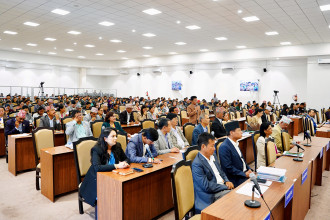
BIRATNAGAR: Chamber of Industries Morang (CIM) concluded the second CIM Nepal HR Summit in Biratnagar on Saturday. The two-day programme brought together industrialists, policymakers, educators and human resources specialists to discuss building a skilled workforce to support sustainable and competitive industrial growth in Nepal.
The summit focused on strengthening coordination between industry, academia and government to meet evolving skill demands. Around 150 participants from the Sunsari-Morang Industrial Corridor, academic institutions and development partners attended, and the event featured ten sessions led by national and international experts.
-1778393656.jpeg)
During the opening on Friday, Ram Prasad Mahato, Minister for Social Development of Koshi Province, said capable, skilled and responsible human resources were essential in today’s economic and industrial competition. He added that the provincial government was committed to linking young people with employment and entrepreneurship by enhancing cooperation between education, skills development and industry.
Nand Kishor Rathi, president of CIM, said the summit had been convened to close the gap between industry needs and the labour market and to prepare workers for new technical and cultural demands. He urged industries to take a proactive role in developing talent rather than expecting ready-made manpower, and said difficulties in finding and retaining staff reflected broader issues of efficiency, work culture, opportunity, security and trust.
Pawan Sharda, president of the Confederation of Nepalese Industries (CNI), Koshi Province, said technological change was reshaping the industrial sector and called for a strategic approach to human resources management. He urged greater private-sector investment in skill development and leadership training, saying industrial progress was not possible without a skilled workforce.
Professor Dr Biju Kumar Thapaliya, vice-chancellor of Purbanchal University, emphasised the need for practical, market-oriented education. He highlighted the importance of linking research, innovation and hands-on learning to produce graduates who meet industry requirements. He said leadership and creativity must be prioritised as global shifts alter human resources practices.
-1778393655.jpeg)
Sessions over the two days covered multinational company practices, the impact of technological change, digital HR systems, employee retention, labour law issues and the role of HR in industrial development. Motivational speakers offered insights on success strategies.
CIM said the summit received technical support from the ENSSURE and QualiTY projects under Helvetas Nepal and the Swiss government, together with the National Vocational Qualifications System (NVQS). Kumari Job was the title sponsor, and Rigo HR was the silver sponsor. CIM noted that the first edition in 2024 had established human resources as a central element of industrial transformation and that this year’s event aimed to build on those gains.
-1790953895.jpeg)
-1790952398.jpeg)
-1790946272.jpeg)