
Govt announces AI-based learning system, digital content rollout to community schools

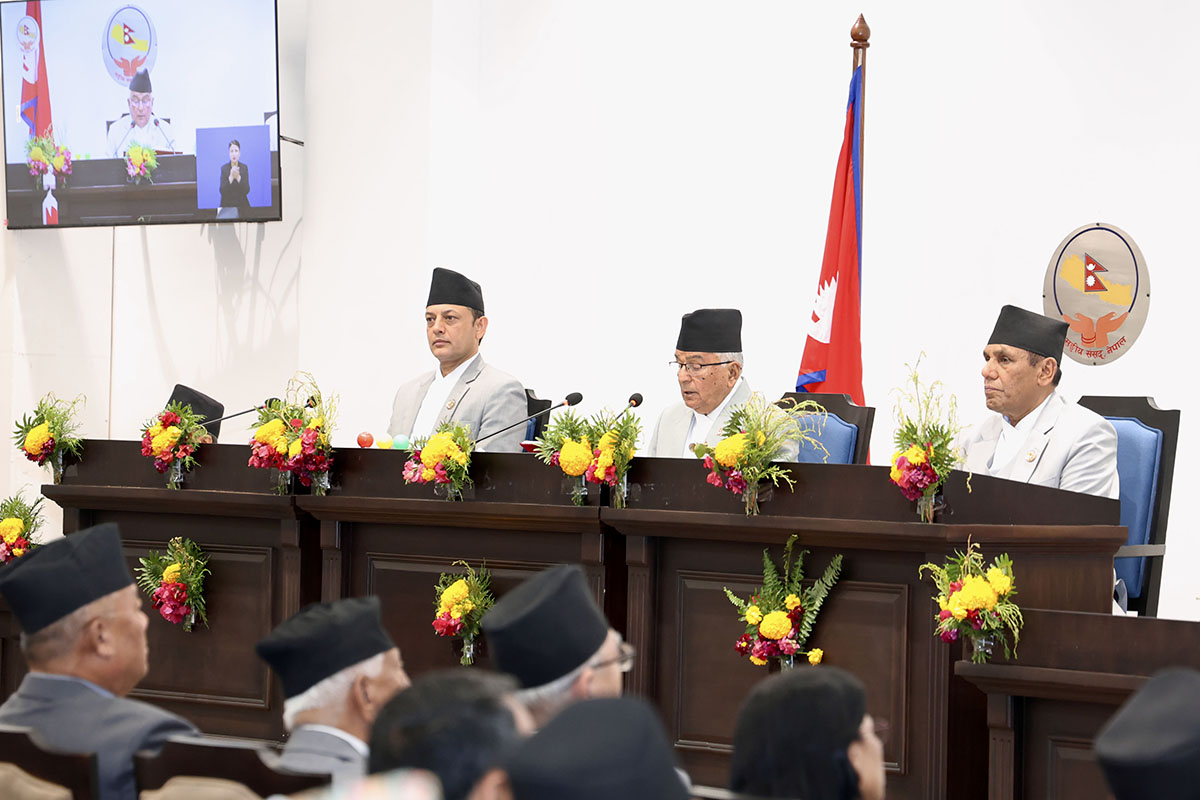
KATHMANDU: The government has announced plans to develop digital content and an artificial intelligence (AI)–based learning system beginning in the fiscal year 2026/27, as part of a broader education agenda unveiled at the joint sitting of the Federal Parliament on Monday.
President Ramchandra Paudel presented the government's annual policies and programmes, which call for an expansion of e‑learning platforms, virtual classrooms and open digital content nationwide. Under the initiative, high‑speed internet, digital educational materials and AI‑supported learning technologies will be rolled out in 10,000 community schools.
The package reaffirms the government’s commitment to free education up to the secondary level and emphasises improving the quality of teaching to make learning more practical and employment‑oriented. Measures announced include ensuring timely distribution of textbooks, provision of midday meals and supply of school uniforms.
Curricula at all levels will be revised and updated on a regular basis, the programme states. Special measures will target equal access to quality education for children from impoverished, marginalised, Dalit, indigenous, disabled and remote communities, with strengthened health and nutrition services, scholarships, residential facilities and safer learning environments.
The policy outlines plans to increase long‑term public investment in education while tightening regulation of private institutions to ensure service‑oriented, quality learning. Higher education will be aligned more closely with labour market needs, and universities will undergo academic and administrative restructuring.
Integrated reforms are planned for school mapping, adjustment of teacher vacancies, and improvements to libraries and laboratories. Support for children with autism and other forms of neurodiversity will include therapy services, assistive technologies, specially trained teachers and inclusive education systems.
All scholarship programmes will be made merit‑based, with payments transferred directly to beneficiaries’ bank accounts through digital systems. Teacher recruitment, promotion and evaluation systems will be made transparent and merit‑based, alongside measures to enhance professional development, management and fair remuneration. New incentive programmes for outstanding teachers will be launched, and curriculum, evaluation and certification systems will be reviewed to make school education more learning‑centred.
The policies also announce a National Volunteer Programme to mobilise youth in digital literacy, community service, innovation and local development.