Govt will bring radical change to economy, RSP Treasurer Adhikari says at Nepal Women Chamber event

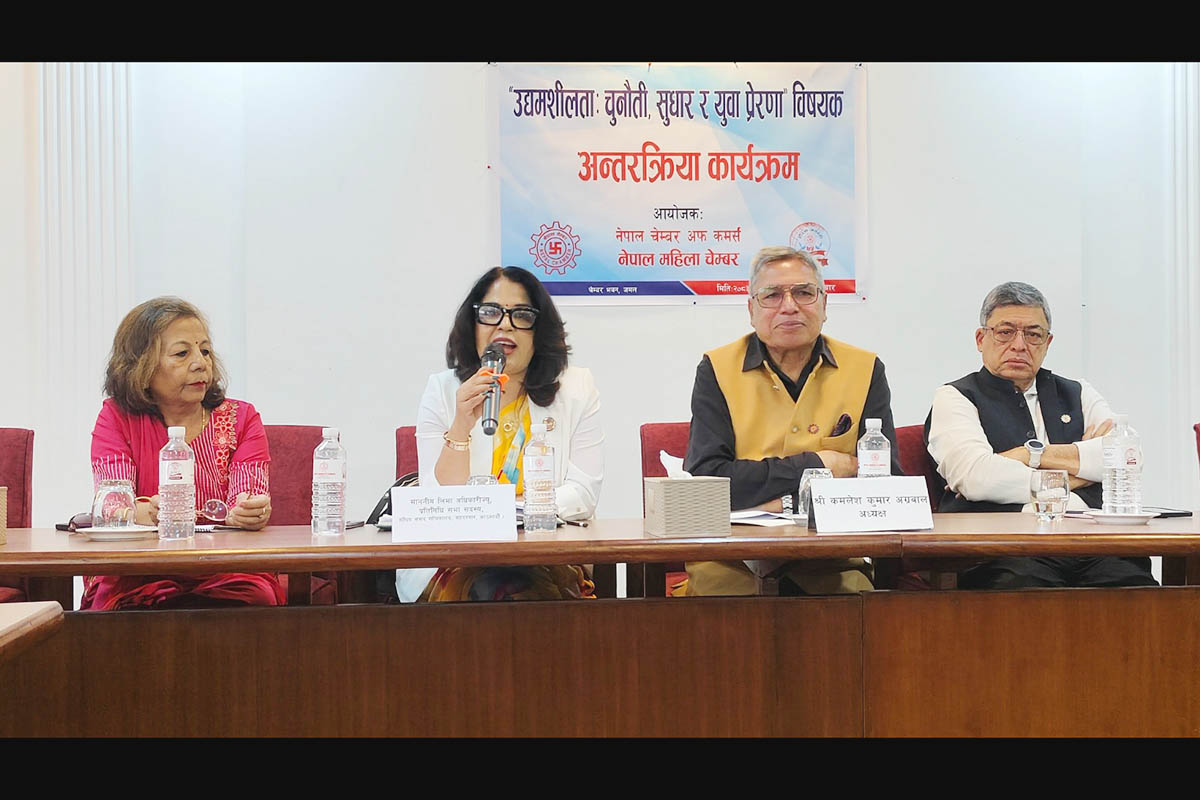
KATHMANDU: A special interaction on 'Entrepreneurship: Challenges, Reforms and Youth Inspiration' organised by the Nepal Women Chamber concluded on Wednesday at the Nepal Chamber of Commerce Secretariat in Jamal, Kathmandu. Ruling party leaders and business representatives used the event to outline plans for economic reform.
Speaking at the event, Member of the Federal Parliament and treasurer of Rastriya Swatantra Party, Lima Adhikari, who attended as chief guest, said the new five-year government is working in a planned way to avoid the unstable and narrow economic policies of the past. She said that authorities are taking the current moment as an opportunity and that work is underway to bring radical changes in both political and economic spheres.
Adhikari said digitisation and faceless, paperless systems have been prioritised to improve governance and that arrangements have been made to register an industry within a single day. She added the government aims to shift the economy from remittance-based to production-oriented and plans to make the upcoming fiscal budget more private-sector-friendly.
The MP outlined targets and incentives intended to reduce unemployment and support start-ups, including a goal to create 1.2 million jobs, expanded tax exemptions, seed capital, and broader financial access for new businesses. She said efforts will be made to enable work from rural areas through information technology and that innovation projects and programmes for women and youth will be encouraged.
To lower production costs and boost industrial competitiveness, Adhikari said the government will expand road networks, provide low-cost land for industries, manage industrial zones more systematically, and reform laws and regulations. She said such measures will advance women’s entrepreneurship.
Meanwhile, NCC President Kamlesh Kumar Agrawal said Nepal stands at a decisive turning point and urged better use of women and youth power for rapid development. Agrawal emphasised the need for access to finance, markets and technology for women entrepreneurs and said the chamber is committed to helping expand international market access.
Likewise, NCC Senior Vice President Deepak Kumar Malhotra highlighted the potential to link women-led enterprises with demand from Nepalis abroad, noting that around 11 million Nepalis are currently working overseas. Era Parsai, secretary of Nepal Women Chamber, called for entrepreneurship development as a basis for employment to curb youth migration and urged stronger coordination between the government and the private sector to connect production with markets. She also pointed to implementation gaps in collateral-free financing policies.
Women entrepreneurs at the event raised a range of concerns, including requests for free land for industrial use, easier startup and credit procedures, wider financial access, improved international market entry, more empowerment programmes, simplification of export processes, protection for vulnerable industries, and issues related to MRP.