NEFtalk: Policymakers urge govt to adopt national policy for gig economy, ride‑hailing

-1782049964.jpeg)
KATHMANDU: Policymakers, economists, development practitioners and business leaders have urged the government to replace ad hoc rules with a coherent national policy to support Nepal’s rapidly expanding gig economy and ride‑hailing sector.
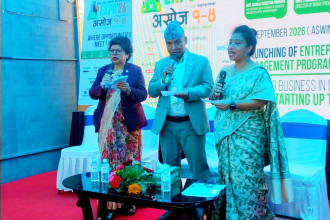
The appeal was made at the Nepal Economic Forum’s signature event, NEFtalk, titled ‘Gig Economy and Ride Hailing: Towards Employment Generation’, held on Friday. Participants said the platform economy is no longer merely a transport solution but a key part of Nepal’s digital infrastructure that drives tourism, strengthens small and medium‑sized enterprises and creates flexible earning opportunities for young people.
-1782049964.jpeg "NEFFtalk-(6)-1782049964.jpeg")
-1782049964.jpeg "NEFFtalk-(1)-1782049964.jpeg")
-1782049964.jpeg "NEFFtalk-(2)-1782049964.jpeg")
Speaking at the event, Pukar Malla, member of the National Planning Commission, warned against treating innovation and regulation as mutually exclusive and stressed that regulatory clarity is essential for smooth policy implementation. He outlined six core policy principles: ride‑hailing rules, harmonised laws, worker protection, skill certification, digital labour formalisation and evidence‑based regulation, and urged stakeholders to submit recommendations during the current policy window.
Meanwhile, lawyer Semanta Dahal, chair of Purak Asia, said the current legal environment is a patchwork of fragmented regulations drafted independently by provinces and the federal government. He urged amendments to the labour act to protect gig workers, clearer approaches to fare regulation, and a legal distinction between digital platforms and software providers to avoid overregulation. Dahal also recommended reassessing mandatory local ownership requirements that could impede growth, despite the intention to promote technology transfer.
Despite regulatory gaps, sector leaders expressed optimism about market potential. Rajesh Maskey, chairperson of eDriveNepal, highlighted Nepal’s opportunity to lead South Asian e‑mobility while supporting livelihoods across the country, and called for clear, specific laws to ensure fair competition.
Rojesh Shrestha, NEF executive board member, presented a policy brief showing how ride‑hailing expands the small business ecosystem and bolsters tourism, noting the sector’s growing role in broader economic development.
-1782049964.jpeg "NEFFtalk-(4)-1782049964.jpeg")
-1782049964.jpeg "NEFFtalk-(3)-1782049964.jpeg")
Industry experts added that formalising the gig economy would improve both state oversight and worker welfare. Aanchal Kunwar, former managing director of Daraz Nepal, pointed out that e‑businesses’ digital traceability makes it easier for the government to monitor and implement tax or regulatory changes.
Jasmine Rajbhandary, senior protection specialist at the World Bank Group, urged that workers remain central to policy discussions, highlighting concerns about job quality and the well‑being of young riders and their families. She called for robust social protections, better management of financial and safety risks, and safe opportunities for women, noting that ride‑hailing can catalyse growth in other sectors.
Closing the event, NEF chair Sujeev Shakya, who also moderated the panel, reaffirmed the forum’s commitment to advancing research and public‑private dialogue to support an inclusive digital economy.

-1789922568.jpeg)