NEPAL’S INNOVATION GAP IS INSTITUTIONAL, NOT TECHNICAL

Despite gains in digital connectivity and e-governance, weak policy continuity and limited R&D investment continue to prevent Nepal from becoming a creator economy.
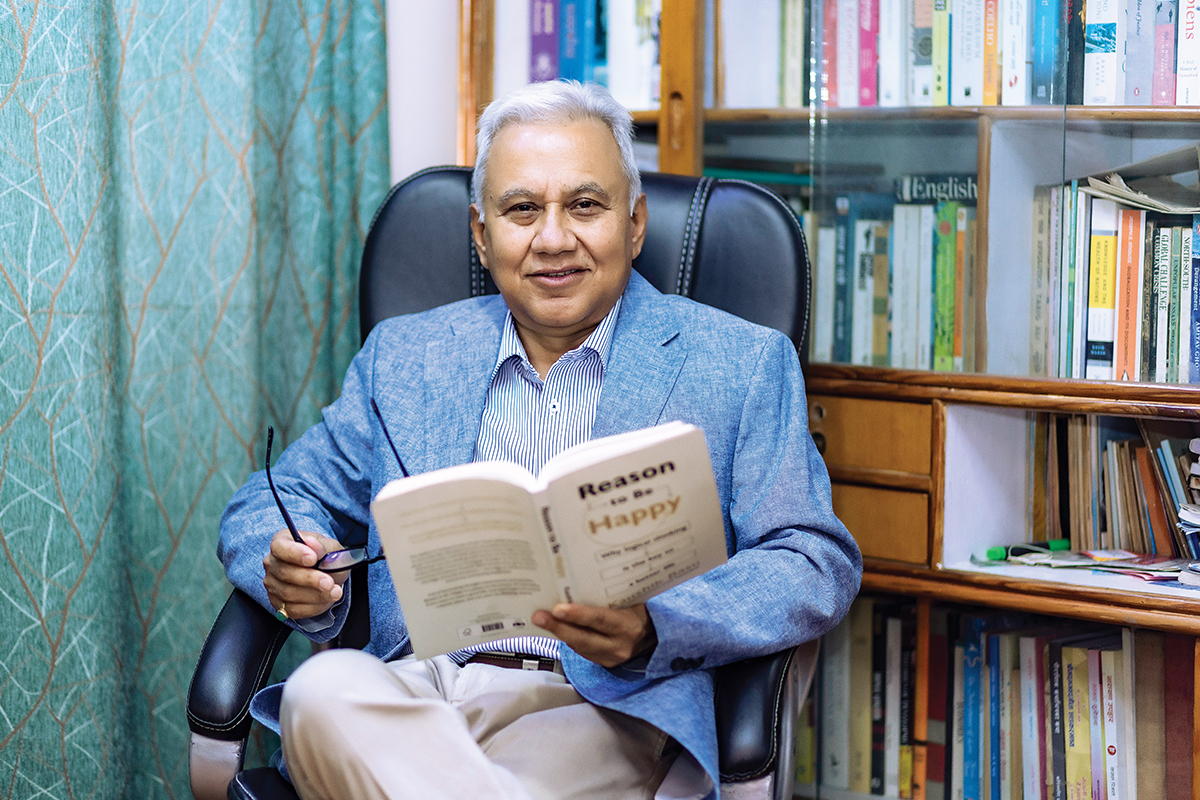
Krishna Gyawali, Former Secretary, Government of Nepal
Krishna Gyawali, a veteran civil servant with nearly three decades in public administration, has held senior roles across the country’s key economic and regulatory institutions, including secretary positions at the ministries of Industry, Environment, and Local Development, as well as joint secretary at the Ministry of Finance.
Since retiring from government service in 2014, Gyawali has shifted into development advisory roles, notably serving as Nepal’s first national coordinator for the Millennium Challenge Corporation, where he helped lay groundwork for major energy and transport infrastructure initiatives.
Gyawali holds advanced degrees in law, Sanskrit, and public policy from Tribhuvan University and the University of Birmingham. He is a former Hubert Humphrey Fellow in Economic Development at Michigan State University and completed executive training at Harvard Kennedy School.
His career also includes stints with the BBC Nepali Service in London and United Nations volunteer assignments, alongside a body of writing on Nepal’s political economy, bureaucracy and industrial development.
He currently works as a freelance development consultant and continues to engage in policy discourse on governance reform and technology-driven development in Nepal.
Speaking to Business 360, Gyawali discussed Nepal’s evolving technology landscape, the priorities of the newly formed Ministry of Science, Technology and Innovation, and the structural changes needed to shift the country from technology consumer to producer.
-1782203293.jpg)
You have served across key ministries including Finance, Industry, Environment and Local Development. Looking back, how do you assess Nepal’s relationship with technology and innovation?
I have worked in different ministries of the Government of Nepal over more than three decades of my civil service career. Based on my experience and reflections, I believe that although Nepal has generally been able to keep pace with rapid technological and innovative developments, it has faced challenges in institutionalising these initiatives. Over the years, the country has made notable progress in digital connectivity, mobile banking, e-governance and the growth of a young IT and startup sector. However, it has struggled to turn these advances into a sustained driver of national development.
Several factors have contributed to this situation. The most important is weak policy continuity, largely resulting from political instability and frequent changes in government. Other factors include limited investment in research and development, an education system that emphasises credentials more than innovation, a small industrial base, persistent brain drain, weak links among government, academia and industry, and a bureaucratic culture that often discourages experimentation. As a result, Nepal has remained largely a consumer rather than a creator of technology. Nevertheless, with a digitally connected population, growing technological capabilities and increasing global engagement, the country now has a valuable opportunity to build a stronger innovation ecosystem – provided it strengthens institutions, promotes research and entrepreneurship, and integrates technology more strategically into its development agenda.
The government has created a standalone Ministry of Science, Technology and Innovation. What gap does this address?
Although Nepal had a similar ministry in the past under the name Ministry of Science and Technology, it did not have a distinct and independent identity. At different times, it was merged either with the Ministry of Environment or the Ministry of Education. In fact, I served as Secretary when it was combined with the environment portfolio. However, the concept of innovation was largely absent from its mandate. The establishment of a dedicated Ministry of Science, Technology and Innovation has therefore come at an appropriate time, especially when the government is placing strong emphasis on the digital transformation of governance and the economy through initiatives such as digital service delivery and the promotion of a digital economy. The national budget for the coming fiscal year has also highlighted this priority through measures such as a sovereign AI computing center, a governance innovation fund and a policy research lab, among others. These are encouraging steps and reflect the government’s commitment to embracing technology and innovation as drivers of national development.
Going forward, the government should strengthen the new ministry by providing it with a clear and robust mandate focused on the development and application of technology in governance and the economy. It should also ensure adequate financial, human, and logistical resources and establish strong accountability mechanisms. The ministry should work closely with key stakeholders, including the scientific community, universities, private research institutions and the Nepali diaspora of scientists and technologists, many of whom are willing to contribute their expertise to the country’s development. To attract and retain such talent, the government should create a conducive working environment and provide appropriate incentives to encourage brain gain and reduce the continuing outflow of skilled professionals. At the same time, priority should be given to strengthening coordination and collaboration with existing institutions such as Nepal Academy of Science and Technology (NAST), Nepal Agricultural Research Council (NARC), and Research Centre for Applied Science and Technology (RECAST), so that their efforts complement and reinforce the ministry’s objectives.
Has Nepal effectively leveraged foreign aid for technology and innovation?
To be honest, not very much. Nepal has not been particularly effective in leveraging international development assistance to promote technological advancement and build a strong innovation ecosystem. Most of the support received from development partners has traditionally been directed toward physical infrastructure such as roads, bridges, airports and irrigation systems, or social sectors such as education, health, drinking water and nutrition. Science, technology and innovation have often been viewed as a ‘development luxury’ affordable only to developed countries. In my view, this has been a short-sighted approach.
The situation now needs to change. Nepal has a young population with increasing exposure to global education, knowledge and technology, as well as a growing interest in fields such as information and communication technology (ICT), computer science and innovation. The government and particularly the new Ministry of Science, Technology and Innovation (MoSTI), should make full use of this opportunity. Support from both bilateral and multilateral development partners, as well as private investors, should be mobilised more strategically to strengthen the country’s science, technology and innovation ecosystem. Guided by the new national policy on science, technology and innovation, these efforts should be pursued in an integrated and coordinated manner so that technological advancement becomes a key pillar of Nepal’s future development.
What is needed for Nepal to shift from technology importer to innovator?
This is indeed a difficult reality but one that Nepal must now work to change. The country should gradually move from being primarily a consumer of technology to becoming a producer and innovator of technologies that address its own development needs. Achieving this requires sustained investment in human capital, research, innovation and entrepreneurship.
Nepal should focus on equipping young people and other interested learners with practical technological skills, regardless of their academic background. Universities and training institutions need to place greater emphasis on applied research, innovation and product development rather than concentrating solely on academic outputs. Stronger collaboration among government, academia, research institutions and the private sector is also essential.
At the same time, Nepal should expand international partnerships, research exchanges and technology transfer initiatives with leading institutions abroad, including in neighbouring countries. The government should introduce incentives for research, startups and technology-based enterprises, while supporting innovation through dedicated funds, incubators and a commensurate policy environment. By nurturing local talent, encouraging innovation and focusing on technologies relevant to Nepal’s own needs, the country can gradually build the capacity not only to use technology developed elsewhere but also to create and export technologies of its own.
How can technology be better integrated into local governance and public service delivery?
To achieve this, the federal government should provide sub-national governments with dedicated financial and technical support for research, innovation and digital transformation through appropriate grant mechanisms. Equally important is investing in human resources at the provincial and local levels by providing continuous training and creating incentives that sustain motivation and innovation. Technological advancement often requires patience and long-term commitment before tangible results emerge.
At the same time, technology should not be viewed merely as something to be imported from outside. Many effective solutions can be developed locally by combining modern technology with indigenous knowledge, traditional practices and local experience. Local governments should be encouraged to identify their own challenges and innovate accordingly. Technology can significantly improve public service delivery in areas such as education, healthcare, agriculture, land administration and citizen services, particularly in remote regions where access remains limited. The ultimate goal should be to ensure that technological innovation reaches all parts of the country and makes governance more efficient, transparent, responsive and accessible to citizens.
During your tenure in government, what were the biggest bureaucratic barriers to digital transformation and innovation-driven policymaking, and have those challenges changed today?
In the early days, one of the biggest barriers to digital transformation and innovation-driven policymaking was the reluctance, and sometimes resistance, within the bureaucracy itself. Many of us belonged to a generation with limited exposure to digital technologies during our education and early careers. As a result, there was a natural tendency to rely on established procedures and be cautious about adopting new technologies, which often appeared risky and uncertain.
The challenge was also linked to limited financial resources, inadequate technical expertise and the relatively early stage of technological development in Nepal. Investing in digital systems required significant resources and there was understandable hesitation about committing public funds to technologies whose benefits were not yet clear. In addition, our education system traditionally placed greater emphasis on conventional disciplines than on science, technology and innovation.
Fortunately, the situation has changed significantly. Today’s civil servants are more exposed to global developments and more open to technological change. The education system has also evolved, placing greater emphasis on digital skills and innovation. As a result, more ICT professionals and technically trained graduates are entering public service, bringing fresh perspectives and expertise. This has created a much more positive environment for digital transformation and innovation within government, which is an encouraging sign for Nepal’s future.
How important is infrastructure for Nepal’s digital economy?
A thriving digital economy and innovation ecosystem cannot be built without a strong physical infrastructure base. Quality roads, reliable and uninterrupted electricity, modern telecommunications networks, adequate water supply and robust data infrastructure are all essential for supporting technology-driven growth. Facilities such as data centres, AI computing centres and digital service platforms depend on these foundational investments. Nepal still faces significant gaps in many of these areas. This is one reason why the Millennium Challenge Corporation (MCC) programme was considered important: it focused on infrastructure development through grant assistance rather than loans. When I led its preparatory work as the first Nepali National Coordinator, I was impressed by the transformative impact similar investments had achieved in other countries. It was unfortunate that misunderstandings and political controversies delayed its implementation for several years. More broadly, the lesson is clear: infrastructure creates connectivity, connectivity builds investor confidence, and investor confidence drives innovation and economic growth. In today’s world, digital connectivity cannot be sustained without strong physical connectivity, making infrastructure development a prerequisite for Nepal’s technological transformation.
How can the state become an enabler of innovation?
Compared to the private sector, government systems tend to be more cautious and slower to adopt innovation, not only in Nepal but around the world. Governments operate within legal and accountability frameworks, and public officials are often reluctant to take risks unless they are fully convinced of the outcomes. In Nepal, this caution is further reinforced by concerns about scrutiny from oversight and accountability agencies. As a result, innovation can sometimes be discouraged even when the intention is positive.
To address this challenge, the system should provide public officials with the confidence to experiment, innovate and make well-intentioned decisions without undue fear of repercussions. The role of the state should evolve from being merely a regulator to becoming an enabler, one that promotes innovation, facilitates investment and provides appropriate incentives.
Encouragingly, recent government policies appear to be moving in that direction. The newly announced budget includes several fiscal and regulatory measures aimed at encouraging private-sector investment in digital innovation and technology-based enterprises. At the same time, there is growing emphasis on performance, results and innovation within the public sector. If implemented effectively, these reforms can help create a more dynamic partnership between government and the private sector, accelerating Nepal’s digital transformation and innovation-driven growth.
Investment decisions are shaped not only by interest rates but by policy stability, institutional credibility and expectations of future returns. In an environment marked by political instability, regulatory unpredictability and recent economic shocks, investors often adopt a ‘waitand-see’ approach. This leads to a situation where liquidity accumulates in the banking system but entrepreneurial risk-taking remains suppressed.
-1782203403.jpg)
How important are IP protection, research commercialisation and digital finance to build an innovation economy?
Intellectual property protection, research commercialisation and digital finance are all essential pillars of a modern innovation economy. Innovation thrives when people are confident that their ideas, inventions and creative works will be protected and rewarded. Without a strong intellectual property regime, there is little incentive for researchers, entrepreneurs and investors to take risks and invest in new ideas.
Equally important is research commercialisation. Research should not remain confined to universities, laboratories or academic journals. It should be translated into products, services and enterprises that create jobs and generate economic value. Nepal has considerable potential in areas such as agriculture, biodiversity, traditional knowledge, herbal products, tourism and information technology, but much of this potential remains underutilised due to weak links between research and industry.
Digital finance is another critical enabler because it expands access to financial services, reduces transaction costs, and supports entrepreneurship and innovation. Nepal has made encouraging progress in digital payments and mobile banking but financial and digital literacy still need to improve.
At the same time, awareness alone is not enough. Nepal needs stronger legal and institutional frameworks to protect intellectual property, facilitate research commercialisation, and promote secure and inclusive digital finance. Given the country’s rich biological and cultural diversity, effective intellectual property protection is particularly important for preserving and benefiting from both its tangible and intangible assets. If Nepal aspires to build a knowledge-based and innovation-driven economy, sustained investment in these areas will be indispensable.
Is Nepal’s policymaking culture still short-term oriented?
Historically, Nepal’s policymaking culture has often been influenced by short-term political priorities rather than long-term strategic thinking. Frequent changes in government, policy discontinuity and implementation challenges have made it difficult to sustain reforms and innovation initiatives over time. As a result, long-term investments in areas such as science, technology, research and innovation have not always received the attention they deserve.
However, there are encouraging signs of change. A new generation of policymakers, bureaucrats and professionals, many of whom have been exposed to global ideas, technologies and best practices, is gradually bringing a different perspective. There is growing recognition that policymaking should be guided by evidence, research, innovation and measurable results rather than by short-term considerations alone. The increasing presence of technically skilled and innovation-oriented young professionals in government and other sectors gives reason for optimism. While challenges remain, I believe Nepal is slowly moving toward a more forward-looking policymaking culture that places greater value on long-term development and innovation.
What should Nepal prioritise in a national innovation roadmap?
If I were advising the government on a national innovation roadmap for the next decade, I would prioritise the following four areas:
First, we need to modernise the public sector by making government institutions more adaptive, technology-friendly and performance-oriented. This requires investment in digital skills, institutional reform and incentives that encourage innovation and results.
Second, we should create a stronger partnership with the private sector, which is the main driver of investment, entrepreneurship and job creation. The government should provide a supportive policy environment, listen to the concerns of businesses, encourage innovation, and ensure fair and transparent regulation.
Third, Nepal must make better use of its own strengths and resources. Our rich natural resources, biodiversity, cultural heritage and human talent offer tremendous opportunities for innovation and value creation. With the right policies and institutions, these assets can become important drivers of economic growth and prosperity.
Finally, Nepal should strengthen its integration with the global economy. This means expanding trade, attracting investment, promoting technology transfer and building stronger partnerships with regional and international markets. At the same time, we should make better use of Nepal’s soft power, including its cultural heritage, international goodwill, diaspora networks and unique global identity, to advance the country’s economic and innovation interests.
In short, Nepal’s future competitiveness will depend on four things: an innovative and capable state, a dynamic private sector, productive use of our national strengths, and stronger global engagement supported by the effective use of our soft power. If we invest consistently in these areas, Nepal can build a more prosperous, resilient and innovation-driven future.