
NSO survey report: 10,411 non-governmental education institutions operate in Nepal

-1770098492.jpeg)
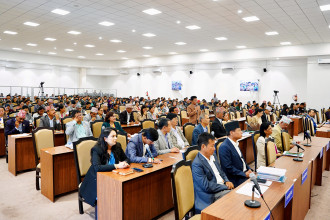
KATHMANDU: National Statistics Office (NSO) on Wednesday released 'Nepal Education Institution Survey 2081', reporting that 10,411 non-governmental educational institutions operated nationwide in the reference fiscal year 2023/24.
Bagmati Province held the largest share of these institutions at 27.9%, followed by Koshi at 18.4% and Madhesh at 18.2%, while Karnali had the smallest share at 3.6%. By level, pre-primary and basic schools made up 43%, secondary schools 41%, higher education institutions 12% and technical and vocational centres 3%.
Student enrolment in non-governmental institutions totalled 3.741 million across all levels, with basic education accounting for nearly 1.864 million students. Of the 466,805 students in higher education, 46% were enrolled in Bagmati Province, and 51% of higher education students were studying in management and commerce faculties.
A total of 311,516 people were engaged in these institutions, including 300,021 paid employees. Teaching staff comprised 74% of the workforce and non-teaching staff 26%. Employment by gender included 154,411 women and 145,610 men, with female employees outnumbering male employees in all regions except Madhesh Province.
The non-governmental education sector generated a gross output of about Rs 195 billion and contributed roughly Rs 160 billion in gross value added during the period. Fixed capital investment in the sector reached approximately Rs 309 billion, while annual spending on salaries, wages and benefits totalled about Rs 75 billion. The average annual operational cost per institution was Rs 12.2 million, with wide variation by region and education level.
Private limited companies were the most common ownership model at 52.1%, followed by individual ownership at 20.8%, partnerships at 14.8%, educational trusts at 7.2% and community institutions at 5.2%. Female participation in individual ownership stood at 20%, and women held 17.8% of managerial leadership roles nationwide.
The national average monthly tuition fee was Rs 3,300, with Bagmati recording the highest average at Rs 5,100 and Sudurpashchim the lowest at Rs 2,000.
Among institutions that responded about major operational challenges, 71% cited governance, education laws and unstable policies as their primary concern, while 42% pointed to financial constraints and delayed fee collections. Higher education and technical institutions reported declining enrolments and an increasing number of students going abroad as significant issues.
The findings were released by Dhundiraj Lamichhane, Deputy Chief Statistician and spokesperson for the NSO.
-1790953895.jpeg)
-1790952398.jpeg)
-1790946272.jpeg)