NCC urges NRB to adopt monetary policy to boost investment

KATHMANDU: Nepal Chamber of Commerce (NCC) has urged Nepal Rastra Bank (NRB) to adopt a monetary policy for the coming fiscal year that supports investment, production and the private sector.
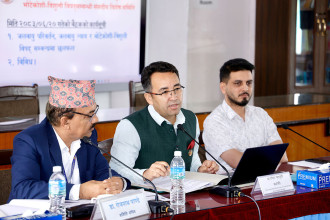
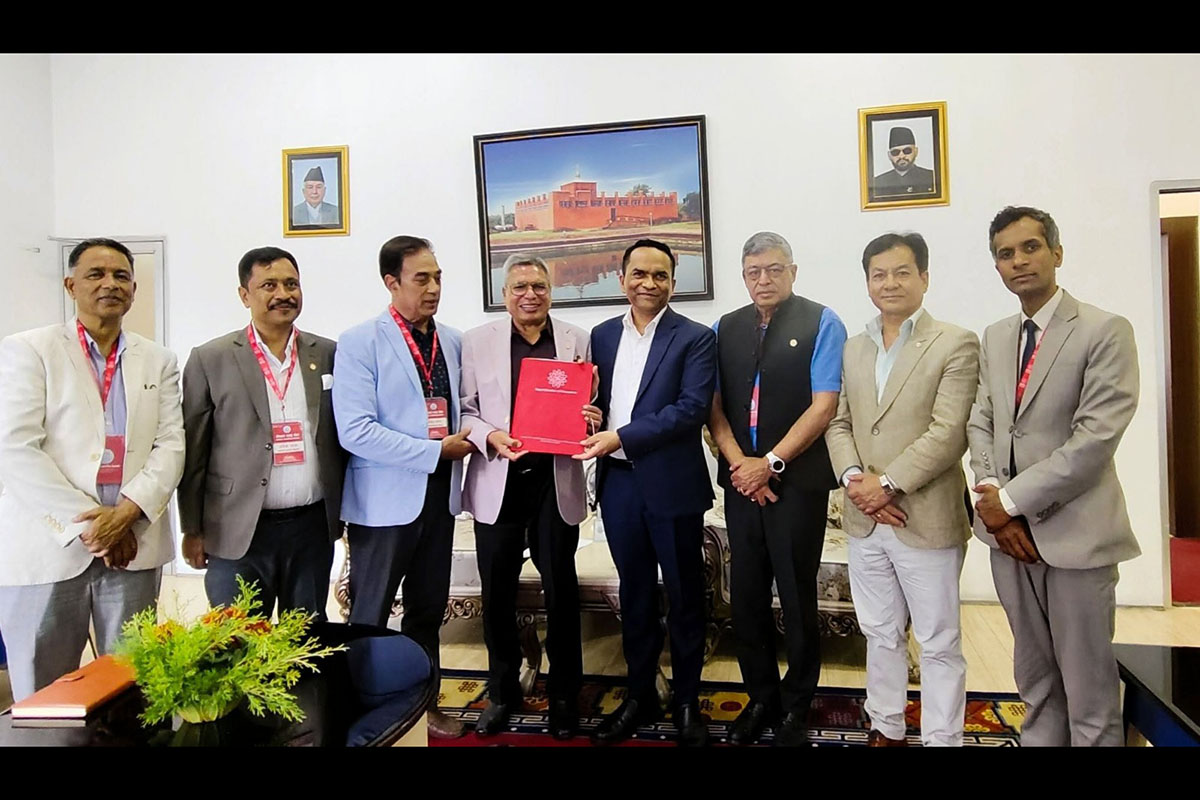
A delegation led by NCC President Kamlesh Kumar Agrawal met NRB governor Dr Biswo Nath Poudel on Wednesday and requested measures to ease business conditions and address problems in the banking and financial sector. The chamber asked for a policy to enable credit growth of more than 20% and said that level of lending is needed to reach an economic growth target of 7%.
The NCC said the economy has been sluggish for five years, with industry, trade, construction, tourism and services failing to gain expected momentum and private sector morale weakening. The organisation urged monetary policy to prioritise expanding economic activity.
The chamber asked the central bank to make single-digit interest rates a permanent feature, keep the bank rate at 5% and limit the spread to 3.5%. It also called for the immediate repeal of the Working Capital Loan Guidelines 2078 to ease access to working capital for businesses.
The delegation said anti-money-laundering provisions have created fear among business owners with legally acquired assets. It asked for a practical, business-friendly application of the law and a workable approach for assets acquired before 2064 BS, when documentation was not managed by state mechanisms.
The NCC highlighted problems with KYC and customer identification processes at banks and financial institutions, calling them cumbersome, duplicative and inconsistent. It urged an integrated digital KYC system so that once a customer completes KYC at one bank the process need not be repeated elsewhere, and for uniform banking documents and forms.
On non-performing loans, the chamber recommended that borrowers who miss payments should not be immediately blacklisted. It asked for options to reschedule and restructure loans according to business characteristics, and requested maintenance of credit restructuring, rescheduling and an 80% loan-to-value ratio to revive the housing and real estate sector.
Other demands included reviewing strict credit-to-income rules, limiting the liability of individuals providing personal guarantees to their shareholding proportion, and applying the Companies Act principle of limited liability within banking practices so that related companies’ transactions are not halted because one company is blacklisted.
The NCC also proposed regulating banking service fees, simplifying and digitising banking processes, ending unnecessary administrative and police interference in cash transactions, raising cash deposit limits, and creating policies to channel capital from the informal economy into the formal banking system.
To attract foreign investment and boost exports, the chamber suggested incentive schemes for export promotion, providing up to 80% bank financing for electric vehicles, facilitating high-denomination Indian currency transactions for Indian tourists, and using a portion of NRB’s foreign exchange reserves to support economic expansion.
Agrawal said monetary policy should go beyond price stability to emphasise production, investment, employment and economic recovery, and that restoring private-sector confidence is essential. He praised reform steps taken since Governor Poudel took office and expressed confidence the upcoming monetary policy would meet private-sector expectations.
Governor Poudel said the NRB is committed to economic growth, investment expansion and private-sector development, and that efforts are under way to remove unnecessary compliance through financial policy and regulatory changes. “We want economic growth. We will continue making the necessary policy reforms for the nation's economic development, investment expansion, and the creation of a business-friendly environment. It will be our effort to make investment and business even easier through financial policies and arrangements by addressing the legitimate suggestions from the private sector as much as possible,” he said.