
Govt issues 40 guidelines to accelerate governance reforms

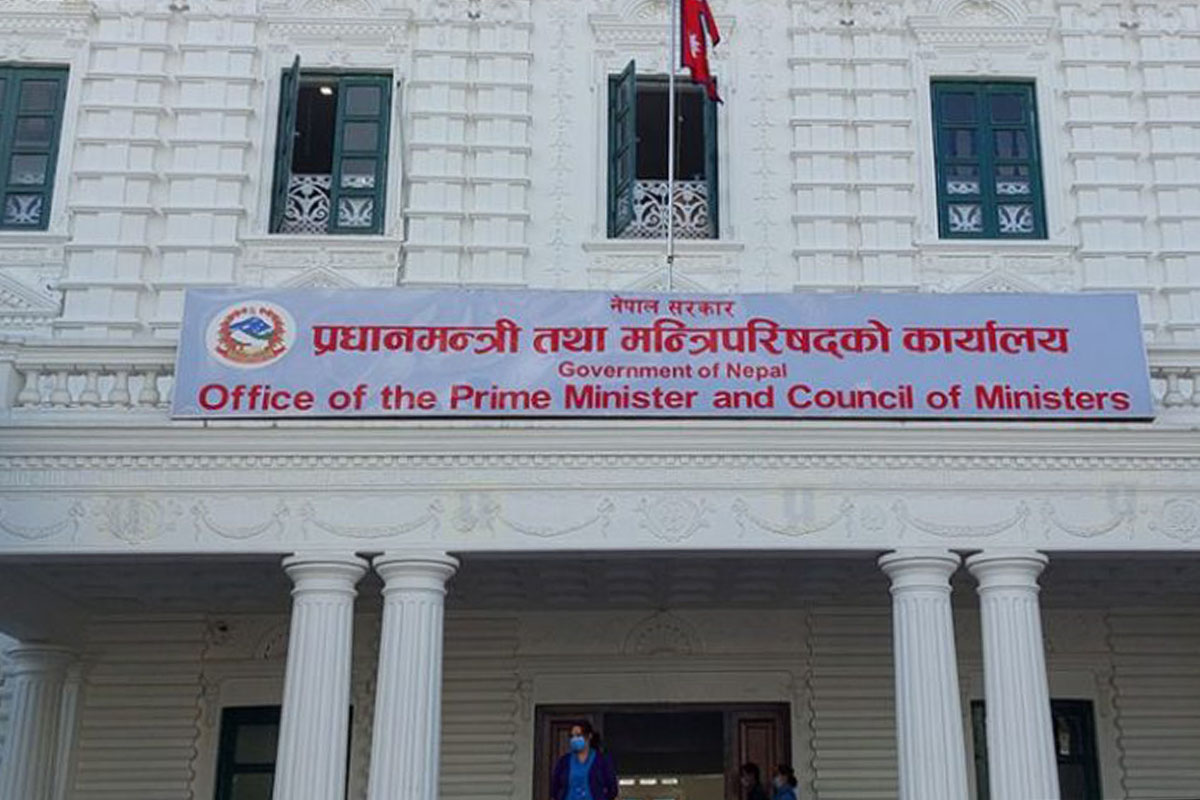
KATHMANDU: The government has issued 40 guidelines, procedures and circulars to accelerate governance reforms, improve service delivery and strengthen public accountability across ministries, commissions, secretariats, provinces and local bodies.
The Office of the Prime Minister and Council of Ministers (OPMCM) said the measures are intended to make the administrative mechanism more agile, transparent, accountable and people‑oriented. They are intended to support the implementation of the government’s 100‑point reform agenda.
The directives cover administrative reform, austerity in spending, digital governance, corruption prevention, natural resource protection, education, health, foreign employment, health insurance and grievance redressal.
Agencies have been instructed to limit approvals to a maximum of three levels under the 'Business Process Reengineering' (BPR) guidelines. They have also been told to strengthen the 'Government Integrated Office Management System' (GIOMS), so work is processed digitally.
The government has prioritised the 'Zero Backlog File' campaign, complaint management, updating institutional records and preserving institutional memory.
Austerity measures include strict controls on new purchases and mandatory repair and reuse of existing materials. Restrictions on vehicle misuse have been imposed. Civil servants’ foreign travel has been temporarily suspended to avoid disruption to reform work.
To support agriculture and manufacturing, cold stores must operate at full capacity. The government has promoted milk and dairy consumption, organised import details for agricultural products, and required transparent distribution and inventory reporting for chemical fertilisers.
A letter to all ministries sets a mid‑Ashar deadline for approval of operations and maintenance guidelines. The PMO has issued guidance on preparing the annual action plan for the financial year 2026/27 and on drafting annual programme concepts.
Additional circulars address financial management of Madrasas, removal of office bearers, including vice‑chancellors, televised classes for all secondary subjects, strengthening Nepal Drug Limited, stipends and working hours for MBBS and BDS intern doctors, management of Nepali workers going abroad, health insurance reform and oversight of NGOs/INGOs and the Social Welfare Council.
Environmental and resource protections are emphasised in the guidelines. Instructions target illegal mining and the collection and transport of river‑extracted and mineral products. Ministries and offices have been directed to run the National Cleanliness Week to improve office hygiene and environmental standards.
All ministries, commissions, secretariats and offices have been told to step up measures against corruption. Offices must regularly update contact details for office heads, spokespersons and information officers to boost accountability. Staff are required to answer phones during office hours and address citizen complaints promptly.
Prime Minister Balendra Shah’s press and research expert Deepa Dahal said the documents aim to end administrative delays, emphasise digital governance, remove unnecessary procedural hurdles, maintain austerity in government expenditure and deliver faster services to citizens.
Under‑Secretary and Assistant Spokesperson Sirjana Sharma said the OPMCM has been providing coordination and facilitation among ministries, commissions, secretariats, provinces and local levels as the 'apex body' for coordination, monitoring and evaluation. She added that the OPMCM issues these directives to ensure effective implementation of the government’s reform agenda, requests regular progress reports from concerned bodies and provides necessary monitoring and facilitation.
-1790953895.jpeg)
-1790952398.jpeg)
-1790946272.jpeg)