Balancing Legacy with Innovation in Nepal's Paint Industry
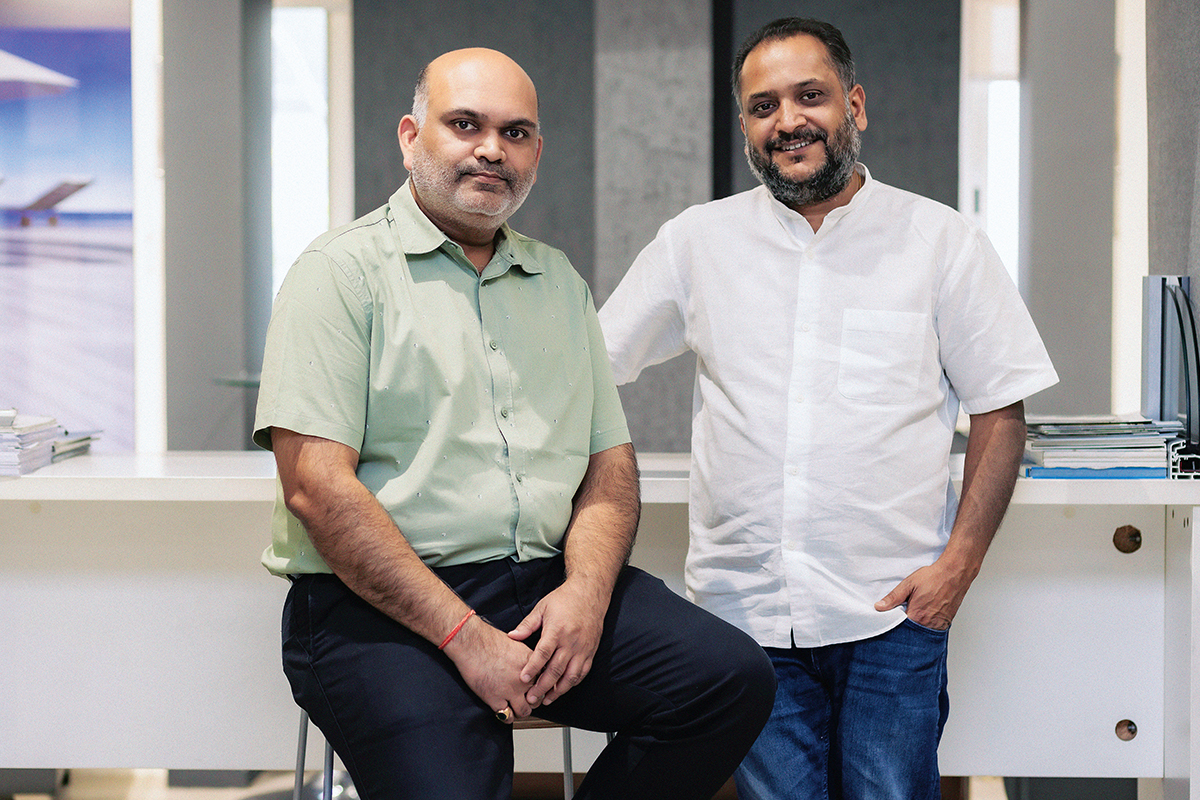
Abhishek Murarka & Aditya Murarka, Directors, Pashupati Paints
Founded in 1981, Pashupati Paints is among the pioneering players in Nepal’s paint industry, having played a significant role in the growth of the country’s construction and manufacturing sectors for more than four decades. Today, under the leadership of Abhishek Murarka and Aditya Murarka, the company is navigating a new phase of growth—one that combines a legacy of trust and quality with a forward-looking approach to innovation.
As consumer perceptions of paint evolve from a purely functional necessity to an integral element of lifestyle and design, Pashupati Paints has adapted to changing market dynamics through technology-driven solutions, sustainable product development, and an expansive nationwide distribution network. Initiatives such as the Luxuria Eco Safe range reflect the company’s commitment to environmentally responsible innovation while addressing rising demand for premium, health-conscious products.
Operating in an increasingly competitive environment marked by economic volatility, unregulated imports and uneven duty structures, the company continues to view the future of Nepal’s paint industry with confidence. Rapid urbanisation, infrastructure development and growing consumer preference for high-quality, eco-friendly solutions are creating new opportunities for long-term growth.
By combining decades of manufacturing expertise with global standards in architectural and interior coatings, Pashupati Paints aims to strengthen domestic industrial capacity, create employment opportunities and contribute meaningfully to Nepal’s economic development.
In this conversation with Business 360, Abhishek and Aditya Murarka discuss the challenges and opportunities shaping Nepal’s paint industry, how the company is balancing heritage with innovation, and their vision for the next chapter of growth.
Pashupati Paints is one of Nepal’s oldest and most recognised paint brands. How do you balance preserving the company’s legacy while adapting to the expectations of a new generation of customers?
Pashupati Paints began its journey in 1981 and today stands as one of the pioneers of Nepal’s paint industry. Over the last four-and-a-half decades, we have witnessed the transformation of Nepal’s construction sector, changing consumer preferences and evolving technologies. Being one of the country’s earliest paint manufacturers carries a responsibility. We are not only preserving a brand legacy but also contributing to the development of an industry that has grown alongside modern Nepal.
Balancing tradition with innovation has therefore become a key part of our strategy. While we continue to uphold the values that built our reputation, namely quality, reliability and trust, we are equally focused on understanding the needs of today’s consumers.
The new generation of homeowners is far more informed and involved in the decision-making process than previous generations. They seek convenience, personalisation and digital solutions. To meet these expectations, we have introduced modern technological tools, including a mobile application that allows customers to visualise colours on their homes before painting. Users can experiment with different colour combinations, estimate project costs and make informed decisions before making a purchase.
At the same time, we continuously study emerging global colour trends and design movements. Today’s consumers are influenced by architecture, interior design, social media and international lifestyle trends. We therefore ensure that our product offerings, colour palettes and customer experiences remain contemporary while maintaining the reliability and trust that have defined Pashupati Paints for more than 45 years.
Paint was once considered a purely functional product. Today it is also associated with lifestyle, aesthetics and personal expression. How is Pashupati Paints approaching product development and marketing in response to this shift?
The paint industry has undergone a remarkable transformation. In the past, paint was primarily viewed as a protective coating for walls and surfaces. Today, it has become an important part of interior design, architecture, lifestyle and self-expression.
Modern consumers do not simply ask for paint. They ask for experiences, moods and identities. They want colours that reflect their personalities and complement their lifestyles. This shift has significantly influenced how we develop products and communicate with our customers.
From a marketing perspective, we engage consumers through multiple platforms and channels. Our focus is on reaching decision-makers within households, including young homeowners, professionals and families who are actively involved in designing and decorating their living spaces.
We also work closely with architects, interior designers, builders and consultants who influence colour and design choices. We regularly share information about global colour trends and help customers understand how different shades can create different emotional and functional environments.
For example, kitchens often benefit from warmer tones that create a welcoming atmosphere, while bedrooms generally require softer and calmer shades that promote relaxation and comfort. Children’s rooms, living rooms and workspaces each have their own unique colour considerations. We have therefore developed colour families and recommendations that cater to specific lifestyle needs and design preferences.
At the same time, paint remains a functional product. It continues to protect surfaces from moisture, weather and wear. Products such as damp-proof coatings and waterproofing solutions demonstrate that paint serves both decorative and practical purposes.
Our product development strategy is therefore built around this dual role. We constantly update our formulations, improve performance standards and incorporate advancements in chemicals and raw materials. While the basic science of paint manufacturing may be well established, continuous innovation in formulations enables us to deliver better durability, aesthetics and environmental performance.
How do you see Nepal’s paint industry evolving over the next five to 10 years?
We are extremely optimistic about the future of Nepal’s paint industry. Despite the growth that has taken place over the years, Nepal’s per capita paint consumption remains relatively low compared to many regional and international markets. This indicates significant untapped potential and suggests that the industry still has considerable room for expansion.
Urbanisation is accelerating, infrastructure development is continuing, and housing demand is gradually evolving. New residential projects, commercial complexes, apartment developments and institutional buildings will all contribute to increased paint consumption in coming years.
Additionally, consumers are becoming more quality-conscious and design-oriented. This will encourage demand for premium products, specialty coatings, waterproofing solutions and environmentally friendly paints.
Technological advancement will also play a major role. Customers will increasingly expect digital colour selection tools, personalised recommendations and enhanced customer service experiences.
However, for the industry to realise its full potential, supportive government policies will be essential. Domestic manufacturers require a fair and competitive environment that encourages local production and investment. With the right policy framework and continued economic development, we believe Nepal’s paint industry can experience sustained growth over the next decade.
What do you consider the biggest opportunities and challenges facing Nepal’s domestic paint industry today?
Like any manufacturing sector, the paint industry faces both opportunities and challenges. One of the most significant challenges is the inflow of imported products through formal and informal channels. Unregulated imports can create unfair competition and put pressure on domestic manufacturers that invest in quality control, employment generation and tax compliance.
Another challenge lies in the structure of import duties. In some cases, raw materials required for local manufacturing attract higher duties than finished imported products. This creates a disadvantage for domestic industries and can discourage local value addition. We believe policymakers should carefully review such issues to ensure that Nepal’s manufacturing sector remains competitive.
On the opportunity side, the outlook remains highly encouraging. Nepal is witnessing gradual changes in urban planning, housing development and commercial construction. The apartment culture is growing, modern office spaces are increasing, and infrastructure projects continue to expand.
These developments create substantial opportunities for paint manufacturers. Every new building requires coatings, protective solutions and decorative finishes. In addition, repainting and maintenance activities generate recurring demand throughout the lifecycle of a building. The market still has significant untapped potential and we believe the opportunities far outweigh the challenges.
Consumers today are increasingly concerned about quality, durability and environmental impact. How is Pashupati Paints responding to these expectations?
Consumer expectations have evolved significantly over the years. Today’s customers are not only interested in appearance and durability but also in health, safety and environmental responsibility. Recognising this shift, we have invested in developing environmentally friendly solutions. One of our notable innovations is our Luxuria Eco Safe range, which has been designed to minimise harmful emissions and create healthier indoor environments.
Traditional paints often produce strong odours and require significant ventilation after application. In contrast, our eco-friendly products are formulated to reduce such concerns. They are safer, more comfortable for occupants and contribute to improved indoor air quality. We believe sustainability is not a trend but a long-term responsibility.
What is your vision for Pashupati Paints, and what role would you like the company to play in Nepal’s economic development?
Our vision is to continue serving Nepal with world-class products while remaining firmly rooted in our identity as a proud Nepali company. We aim to provide a comprehensive range of decorative and protective coating solutions that meet the evolving needs of consumers, businesses and institutions across the country. At the same time, we are committed to maintaining the quality standards and customer service that have defined our reputation for more than four decades.
We closely monitor global developments and aspire to remain aligned with international standards in technology, innovation and product performance. Nepali consumers deserve access to the latest advancements and we are determined to bring those innovations to the domestic market. Beyond business growth, we also see ourselves as contributors to national development.