AmCham Nepal, Cross River Bank convene leaders to boost institutional investment, link Nepal to global capital markets

-1782729556.jpg)
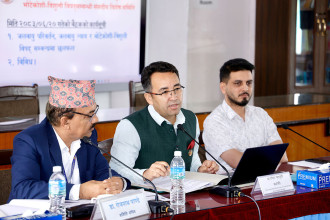
KATHMANDU: Senior figures from Nepal’s banking, investment, energy and technology sectors met at a high‑level roundtable convened by the American Chamber of Commerce in Nepal (AmCham Nepal) and US‑based Cross River Bank. The meeting discussed ways of expanding institutional investment and strengthening Nepal’s links with global capital markets.
Held under the Chatham House Rule, the invitation‑only meeting brought together chief executives of commercial banks, private equity and venture capital investors, hydropower developers, fintech entrepreneurs, non‑resident Nepali investors and former ambassadors. The session was led by Pravesh Rijal, executive vice president of Cross River Bank, and Henry Pinnell, head of investment banking at Cross River Bank, who travelled from New York to participate.
Participants considered the financial infrastructure required to support long‑term economic growth and improve access to international capital. They noted Nepal’s substantial domestic financial resources, including about $23 billion in foreign exchange reserves, trillions of Nepali rupees in bank deposits, and more than $13 billion managed by provident funds, pension funds and insurance companies, while observing that foreign direct investment remains below potential.
Data presented at the roundtable indicated that roughly 39% of committed foreign investment has been implemented, highlighting gaps in investment execution and the need to strengthen the country’s financial architecture. Attendees emphasised that, beyond capital availability, developing systems that enable efficient capital deployment, accurate risk pricing and greater confidence from long‑term institutional investors is critical.
The group identified strategic priorities to deepen Nepal’s investment ecosystem and boost competitiveness in regional and international markets. These included further development of bond and fixed‑income markets, expansion of modern investment instruments aligned with international standards, stronger risk‑based pricing and capital allocation mechanisms, improved market depth and liquidity, and enhanced financial infrastructure to support long‑term institutional investment.
Nepal’s hydropower sector featured prominently in discussions. Delegates pointed to rising global electricity demand driven by artificial intelligence, digital infrastructure and electrification, and said Nepal is moving towards surplus generation — creating potential to support industrial development and attract international investors. They also discussed structural challenges in the sector, including project return frameworks and foreign exchange issues, and explored opportunities to link renewable energy with industries such as hyperscale data centres, artificial intelligence (AI) infrastructure, green hydrogen and cross‑border electricity trade.
AI and the broader digital economy were highlighted as additional growth areas. Participants said AI is lowering barriers to entrepreneurship and enabling Nepali firms to compete internationally with smaller capital outlays, and they underlined the importance of continued investment in digital skills, innovation and technology infrastructure to sustain competitiveness.
-1782729557.jpg "Cross-River-Bank,-AmCham-Nepal,-global-capital-markets,-Intitutional-investment-(2)-1782729557.jpg")
-1782729556.jpg "Cross-River-Bank,-AmCham-Nepal,-global-capital-markets,-Intitutional-investment-(4)-1782729556.jpg")
-1782729556.jpg "Cross-River-Bank,-AmCham-Nepal,-global-capital-markets,-Intitutional-investment-(3)-1782729556.jpg")
-1782729557.jpg "Cross-River-Bank,-AmCham-Nepal,-global-capital-markets,-Intitutional-investment-(1)-1782729557.jpg")
The roundtable addressed ways to increase investment from the global Nepali diaspora. While remittances remain a major economic contributor, attendees discussed creating structured investment channels to direct diaspora capital into entrepreneurship, infrastructure and other productive sectors through vehicles that meet international governance, transparency and risk‑management standards.
Cross River Bank shared insights from its experience in technology‑enabled banking and financial infrastructure, focusing on systems that support capital formation, payments and risk management in modern markets.
The meeting concluded with a commitment to continue engagement among Nepal’s financial institutions, investors, policymakers, development partners and international organisations to identify practical initiatives that strengthen the country’s financial ecosystem and expand its connectivity with global capital markets.
AmCham Nepal said the event marks the start of an ongoing dialogue aimed at supporting Nepal’s next phase of financial market development through collaboration, modern infrastructure and increased international investment partnerships.