
NEPAN urges NGOs to adopt social entrepreneurship to secure funding, support livelihoods

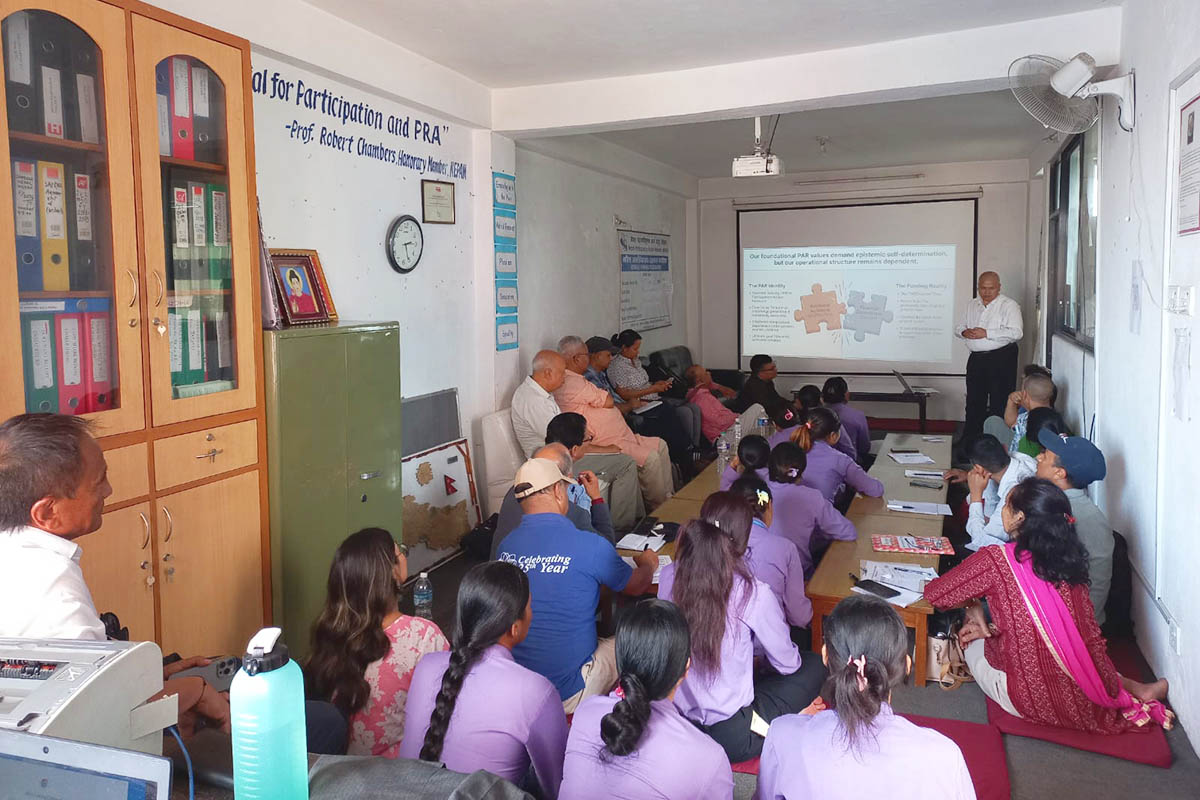
KATHMANDU: Speakers at an interaction organised by Nepal Participatory Action Network (NEPAN) on Monday urged NGOs to adopt practical social entrepreneurship models to secure sustainable funding and support local livelihoods.
Development expert Dr Krishna Raj Bhandari said nearly 50% of Nepal’s NGOs have already closed down because they lacked sustainable financial sources. He urged the development of social entrepreneurship to revive struggling organisations and said NGOs should not remain dependent on donors but should generate their own income.
NEPAN Chairperson Ashwin Kumar Pudasaini said NGOs must be freed from donor agendas, political influence, elite directives and reliance on banks and microfinance, and encouraged them to pursue social enterprise initiatives.
Participants said local communities must be actively involved in enterprises so that income from the sale of goods and services directly benefits those communities. They warned that without viable income streams, many organisations risk closure.
A range of development workers, including Dr Binod Bhatta, Brahma Dhoj Gurung, Dr Chet Nath Kanel, Dr Giri Panthi, Dr Menuka Karki, Sriram KC, Ram Hari Adhikari, Krishna Sharma, Himmat Singh Lekali, Raj Bahadur Giri, Padma Mathema, Sharad Neupane, Vijaya Khanal, Nita Thapa and Deepak Pokharel, offered suggestions during the programme.
Speakers pointed to legal hurdles, a negative public outlook towards NGOs, and a tendency to operate according to donor priorities as key factors behind organisational decline. They noted that initiatives presented as social enterprise — such as some cooperatives, microfinance schemes and income-generating programmes — face their own problems and often remain under suspicion.
Some participants said the concept of social enterprise has been introduced from outside and called for a distinct Nepali model. They recommended closer monitoring of corporate social responsibility by Nepali companies, more practical and lenient legal provisions, and urged the state and other organisations to adopt successful practices from groups that have built enterprises by working directly with the poorest communities.
(With inputs from RSS)