Beyond Algorithms: Mark Tolley on Building Fairer Urban Mobility


It is critical that the government builds a balanced framework that reflects the socioeconomic realities of independent drivers, everyday passengers and the digital platforms connecting them. Any sudden, disproportionate increase in fiscal burdens triggers a severe ripple effect. If a platform is forced to absorb excessive costs, it restricts our capacity to reinvest heavily in safety, driver welfare and national infrastructure. Conversely, if those costs are passed down, it directly squeezes the wallets of everyday citizens
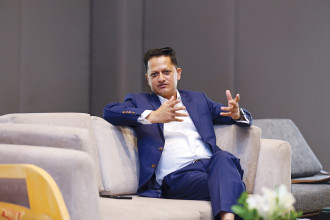
Mark Tolley
Regional Director - Asia Pacific, inDrive
The global mobility industry is entering a new phase, where trust, transparency and localisation are becoming as important as technology itself. While most ride-hailing platforms rely on algorithm-driven pricing and surge economics, international mobility platform inDrive has built its business on a fundamentally different premise: giving passengers and drivers the freedom to negotiate fares directly.
What began 13 years ago in the remote Siberian city of Yakutsk as a response to exploitative transport practices has evolved into one of the world’s fastest-growing mobility platforms, operating in more than 1,000 cities across 48 countries. Rather than competing solely on price or scale, inDrive has positioned fairness, transparency and consumer choice at the centre of its growth strategy.
Leading the company’s Asia-Pacific operations is Mark Tolley, a veteran technology and mobility executive with more than 15 years of experience scaling high-growth businesses across emerging markets. Having previously held senior regional leadership roles at Foodpanda APAC, Tolley now oversees one of inDrive’s most dynamic regions, where mobility is not merely a convenience but an essential economic enabler. His approach blends operational discipline with deep market immersion, recognising that sustainable growth in Asia depends as much on local understanding as technological innovation.
As regulators reshape urban transport, competition intensifies and consumers demand greater safety and accountability, inDrive is expanding its proposition beyond ride-hailing through enhanced safety features, driver welfare initiatives and partnerships tailored to local markets. In this conversation with Business 360, Tolley shares his perspective on building a human-centric mobility platform, navigating the complexities of Asia-Pacific, and why the next chapter of urban transportation will be defined as much by trust and inclusion as by technology.
Unlike traditional ride-hailing networks that depend entirely on algorithms and surge pricing, inDrive utilises a peer-to-peer negotiation framework. What specific market inefficiencies or structural philosophies drove the decision to choose this model?
To understand our model, you have to look at the backstory of our platform. Over 13 years ago, our founder, Arsen Tomsky, started the company in Yakutsk, Siberia, a town where winter temperatures routinely drop to minus 60 degrees Celsius. In that extreme climate, urban mobility is not a matter of luxury, it is a literal lifeline for getting to the grocery store or the hospital.
At the time, centralised taxi operators were effectively extorting passengers, raising prices arbitrarily because commuters had no alternative.
That experience is where our core mission of challenging injustice was born. It began simply, using basic digital communication groups to connect a network of drivers directly with passengers. A passenger would state what they could afford to pay for a specific route and a driver could accept it if the trip aligned with their schedule, such as being on their way to pick up their children.
Thirteen years later, even as we have scaled to over a thousand cities and 48 markets globally, that foundational principle of freedom of choice remains ingrained in our corporate DNA. When you place pricing power entirely in the hands of a machine algorithm, you remove agency from human participants. Algorithms do not understand real-time personal nuances, whether a trip happens to be a driver’s final run of the day, or whether they are four kilometres away versus one. By eliminating algorithmic surges, we allow passengers and drivers to evaluate conditions and choose one another based on mutual agreement, fair pricing and transparency.
Looking across the Asia-Pacific region where you oversee operations, what common operational realities or consumer dynamics characterise these markets?
Across our nine operational markets in the APAC region, mobile technology serves a primary function, creating flexible livelihoods. Our platform supports hundreds of thousands of independent drivers, providing vital income streams for young people, students, and both part-time and full-time operators.
We find ourselves solving two distinct structural challenges across the region. First, we address job creation. Any individual with a valid driver’s licence, proper vehicle credentials and clean background verification can be onboarded onto our platform within a matter of hours to begin earning an income. Second, we are solving deeply entrenched urban mobility gaps. In many emerging APAC cities, public transport infrastructure, such as extensive metro systems, trains or municipal bus lanes, is not yet fully mature.
Because of this infrastructure deficit, ride-hailing applications are an everyday economic necessity rather than a premium lifestyle choice. In mature western European markets, taking a taxi is often an occasional alternative to an expansive underground railway. In our region, including Nepal, ride-hailing fills a critical daily transport void, solving essential first-mile and last-mile connectivity gaps.
Urban transport regulators across emerging markets are increasingly prioritising safety, compliance and social inclusivity. How does the inDrive operational model align with these public policy goals?
Our explicit strategy is to complement public transportation, not replace it. By targeting structural infrastructure gaps and offering flexible, on-demand transit alternatives, we help expand the reach of existing public networks.
To meet safety and inclusivity benchmarks, we continually update our in-app feature suite. Beyond standard functionalities like integrated SOS buttons, real-time trip sharing and designated trusted contacts, we have deployed advanced tools, including secure in-app audio recording capabilities designed to protect both passengers and drivers during disputes.
Furthermore, formalising operations requires robust financial protection. We launched comprehensive ride-sharing insurance coverage in Nepal over a year ago to ensure that passengers and drivers are fully protected in the event of an accident. These localised safety frameworks allow us to collaborate constructively with state authorities to support their broader public safety objectives.
The global mobility sector is shifting toward a ‘super-app’ paradigm, integrating logistics, fintech and commercial platforms into singular ecosystems. How do you foresee the next decade of mobility evolving and what is your platform’s roadmap in this space?
The trend toward unified ecosystems is a defining shift for the industry. Consumers are increasingly searching for single digital interfaces that can seamlessly handle grocery delivery, courier logistics, financial technology solutions and ride-sharing concurrently. We have witnessed tremendous success with this integrated multi-service approach across several global regions.
Our assessment indicates that Nepal has established the necessary consumer habits and digital foundations to support an expanded multi-service ecosystem. We have already introduced reliable courier and parcel delivery services alongside our core passenger ride-hailing services here. Moving forward, we are actively evaluating opportunities to introduce adjacent services, allowing users to fulfil multiple logistical needs within a single, integrated app ecosystem.
The global gig economy faces intense scrutiny regarding the fair treatment of independent contractors. How do you maintain an equitable balance between low consumer fares, competitive driver earnings and corporate financial sustainability without falling into predatory practices?
Striking that balance is arguably one of the most complex tasks in modern corporate management. Our approach to long-term sustainability rests on a firm refusal to participate in aggressive, venture-backed price wars. Predatory pricing models may offer short-term marketing wins for the consumer but they ultimately degrade the health of the entire ecosystem, squeezing driver margins and destabilising corporate operations.
To remain genuinely fair to drivers, we maintain one of the lowest commission rates globally, ensuring that a significantly higher percentage of the fare remains directly in the driver’s pocket. Additionally, we deploy localised financial relief mechanisms during economic disruptions. For instance, in response to escalating global fuel and living costs, we rolled out targeted fuel subsidy initiatives and voucher distributions, including our recent Rs 2.2 million fuel support programme in Nepal, to directly alleviate operational cost pressures for active driver partners.
On the passenger side, fairness is protected through transparency. Passengers retain the autonomy to select their driver based on user reviews, vehicle type and negotiated cost, insulating them from artificial corporate surcharges.
-1784717686.jpg)
You have maintained a consistent presence in Nepal over the past several years. What structural characteristics of the Nepali market have stood out to you and what local trends can be exported to other emerging markets?
What stands out most vividly is the pure resilience and day-to-day necessity of the service here. Having visited this market nearly 20 times over the past year and a half, it is clear that urban mobility software is a fundamental utility required by citizens to get to work and keep the local economy moving.
Nepal represents an ideal example of how an independent ride platform can successfully scale by focusing intensely on localised, first- and last-mile transport gaps. We see identical dynamics in other fast-growing South Asian markets like India, Bangladesh and Pakistan. The core lesson we take from Nepal and apply elsewhere is that long-term market leadership requires a deep, physical presence on the ground. You cannot manage these markets via remote algorithms. You must consistently engage directly with driver communities and passengers to understand their friction points and make continuous micro-tweaks to the platform.
If you were tasked with designing an ideal urban mobility framework from scratch for the year 2035, what core technologies and philosophies would form your baseline?
If I were architecting a transport network for the next decade, my primary foundational pillar would be renewable domestic energy, specifically leveraging green hydropower. Many emerging economies are experiencing an exponential influx of electric vehicles (EVs) but they often lack the grid capacity and charging infrastructure required to sustain that growth. Building a system that directly links clean, domestic hydroelectric power with urban transport networks is highly sustainable and economically transformative.
Second, while autonomous vehicle technology will inevitably mature over the next 10 years, its deployment must be heavily caveated. We must not introduce automation simply to erase jobs and displace human livelihoods in regions like Nepal or the Philippines. Instead, technology should complement human capital. For example, a forward-looking policy framework should enable existing driver partners to own or manage autonomous units, allowing them to scale their earnings. Our goal should be to use artificial intelligence to optimise human productivity and drive macro-economic growth, rather than draining employment from the communities that need it most.
What is your long-term perspective on the recent fiscal policy shifts regarding ride-sharing taxes in Nepal and what structural changes would you advise the government to prioritise next?
Our regulatory strategy is always built on proactive collaboration. We aim to work alongside regulators to help shape industry frameworks rather than waiting for top-down mandates. Regarding recent updates to finance and tax laws, our perspective is clear. Ride-sharing platforms absolutely should be integrated into the national tax framework.
However, it is critical that the government builds a balanced framework that reflects the socioeconomic realities of independent drivers, everyday passengers and the digital platforms connecting them. Any sudden, disproportionate increase in fiscal burdens triggers a severe ripple effect. If a platform is forced to absorb excessive costs, it restricts our capacity to reinvest heavily in safety, driver welfare and national infrastructure. Conversely, if those costs are passed down, it directly squeezes the wallets of everyday citizens.
Looking ahead, we advise the government to channel its policy focus toward accelerating public and commercial electrification. Nepal’s domestic EV adoption rate is remarkably progressive, driven by supportive import policies and custom duty differentials. Because our valley topography makes Kathmandu susceptible to seasonal air quality challenges, transition policies are vital. Transitioning fleets to electric vehicles directly improves urban air quality and dramatically lowers operating costs for drivers, while simultaneously driving consumption toward Nepal’s own self-produced, renewable hydropower. It is an economic and environmental win-win.