
WWF Nepal marks Global Tiger Day, says conservation success goes beyond population totals as survey finds 429 tigers

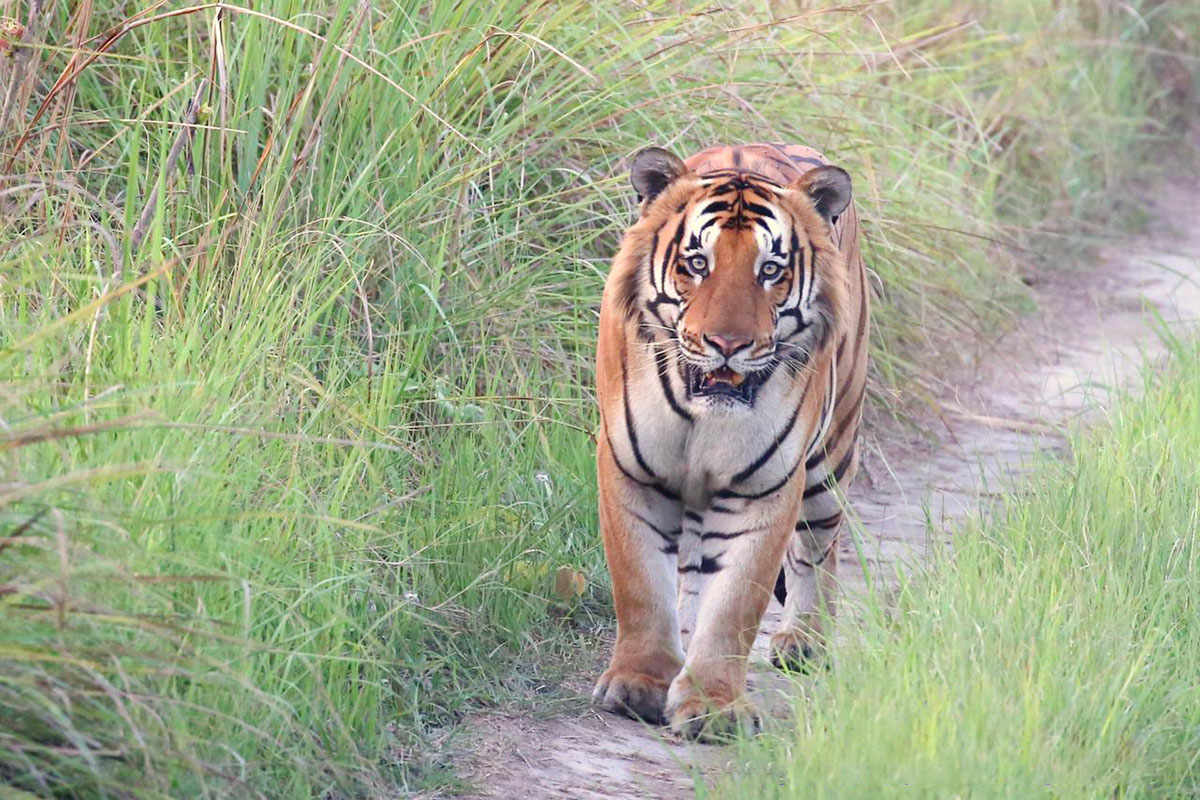
KATHMANDU: The Government of Nepal today released the results of the National Tiger and its Prey Base Survey 2026, confirming that the country's tiger population has reached an estimated 429 individuals across five protected areas.
Chitwan National Park holds the largest population with 145 tigers, followed by Bardiya National Park with 112, Parsa National Park with 71, Banke National Park with 51 and Shuklaphanta National Park with 50.
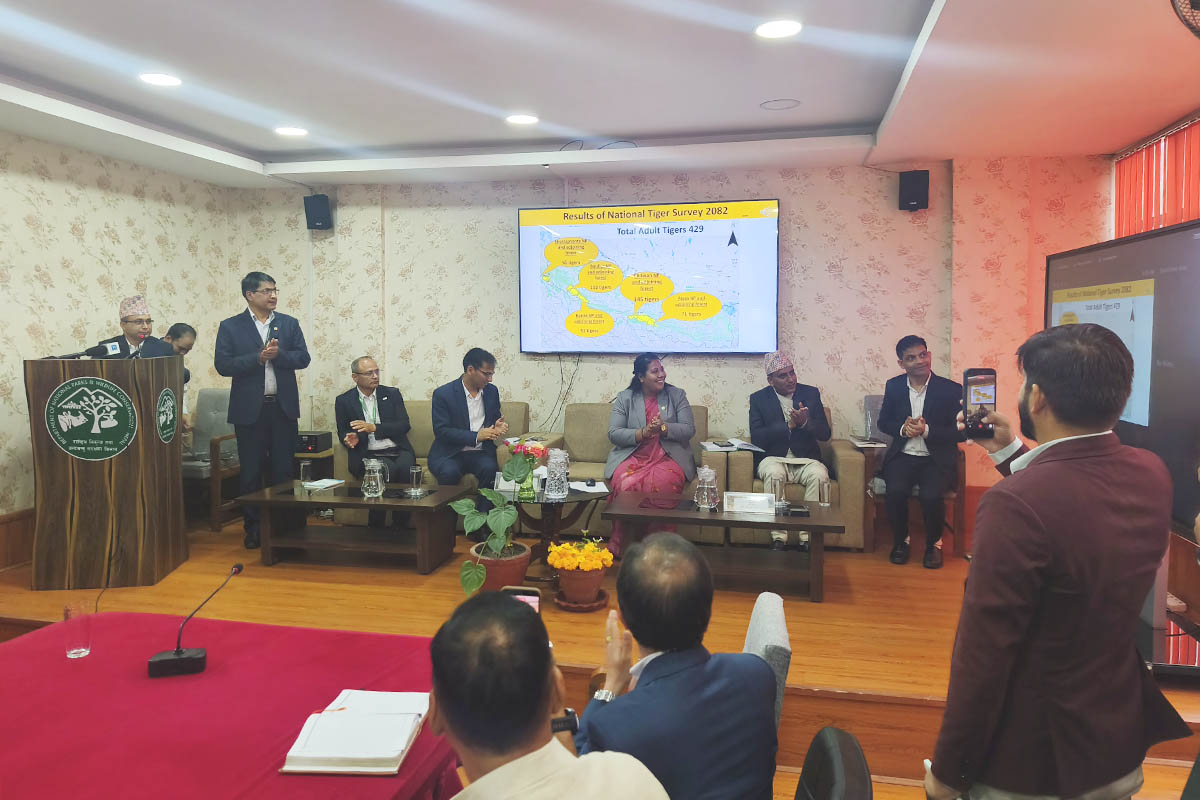
Conducted between December 2025 and July 2026, the survey was led by the Department of National Parks and Wildlife Conservation (DNPWC) and the Department of Forests and Soil Conservation (DoFSC), with technical and institutional support from partners including the National Trust for Nature Conservation (NTNC), Zoological Society of London Nepal (ZSL Nepal) and WWF Nepal. The count was carried out using internationally accepted scientific methods, combining systematic camera-trap surveys within protected areas and surrounding zones with occupancy assessments across potential tiger habitats in Nepal's lowlands.
Marking Global Tiger Day, WWF Nepal said conservation success now extends beyond population totals. Decades of collaboration between the government, Indigenous Peoples and local communities, law enforcement agencies, community-based organisations, researchers, media and development partners have established Nepal as a global leader in wildlife recovery.
With local communities and wildlife increasingly sharing space, conservation strategies are evolving towards long-term coexistence through practical, community-centred solutions designed to support human well-being alongside ecosystem health. Conserving tigers safeguards broader habitats, including forests, rivers and grasslands, which provide essential services such as clean water, climate regulation, disaster risk reduction and sustainable local livelihoods.
WWF Nepal has implemented a range of coexistence initiatives alongside government authorities and local communities. These measures include early warning systems, predator-proof livestock corrals, rapid response mechanisms, community-based monitoring, habitat restoration, buffer-zone management, insurance and relief mechanisms, endowment funds, behaviour-change communication, alternative livelihoods, renewable energy programmes, environmental education through eco-clubs and support for safer school access for children in high-risk areas. Additionally, the GEF 8 initiative, "Managing a human Tiger Interface in Nepal", will assist in expanding these landscape-level efforts.
"The growth in Nepal's tiger population is a collective conservation achievement that reflects the contributions of local communities, the visionary approach of the Government of Nepal's leadership and the support of the conservation fraternity. As we recognise this milestone, we acknowledge both the challenges and the opportunities in ensuring people and wildlife can thrive together. By investing in effective coexistence programmes, Nepal can continue to offer a powerful model for other tiger range countries," said Dr Ghana Shyam Gurung, Country Representative of WWF Nepal.
Future conservation work will focus on enhancing the capacity of community forest user groups, buffer zone user committees and local governments under Nepal's federal system. WWF Nepal plans to partner with these entities to manage human-wildlife conflict, scale up technology for early warnings and rapid response, engage youth, mobilise private sector investment and ensure local populations receive greater social and economic benefits from conservation efforts.

-1789896705.jpeg)
-1789894983.jpeg)

-1789883750.jpeg)