POLITICS BY DESIGN: Inside RSP’s Defining Test of Governance

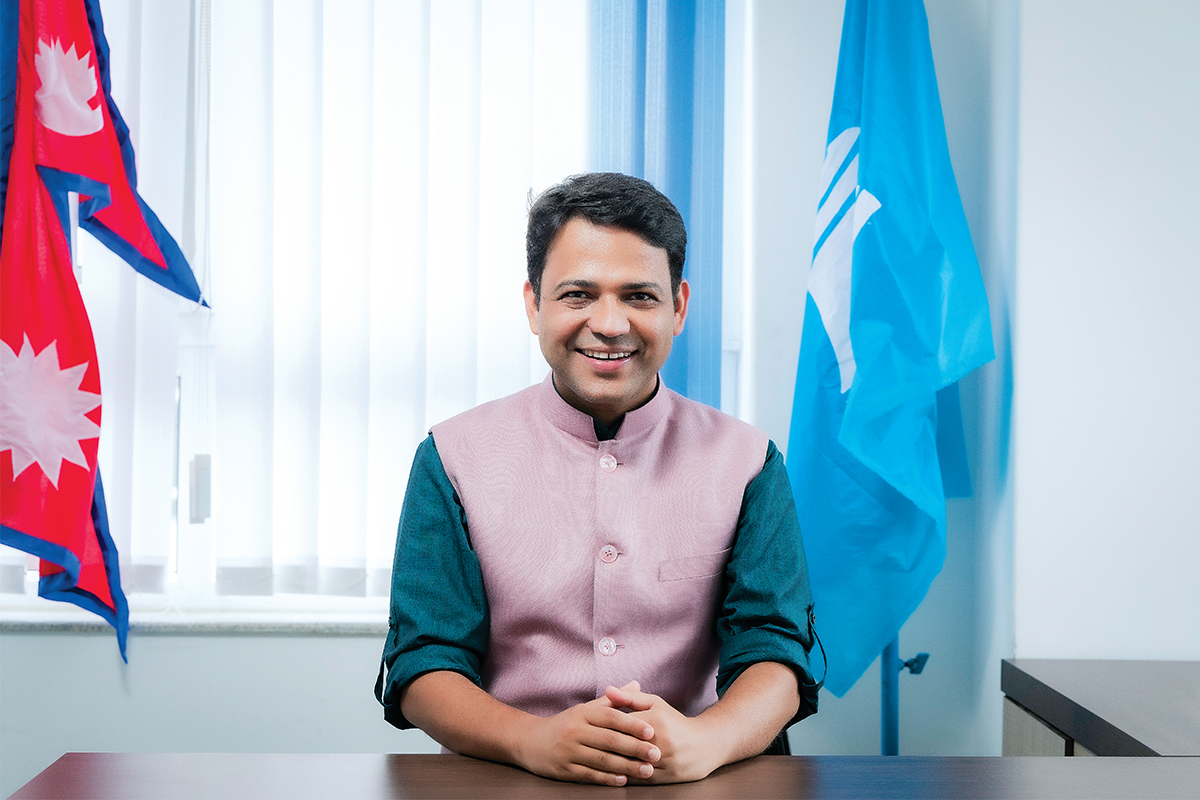
BIPIN KUMAR ACHARYA
General Secretary, Rastriya Swatantra Party
If a country is to run right, the political party must first run right.
Political movements are often powered by the certainty of opposition. Governing, however, demands something far more difficult: the ability to transform ambition into institutions, rhetoric into execution and public trust into measurable outcomes.
Four months into office, Nepal's Rastriya Swatantra Party (RSP) finds itself confronting precisely that reality. Swept into power on a promise of dismantling decades of political patronage and delivering a new model of governance, the party is now navigating the complex terrain where idealism collides with statecraft. Public expectations remain extraordinarily high, but so too has scrutiny. Reform initiatives have frequently been announced with conviction only to be revised or withdrawn amid criticism over inadequate consultation or weak implementation.
While the government's uncompromising anti-corruption stance has resonated with many, critics argue that enforcement has at times appeared to outpace legal preparedness, raising questions about due process, institutional capacity and long-term sustainability. At the same time, the administration has been tested by a slowing economy, investor uncertainty and the delicate balancing act of managing Nepal's relationships with competing global powers. Internally, persistent speculation over competing centres of influence within both the government and the party has added another layer of complexity to an administration still defining its governing identity.
These are not unusual challenges for reform governments. Around the world, insurgent political movements often discover that winning elections is considerably easier than reforming institutions designed over decades to resist change. Vision alone cannot overcome bureaucratic inertia, nor can political legitimacy substitute for administrative competence. Ultimately, governments are judged less by the boldness of their intentions than by the quality, consistency and durability of their execution.
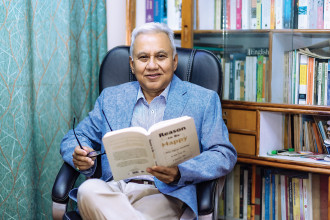
As General Secretary of the Rastriya Swatantra Party and a Member of the House of Representatives, Bipin Kumar Acharya sits at the intersection of this transition. A strong advocate of institutional reform, evidence-based policymaking and private sector-led economic growth, he argues that governments do not create prosperity—they create the conditions in which enterprise, investment and innovation can flourish. His vision is rooted in transparent institutions, predictable regulation and a state that enables rather than controls economic activity.
In this candid conversation with Business 360, Acharya addresses the difficult questions confronting both his party and the government: whether the RSP can move beyond the politics of disruption to the discipline of governance; how it intends to rebuild investor confidence while pursuing systemic reform; whether anti-corruption can be institutionalised without undermining due process; and how Nepal can pursue economic transformation while navigating an increasingly complex geopolitical landscape. More than a conversation about one political party, this interview explores a broader question facing Nepal today: can a movement built on the promise of change develop the institutional maturity required to deliver it?
Every political journey begins with a moment of discontent. What was yours? When did you first believe that complaining about Nepal was no longer enough, that you had to become part of changing it?
Discontent is part of any living society. I do not think discontent alone triggers political journeys. A political journey is much more beyond discontent. Any political journey requires clear vision and firm commitment. Instead of a sudden cinematic epiphany it was perhaps a slow agonising realisation of our systemic stagnation.
The discontent did not come from a single moment; it was built on the foundation of daily avoidable tragedies - the result of bad governance and collusive politics for all the wrongdoings. A handful of powerful elites rigged the system in their favour. Most institutions were either compromised or captured by the ruling political elites. And people were at the receiving end.
Over the past few decades, consecutive governments became entirely indifferent to everyday realities of people and societies. The struggles of migrant and aspiring migrant workers, poor education and healthcare, and rising corruption, nepotism, favouritism were some of the biggest concerns. As these problems continued, people gradually lost hope in the government and the entire state mechanism. No country can leap forward without hope and faith from their people. When a nation loses hope, it loses its drive to survive.
We realised that tea shop talks alone or raising the issue on social media or TV was not going to solve the problem. In order to assure reforms and institution building we realised that the traditional political system was incapable of reforming itself
The need of the hour was that someone needed to constructively come forward. Someone had to step in. A question boggled our mind: if not us, then who? The question itself gave the answer, the choice was clear. Either we had to watch Nepal decline further or step forward and build an alternative. We chose the second one.
As an ardent supporter of nonviolence and rule-based politics, we chose to fight for the transformation from within the system. We wanted change through the ballot, not bloodshed. That was the collective realisation of the founding members of RSP.
My conviction is that public discontent should be addressed through institutions. When discontent and frustration are not addressed timely, it further complicates things. We cannot afford perennial transitions and political unrest.
Politics often changes people faster than people change politics. What beliefs have you refused to compromise, despite your rise?
We chose politics not to become part of collusion, nepotism and a rigged system but to endorse competence, evidence and genuine capability. From the inception of RSP, we have remained committed to building a transparent, accountable and effective system guided by evidence. Here, I ask everyone to differentiate between building consensus and making compromises.
Disagreement is part of politics and statecraft. In such a case, we should always be open for larger consensus to enhance ownership and trust in the decision-making process. While saying that fundamental values such as democracy, civil liberties, political rights, human rights, press freedom and economic freedom should not be compromised. That was the spirit of RSP since the formation of the party and these values make us stand out from other political forces.
We are here for the people so the moment we compromise on integrity while making decisions for the public we stop being a true alternative and become the very disease we set out to cure.
Revolutions are often emotional; governance is relentlessly practical. How has your understanding of leadership evolved now that you are responsible for governing rather than opposing?
You are correct. Revolutions can be driven by emotion but governing cannot. We need to understand that governments cannot run on slogans or anger. They run on institutions, processes, competent people and accountability.
I do not see governing and opposing as two different roles. A responsible opposition holds the government accountable, while a responsible government must be willing to listen to their voices. In any functional democracy, these two have a symbiotic relationship.
Our role as RSP has certainly changed. From being a fierce opposition to forming a nearly two-thirds majority, the RSP has realised that the mess created in the last three or four decades could not be solved magically in a few months. The government, now, has inherited institutions compromised by political interference. This is not going to be a quick fix. This is why our focus has been on institutional reforms and good governance.
So, my understanding of leadership, even though we have moved from the opposition bench to the ruling bloc, has remained consistent. It is about taking responsibility and being accountable to people. Even in government, we must not suppress the opposition voices.
Will it be fair to say that RSP won on the promise that governance would replace politics? Four months into office, what has been harder than you expected: changing policy or changing the bureaucracy?
I would not frame it as governance replacing politics. Good governance is the purpose of politics, not an alternative to it. People become frustrated with politics when it is just reduced to elections, and power sharing in between. RSP, as a party, is committed to practicing politics that delivers results through good governance.
Looking back at our first four months, I would not say changing policy or changing the bureaucracy has been the hardest challenge. Policies can be revised and the bureaucracy can perform well when there is clear direction, accountability and political will. Blaming bureaucracy for every failure is too simplistic.
The bigger challenge has been managing public expectations. After decades of frustration, people want visible changes in good governance and development. And it is understandable. Having said this, what we need to understand is that the problems the government inherited were built over decades, and they cannot be fixed overnight.
The government is led by Prime Minister Balen Shah while the party remains under Rabi Lamichhane. Is this a division of labour or a dual power centre? Where does the final strategic authority lie?
I do not see it as a dual power centre. It is a clear division of responsibility within a single leadership structure. Prime Minister Balen Shah is responsible for leading the government, while Rabi Lamichhane is strengthening the party for a long-term political direction. The roles are different but they are complementary.
Looking at the past history, people have always speculated about division whenever a political party has two prominent leaders. And this time too, there are speculations. But I want to make it clear that the political agreement was born out of political honesty. Together, they forge a powerful political synergy.
As for strategic authority, no democratic party should depend on one individual. Major political and strategic decisions should come collectively from the party’s institutional mechanism.
-1786436013.jpg)
As General Secretary, how do you reconcile internal democracy with party discipline when disagreements inevitably emerge over difficult policy choices?
I have been General Secretary for less than a month, so it would be too early to claim I have faced every challenge the role brings. Yet, I am clear about the principle of open discussion before a decision is made, and maintain discipline once that decision comes to effect.
As General Secretary, I will actively work toward building a culture where our committee rooms do not settle for quiet conformity. I want us to encourage fierce, unvarnished, data-driven debate where members feel empowered to bring sharp perspectives, challenge assumptions and push each other. Under my tenure, no one in this party will ever be penalised for holding a dissenting view or fighting hard for a different policy route during the discussion phase. That is the lifeblood of real internal democracy.
However, internal democracy cannot be allowed to degrade into chaotic factionalism. Politics requires the distinct ability to decide and move forward. My focus will be to ensure that once every argument has been heard, the evidence weighed, and a vote or consensus reached, that outcome becomes the single, unified stance of the party.
Debate builds the wisdom of a policy but discipline gives it the power to actually transform the country. Moving forward, I see it as my personal responsibility to safeguard both ends of that promise, ensuring every voice is genuinely heard before a choice is made and that every shoulder is to the wheel once it is.
Electoral success often breeds complacency. What mechanisms exist within RSP for self-correction if the government loses public trust?
Electoral success often breeds complacency, insulating leaders from the grassroots base that propelled them into office. To prevent this, the Rastriya Swatantra Party treats political capital as a conditional investment rather than an absolute mandate. The party enforces humility and continuous excellence through a blend of statutory mechanisms, data-driven oversight and real-time voter engagement designed to keep representatives tethered to public expectations.
The core of the RSP’s self-correction strategy is the Right to Recall provision. Unlike traditional systems that grant politicians a five-year shield of immunity, the RSP’s internal statute allows the party to withdraw support from representatives who underperform, act unethically or disconnect from their constituents. This statutory threat eventually will be enforced through a mechanism that maps representative performance. Rather than relying on subjective evaluations, leaders will be judged against quantifiable Key Performance Indicators (KPIs) through a transparent, scientific process. If a representative consistently fails to meet these metrics, the party triggers structural mechanisms to hold them internally accountable.
Finally, the party preempts political crises through continuous, independent polling and digital feedback loops integrated into its central infrastructure. By capturing shifts in public sentiment early and binding its leaders to the commitments of a ‘Citizen Agreement’, the RSP ensures its parliamentarians never forget who brought them to power. Together, these systems guarantee that the fear of losing public trust remains significantly stronger than the comfort of holding office.
Nepal has spent decades debating governance while the economy has stagnated. What are the three economic reforms you believe can fundamentally change Nepal within five years?
We can say the economy has followed a sluggish trend for the last few years. Economists and experts are the ones who can analyse the situation with subtle details and indicators. I will not get into the technical details. I personally believe that there are multiple factors that have contributed to economic stagnation. This situation must be changed.
For that RSP has clearly stated its mission of achieving the ambitious target of a 100-billion economy with an average 7% annual growth rate. Achieving this is not an easy task. As a country, we need to work on multiple fronts. On the governance and policy fronts, we need to ensure stable policies, assure transparent and accountable governance, introduce hassle-free doing business environment to enhance confidence of the private sector and attract more investments.
I firmly believe that a strong government fosters a safe business environment to assure investors, rather than instilling fear.
Nepal’s 2015 constitution has envisioned the three-pillar economic model acknowledging the role of public, private and cooperative sectors. I personally believe that the cooperative and private sector cannot be compared. In this competitive age, we need to boost the confidence of the private sector to invite more investment. We should not hesitate to initiate direct talks with big multinationals so that the country can ensure big investments for creating jobs and income generating opportunities.
I sometimes feel that we have not created a positive narrative for ensuring a safe environment for private sector growth in Nepal. There should be clear demarcation and philosophical clarity in terms of the role of the state and role of other sectors – private, cooperation, nonprofit, etc. That clarity should be the fundamental of the reform process.
In terms of three major areas that can propel economic reforms, I pick IT and digital, hydropower, along with agriculture and tourism.
First, cultivating a borderless IT and digital economy is the most rapid way to leverage Nepal’s youth demographic dividend. By formally declaring Information Technology a National Strategic Industry, the government can aggressively strip away the friction of bringing foreign currency into the country. Hitting the manifesto’s target of scaling IT exports to $30 billion over the next decade requires rapid execution: expanding tax exemptions on export earnings, promoting digital nomad visas, and establishing a Sovereign AI Computing Centre to attract global tech partnerships. Scaling this sector fundamentally stabilises Nepal’s foreign exchange reserves, creates high-yield domestic employment, and directly counters the daily migration of youth abroad.
Second, unleashing the clean energy market is the absolute prerequisite for domestic industrialisation. Hydropower remains Nepal’s greatest physical asset, yet its economic potential is severely bottlenecked by state monopolies, transmission deficits and an overemphasis on exporting raw electricity rather than utilising it at home. To catalyse industrial growth, the state must end monopolies on power trading, allowing private sector companies to trade electricity internationally while offering secure, long-term 50-year production permits. By fast-tracking landmark storage projects and restructuring tariffs to drive per-capita electricity consumption to 1,500 kWh by 2035, Nepal can drastically reduce its reliance on imported fossil fuels and channel cheap, reliable energy into value-added domestic sectors like green hydrogen, massive server farms and fertiliser production.
Third, agriculture and tourism must undeniably be the bedrock of Nepal’s current economy and central to the party’s broader vision. However, they are not the rapid structural disruptors that will define the immediate five-year leap yet the country must prioritise them. Agriculture, constrained by severe land fragmentation, is primarily a ‘defence’ sector focused on food security, import substitution, and poverty alleviation, which requires long-term, politically sensitive land reform and mechanisation. Tourism is equally vital but its exponential growth is heavily bottlenecked by the need for massive, time-consuming physical infrastructure such as completing the 30,000 km of planned highways, restructuring the civil aviation authority, and establishing integrated transit networks.
I reiterate, none of this is possible without implementing a ‘bureaucratic guillotine’ to create a frictionless investment climate. Capital naturally flees from unpredictability, and currently, both foreign direct investment and domestic startups are suffocated by rent-seeking behaviour and archaic compliance laws. Building a thriving private sector requires the radical simplification of the business environment, a process the current government intends to navigate.
Anti-corruption has been central to your political identity. Beyond investigations, what structural reforms will permanently reduce opportunities for corruption?
High-profile investigations and arrests satisfy the public’s immediate appetite for justice but they fail to eradicate corruption permanently. Investigating a corrupt official without fixing the underlying system is like mopping the floor while the tap is still running. It addresses the symptom rather than turning off the source. The Rastriya Swatantra Party treats corruption not merely as an individual moral failure but as a predictable consequence of flawed institutional design that grants unchecked discretionary power. Beyond empowering traditional watchdogs like the Commission for the Investigation of Abuse of Authority (CIAA), permanently reducing opportunities for corruption requires radical structural reforms: eliminating bureaucratic discretion, professionalising financial oversight, and ending political patronage in the judiciary and constitutional bodies.
Corruption flourishes in the grey areas of administrative discretion, where overly complex laws allow officials to create artificial delays and demand bribes as ‘speed money’. To eliminate this, Nepal must transition from an approval-based regime to an automated, declaration-based system through a digitised One-Stop Service Centre. By moving business registration, tax compliance and environmental clearances entirely online, the state removes the physical interface between citizens and bureaucrats. When accurate data input automatically generates approval without a physical file sitting on a desk awaiting a signature, you strip bureaucrats of the discretionary authority used to extract rents from the public.
Systemic corruption is equally entrenched in revenue leakage and tax evasion, where the Revenue Investigation Department has traditionally been staffed by generalist administrators vulnerable to influence and extortion. The tax enforcement must shift from a subjective, relationship-driven process to a mathematically rigorous, forensic audit system. Professionalising oversight ensures that the state protects legitimate businesses from administrative harassment while stripping politically connected cartels of their ability to execute sophisticated tax evasion schemes undetected.
Finally, the ultimate structural safeguard against corruption is an independent judiciary and non-partisan constitutional bodies. When judges and forensic investigators owe their appointments to professional competence rather than political patrons, the state constructs a self-enforcing institutional framework. By combining automated digital approvals, forensic financial auditing and non-partisan constitutional oversight, Nepal can permanently dismantle the systemic machinery that breeds corruption.
Nepal increasingly finds itself balancing relations between India, China and Western partners. How does RSP define strategic neutrality in an era of great-power competition?
For the Rastriya Swatantra Party, strategic neutrality in an era of great power competition is not about passive avoidance but active engagement grounded in a foundational belief: on the global stage, there is no party policy, only national policy. Guided by the UN Charter, the principles of Panchsheel, and the Non-Aligned Movement, we champion ‘Development Diplomacy’, ensuring that partnerships with India, China and Western nations are pursued strictly through the lens of national economic interest, technological transfer and infrastructure needs, entirely free from ideological or military entrapment. True non-alignment does not mean calculated equidistance; it means maintaining the absolute, sovereign autonomy to evaluate every international issue on its own merits without fear or favour, safely maximising Nepal’s global economic engagement while keeping its sovereignty strictly non-negotiable.
International investors do not invest in personalities; they invest in institutions. If your three most recognisable leaders disappeared tomorrow, would the RSP remain politically relevant?
Traditional politics in Nepal has long been trapped in the shadow of personalities where parties operate as personal fiefdoms that fracture the moment a leader steps aside. We do not claim to have fully solved this overnight. Building a truly self-sustaining political institution is an ongoing, rigorous process that we are actively working on every single day. The Rastriya Swatantra Party was conceived not as a vessel for individual ambition but as a structural operating system. We are systematically embedding transparent internal democracy, merit-based evaluation, and policy-driven accountability into our core machinery so that governance is determined by repeatable frameworks rather than personal whims.
While our current leaders have been essential in sparking this movement, we are deeply confident that the RSP is fundamentally bigger than any single person or personality. Our political relevance does not depend on who holds the microphone on any given day. It rests on the shared values, institutional discipline and collective mandate of a citizenry demanding systemic change. By continually strengthening these organisational pillars, we are ensuring that our vision for a modern, prosperous Nepal is never vulnerable to the fate of individuals, but remains an enduring institutional force built to serve the country for generations to come.
-1786436098.jpg)
Critics argue that RSP has mastered campaigning but has yet to prove it can govern. What evidence should businesses look for over the next 12 months to judge whether this government is genuinely different?
Critics are right to be sceptical, as disrupting an entrenched political syndicate requires vastly different skills than managing a national economy, leaving the burden of proof entirely on our execution. Yet, I believe over the next 12 months businesses and international investors will feel the change.
A lot again will depend on the implementation of the FY 2026/27 budget, specifically its operationalisation. The immediate test is whether a foreign investor or tech startup can register a business, clear tax compliance, process visas and repatriate profits digitally without facing the traditional, rent-seeking delays at the Department of Industry or central bank. The proof of a competent government lies in whether capital can now move effortlessly into and out of Nepal without physical file-pushing.
Beyond digital integration, the private sector must judge us by how effectively we unlock and eliminate structural bottlenecks that have bothered them from ages. Campaigns run on promises but governments are judged on execution. If these digital, administrative and financial systems operate seamlessly it will provide undeniable evidence that the RSP has successfully transitioned from a campaign movement into an institutional, governing force.
If five years from now Nepal’s GDP has grown but institutional reforms have stalled, or vice versa, which would you consider the greater failure?
For the Rastriya Swatantra Party, GDP growth without institutional reform is the far greater failure. If the economy expands while bureaucratic red tape, discretionary laws and political syndicates remain intact, that growth is an illusion. It implies Nepal merely rode a temporary wave of remittances, foreign debt or a geopolitical windfall, with the profits captured by the same entrenched cartels. The country would remain fundamentally fragile and vulnerable to the next crisis. Wealth built on a broken system is temporary. Any achievement can be sustained only when we build strong institutions.
Governments often say they support press freedom, until criticism arrives. What kind of media relationship does RSP genuinely want? Does the party deliberately bypass traditional media because it distrusts it, or because digital platforms offer greater authenticity? How do you ensure your supporters remain informed citizens rather than simply loyal followers?
Press freedom is not a privilege granted by the state. It is the vital oxygen of a functioning democracy, and an independent, fearless media remains the most essential mirror any government can face. The Rastriya Swatantra Party unconditionally defends the fourth estate against all forms of intimidation, recognising that protecting the media’s right to investigate is identical to protecting the public’s fundamental right to truth. Our extensive use of digital platforms is not a deliberate attempt to bypass or undermine traditional media out of distrust. Rather, digital platforms serve as an administrative tool for direct transparency allowing us to share raw data, legislative metrics and performance dashboards unfiltered while critical journalism provides the essential investigation, context and external accountability that raw data alone cannot deliver.
Ultimately, we seek a constituency of critical thinkers rather than a base of blindly loyal followers. Blind allegiance is the hallmark of traditional feudal politics, breeding the exact complacency and corruption we were engineered to dismantle. By anchoring our governance in open-source data, quantifiable metrics and continuous feedback loops, we actively invite citizens and journalists alike to verify our claims, challenge our decisions and hold us to account. A resilient democracy requires citizens who are far more loyal to the truth and the nation than to any political party.
Parliament is meant to be the nation’s highest deliberative institution. Critics say it has become more of a political theatre, what are your thoughts?
The criticism is entirely justified. For too long, the sovereign parliament of Nepal has functioned less as the nation’s highest legislative body and more as a taxpayer-funded political theatre. When lawmakers spend hours trading partisan barbs, staging walkouts and prioritising performative outrage over the scrutiny of complex economic bills, it is not just poor optics, it is a catastrophic waste of state resources. A modern nation cannot be governed by archaic parliamentary procedures designed for a bygone era. We do not just need a change in tone or decorum; we need a 360-degree structural revamp of how the legislature actually operates on a daily basis.
To modernise and innovate, we must transition parliament from an arena of rhetoric to an institution of data-driven policymaking. As a parliamentarian, I have vocally demanded shifting the genesis of bills from executive ministries to the legislative branch. I believe, if the origin of the bill is parliament it will revolutionise the way parliament functions.
Furthermore, we must digitise the legislative workflow, stripping away the slow, paper-heavy bureaucracies that stall critical national reforms. Parliament must be forced to operate with the operational efficiency of a modern enterprise, where parliamentary time is treated as a finite and highly valuable national resource.
Finally, Parliament must actively connect with the citizens it serves, tearing down the opaque walls of traditional governance. When the parliament modernises its tools, innovates its procedures and connects directly with the people, it ceases to be a stage for political theatre and finally reclaims its rightful place as the engine of Nepal’s transformation.
If, five years from now, the public says, “They turned out to be no different,” what do you think will have gone wrong?
To be honest, even at a hypothetical level, this should not be the case. People have given us a mandate to take the lead in the change and transformation process. If the public fails to feel change and transformation five years down the line, it will be unfortunate not only to the party but also to the country and entire politics.
We need to think very thoughtfully on every possibility and potential backlash and tailor strategy and plans accordingly. We were not elected just to hold power. People want us to see them as an agent of change and transformation on the governance and service delivery front. We have made promises to dismantle a deeply entrenched system of patronage and stagnation and introduce a system where discrimination and selective biases from the state level will end.
We need to think what factors support us to stand out or be different from traditional and old political forces. I think they are integrity, accountability, transparency, answerability and so on.
In some cases, criticism and public perception may not be so positive. I think that if things go wrong and people begin to see the RSP as ‘no different’ from the traditional political forces, there could be several key reasons behind it.
First, the gap between the aspirations of the people and service delivery given there is a huge gap in terms of public aspiration for development and our actual capacity of service delivery. That can have fatal consequences if the government’s limitation cannot be communicated to people on time.
Second, there is a low appetite among our leaders to learn from the failure of traditional politicians. Such a failure would indicate that we completely failed to learn from the fatal mistakes of traditional political parties. It would mean that instead of institutionalising our systemic reforms, we allowed the intoxicating comfort of power to neutralise our disruptive edge, trading our mandate for the very bureaucratic complacency we were engineered to destroy.
Third, as our party chair repeatedly says, if the RSP fails to live up to the expectations of people, it will be no other political fraction but the RSP itself. If our party and leaders start following the same trends such as personal interests, fractionalism, groupism, division for personal gains, it will result in the fading of the charm of the party.
Beyond these factors, the conduct of ministers representing RSP and our party members, along with avoiding collusive political practices and maintaining strict accountability and answerability, plays a vital role in shaping public perception of the party and the government.
If Nepal’s next generation remembers only one idea from your political career, what would you want that idea to be?
If the next generation remembers only one idea from my political career, I want it to be the demystification of governance: the absolute conviction that politics can and must be scientifically analysed.
For too long in Nepal, leadership has been treated as a charismatic art form, allowing politicians to hide behind rhetoric, patronage and emotional manipulation. I have always fought to dismantle this by proving that a leader’s true worth can be mathematically measured based on objective indicators and performance metrics. Governance is not an abstract philosophy; it is a science of delivery, and it can only succeed within a system that is aggressively transparent and strictly merit-based.
However, that systemic change cannot magically appear at the government level; it must begin at the source. The single most defining truth I have vouched for is this: if a country is to run right, the political party must first run right.