
APIGA Nepal 2026 concludes with focus on youth participation in internet governance

-1789021537.jpeg)
KATHMANDU: The Asia Pacific Internet Governance Academy (APIGA) Nepal 2026 concluded in Kathmandu after equipping young participants with practical knowledge and skills in internet governance and digital policy.
The two-day capacity-building programme, held on September 5 and 6, covered the multistakeholder model and policymaking processes at regional and global levels.
Organised in collaboration with the Internet Corporation for Assigned Names and Numbers (ICANN), the event marked the third edition of APIGA held in Nepal. It offered young people from the Asia-Pacific region opportunities to learn about multistakeholder internet governance, participate in regional and global discussions, and develop skills for future digital leadership.
Participants took part in expert sessions, power talks, policy discussions, interactive workshops and group activities. They learnt about the fundamentals of internet governance, ICANN’s role and policymaking procedures, the Domain Name System, the wider internet ecosystem and opportunities for digital policy leadership.
The Model ICANN Conference gave participants practical experience of a multistakeholder policy discussion. By assuming the roles of different stakeholders, they practised negotiation, discussion and consensus-building on internet governance and policy issues.
A Power Talk session on ‘Regional and Global Internet Governance’ allowed participants to discuss the roles that young people from Nepal and the wider Asia-Pacific region could play globally. They also explored participation in policy formulation and collaboration with regional and international organisations.
A session on the Asia Pacific Network Information Centre (APNIC) provided insights into the organisation’s role and Policy Development Process. Participants also learnt about community involvement in managing internet resources and regional internet policymaking.
The programme enabled young people to express their views and develop leadership skills through practical exercises, group discussions, question-and-answer sessions and policy debates. It encouraged them to play responsible and active roles in Nepal’s digital future and contribute to internet openness, security, inclusivity and access.
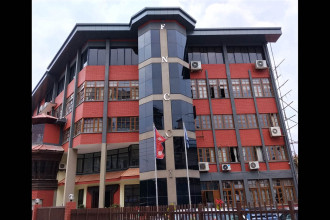
Federation of Computer Association Nepal (CAN Federation) said APIGA Nepal 2026 had helped strengthen Nepal’s Internet Governance Youth Community by connecting a new generation with digital policy discussions and increasing young people’s participation in the country’s internet governance ecosystem.
CAN Federation Vice President Nabin Joshi delivered the welcome address during the opening ceremony. Nepal Telecommunications Authority (NTA) Chairman Arjun Ghimire delivered the keynote address, speaking about Nepal’s digital development, advances in the telecommunications and internet sectors, and the role of the younger generation in internet governance.
Nawaraj Kunwar, Vice President of the Asian-Oceanian Computing Industry Organization (ASOCIO), delivered a special address on global internet governance. He highlighted Nepal’s participation in regional and global processes and the importance of collaboration in the digital sector.
-1789021537.jpeg "APIGA-Nepal-2026-(4)-1789021537.jpeg")
-1789021536.jpeg "APIGA-Nepal-2026-(1)-1789021536.jpeg")
-1789021536.jpeg "APIGA-Nepal-2026-(2)-1789021536.jpeg")
Internet Service Providers’ Association of Nepal (IPAN) Chief Executive Officer Suvash Khadka shared his views on internet services as part of internet governance. Sunway College Kathmandu Head of Operations Simoli Gautam Desai spoke about internet governance from an educational perspective.
The organiser said the programme prioritised knowledge, participation and leadership development among young people in Nepal’s information and communications technology and internet governance sectors. It expressed confidence that participants would use the knowledge, skills, networks and experience gained through APIGA Nepal 2026 in national, regional and global internet governance processes.
Digital Cooperation Nepal, ICANN, APNIC and the Internet Society Foundation were among the key organisations supporting the programme. WorldLink Communications served as the internet partner, while Global IME Bank was the banking partner. Other supporters included CAN Federation, NPIX, Sunway College Kathmandu and Generation Next Communications.
The organiser thanked its national and international partners, supporting organisations, speakers, trainers, experts, volunteers, organising team and participants.
APIGA Nepal was conducted under the leadership of Programme Coordinator Udip Baral and Programme Team Lead Bibek Silwal. The organising team comprised Pramod Dhungana, Om Prakash Sharma, Swasti Bastola, Madhyika Adhikari, Bijay Regmi, Purnika Khanal, Siddhant Pant, Alina Pun Magar, Dikshya Raut, Anupam Gautam and Nasala Joshi.

-1789042466.jpeg)