'Ride-hailing was our entry point; the broader opportunity is daily life'


Santosh Pandey
Country Manager, Yango in Nepal
Santosh Pandey is an award-winning entrepreneur and business leader who currently serves as the Country Manager, Yango in Nepal, leading overall operations, market expansion and growth strategy for the company. Recognised on the Forbes 30 Under 30 Asia list for Retail & eCommerce, he has established a strong background in e-commerce, retail and tech platforms, having previously co-founded successful ventures such as Offering Happiness and Oho Cake. Beyond his corporate role, he serves as an Executive Committee member of Nepalese Young Entrepreneurs’ Forum (NYEF) Kathmandu Chapter and lectures at Tribhuvan University and Kathmandu University.
In a conversation with Business 360, Pandey shares key insights into Yango’s strategic vision, its business model and its role in transforming urban mobility across Nepal. Excerpts:
Yango entered Nepal at a time when the ride-hailing market was already quite competitive. What was Yango’s initial strategy for entering Nepal and how has the business evolved since its launch?
We entered Nepal with a focus on making urban mobility more accessible, efficient and convenient. In a competitive ride-hailing market, the technology matters, but so does the model behind it. We work directly with partners - local transportation companies, combining our global technology capabilities with their knowledge of the market. That partnership model is a key differentiator for us: we provide tools that help local businesses digitise their operations, improve efficiency and grow.
We started in Kathmandu with a trial launch, using feedback from passengers and partner drivers to understand where our technology needed to adapt to local conditions. The ambition was to build a service that fits how people in Nepal travel and how local transport businesses operate.
Since then, our offering has expanded beyond rides into parcel delivery, and we see room to do more. Strategically, that reflects the same approach: start with an everyday need, work with local businesses to address it, and build from there. Ride-hailing was our entry point; the broader opportunity is to make our technology useful across more of daily life while creating opportunities for local partners.
Yango has talked about building more than just a ride-hailing platform in Nepal. What does Yango’s broader business model look like today and which areas do you see becoming the biggest part of the business in the coming years?
We see Yango in Nepal as an evolving ecosystem of everyday services, built with local businesses. We started with ride-hailing and added Delivery - Express and Cargo - to address another daily need through the same app.
Looking ahead, the biggest opportunity is to make city life easier in more ways. Local demand will guide what comes next: where technology and partnerships can solve a practical problem, we see potential to grow.
How much of your business today comes from ride-hailing compared with delivery and other mobility-related services?
Without sharing any confidential business numbers, I can tell you that ride-hailing remains the core of Yango Group’s business in Nepal at this moment, this includes both bikes and cars. Our priority is to make this service more reliable, accessible and safer while supporting the local partners who we work with closely to deliver it.
We also have Yango Delivery operational in the market. You see, globally Yango has a variety of different services ranging from Transport, Ads, Artificial Intelligence to more common services like food delivery to fintech, however each offering needs to be assessed on its actual operational status and readiness in the local market before being launched. Our broader ambition is to apply technology where it can actually solve real problems in Nepal, rather than just expand the range of services for its own sake.
Yango has positioned itself as a platform that creates opportunities not only for drivers but also for local entrepreneurs and fleet owners. How does the partner model work in Nepal and what kind of economic opportunity is it creating for these businesses?
Our model gives local transportation partners access to technology and customer demand without requiring them to build their own digital platforms. Of course, this is coupled with the necessary training, international best practices and due diligence of law and ethical practices in the country.
These partners can invest in vehicles, build fleets and manage their transportation operations. Yango provides the technology to run mobility business including fleet management software, digital accounting and operational tools, while partners remain responsible for their vehicles, drivers and on-ground operations.
This creates an opportunity for local entrepreneurs to build and manage transportation businesses using digital infrastructure without having to develop the supporting digital infrastructure themselves. The economic opportunity is therefore twofold: reaching more customers, having more orders and building a more efficient local business with room to grow. In short, it’s a win-win situation for everyone.
Safety is one of the most important concerns in Nepal’s ride-hailing industry. Yango has introduced driver verification, SOS, route sharing, trusted contacts and ride insurance. How effective have these measures been in practice and what additional safety measures are you planning?
Let me begin by saying, safety is our utmost priority and we don't make any compromises on it! Safety requires a combination of technology, operational processes and accountability. Our safety journey includes a 3-step approach.
First is a pre-ride inspection of the vehicles and partner drivers (in accordance with the local laws) carried out through local partners. Second is during a ride, this includes in-ride insurance, as well as a host of technology-based safety features designed to support passengers during their journeys. This includes ‘share your ride’, ‘trusted contacts’, ‘emergency panic button’, ‘call centre support’ amongst other things. Similarly, for any partner driver to be able to take orders on the Yango platform, they have to comply with the safety features as in ‘selfie checks’ etc. And finally, last is post-ride customer support to deal with any problems that may occur during your journey.
The effectiveness of these measures depends on how consistently they are implemented and how concerns are handled when they arise. Passenger feedback and reports help identify areas where service quality and safety processes may need improvement. Similarly, we are always working with the local police to further enhance the service as well as provide training to our partner drivers.

How do you monitor driver behaviour and respond to issues such as reckless driving, cancellations, passenger complaints or other safety violations? What happens when a driver repeatedly fails to meet Yango’s service standards?
We combine passenger feedback with technology to identify risks early. GPS helps detect speeding, while smartphone sensors flag harsh braking, acceleration and sudden manoeuvres. Unsafe driving triggers warnings, and ignoring them may lead to restricted access to the platform.
Support teams review complaints using information from both sides, with specialists handling urgent incidents. Cancellation history also informs driver reliability, while local partners manage drivers and day-to-day standards. The principle is simple: growth must go hand in hand with accountability.
Delivery appears to be an increasingly important part of Yango’s Nepal operations. What delivery services are currently available, particularly in food, grocery and cargo, and how do you see the delivery business developing in Nepal?
At this moment, in addition to ride-hailing service, we also have Yango Delivery present in Nepal, with both smaller options like Express and bigger options such as Cargo. This was a natural progression since there is a huge need for delivery services in the market but more importantly there is cross-utilisation of fleet and supply, hence it makes it operationally helpful.
We have also seen how transportation and cargo capabilities can serve needs beyond everyday mobility. During Nepal’s recent flood emergency, Yango supported the movement of relief supplies to affected communities in collaboration with humanitarian organisations through utilising its Cargo fleet.
Affordability has been an important part of Yango’s appeal in Nepal. How do you balance competitive fares for passengers with sustainable earnings for drivers and fleet partners, particularly as fuel, vehicle maintenance and other operating costs rise?
Fares at Yango are calculated using dynamic pricing algorithms that take into account factors such as passenger demand, the availability of partner drivers and prevailing market conditions. Rather than manually setting fares for individual trips, the technology adjusts prices in response to real-time changes in the market.
The objective is to maintain a balance between affordability for passengers and sustainable earning opportunities for partner drivers. When demand increases, pricing signals can encourage more partner drivers to become available, helping the platform respond to passenger needs. When supply and demand are more balanced, fares can reflect those conditions accordingly.
Ultimately, dynamic pricing helps the entire ecosystem function more efficiently. Passengers benefit from greater access to available rides, while partner drivers have an incentive to meet demand. Our aim is to use technology to strike the right balance between availability, affordability and economic sustainability, creating a marketplace that works better for everyone.
The Nepali mobility market is gradually moving toward electric vehicles. What role do you see EVs playing in Yango’s future fleet in Nepal and are you working with local partners to accelerate EV adoption?
Electric vehicles have already and will continue to play an increasingly important role in Nepal’s mobility sector. Their adoption, however, depends on more than vehicle availability. Purchase costs, financing, charging infrastructure, battery range and operating economics all influence whether the transition is practical for drivers and fleet operators.
Technology platforms can contribute by helping transportation partners access demand efficiently, while collaboration with vehicle manufacturers, financial institutions and other stakeholders may help address barriers to adoption.
We are following the market’s development and see potential for technology to support a more efficient mobility ecosystem. Any initiatives must make practical and economic sense for the partners operating the vehicles.
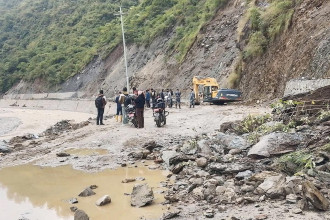
Following the devastating floods of August 26, Yango Nepal has used its delivery and transportation network to provide free transportation for relief supplies to affected communities in Rasuwa, Dhading and Nuwakot. What did Yango learn from this experience and do you see a longer-term role for your mobility network in disaster response and relief logistics in Nepal?
The response demonstrated exactly how existing transportation and logistics capabilities can support communities during emergencies.
Working with Hami Nepal, Astitwa Nepal and Crisis Connect Nepal, we used our Cargo delivery to help move tonnes of relief supplies from Kathmandu to flood-affected areas. The experience showed the importance of coordinating transportation capacity with organisations that understand the needs of affected communities.
During a disaster, collecting donations is only part of the challenge; supplies also need to reach the people who need them. Existing vehicles, logistics coordination and local partnerships can help address that challenge. We see a potential supporting role for mobility and logistics platforms in disaster response, working alongside humanitarian organisations and relevant authorities where our capabilities can be useful.