COP31: Change Initiative calls for resilience measures in UN LDC graduation criteria

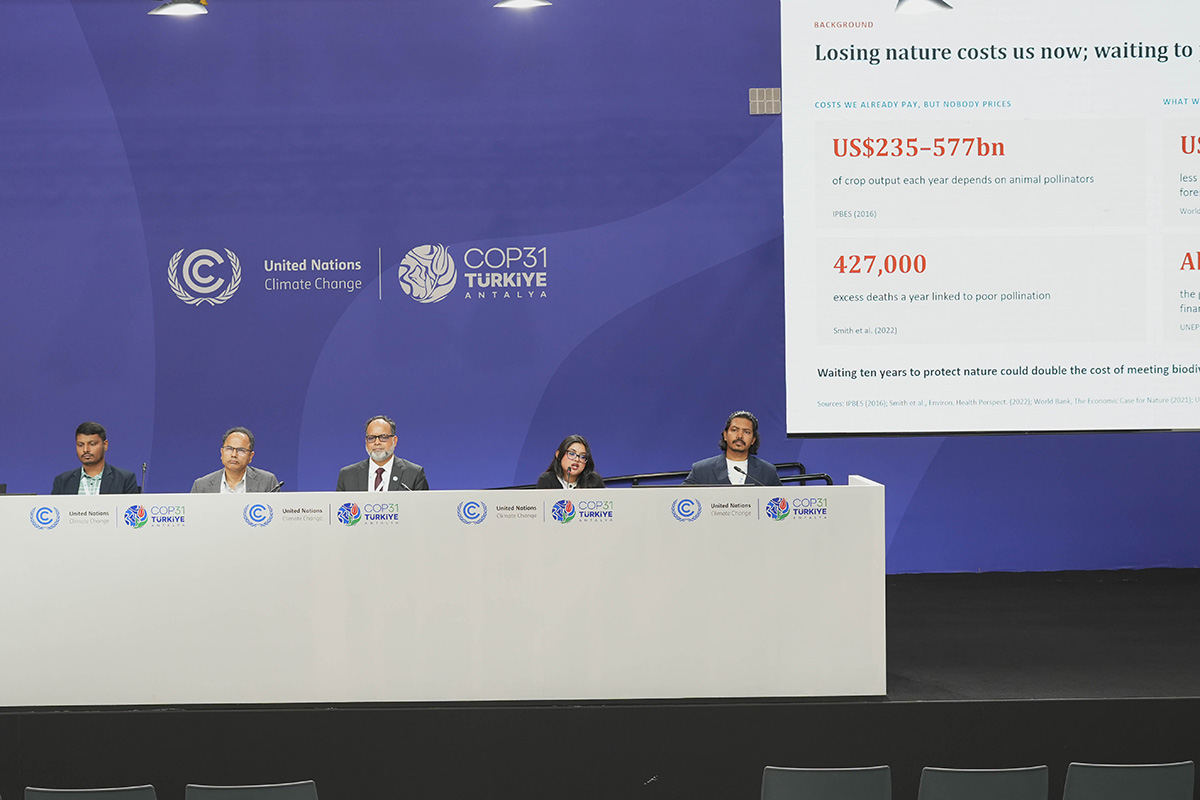
ANTALYA, TÜRKIYE: A policy paper unveiled at COP31 has called for the United Nations to incorporate natural capital, disaster risk and institutional resilience into its graduation criteria for Least Developed Countries (LDCs). The proposal comes as Nepal and Bangladesh prepare to graduate from LDC status in 2029, with the paper's authors arguing that current measures do not adequately capture long-term vulnerability.
The study, titled 'Graduation Beyond GDP: Protecting Natural, Institutional and Security Capital in LDC Transition', was launched by Change Initiative in collaboration with the Maleya Foundation during a press conference on November 13, the fifth day of the climate summit.
According to the authors, Nepal and Bangladesh are scheduled to graduate from LDC status in November 2029 after the United Nations General Assembly granted both countries a three-year extension on October 29, 2026.
The paper says the UN's existing graduation criteria, which assess income, human assets and vulnerability, do not account for whether the natural resources, infrastructure and institutions underpinning economic growth are being maintained.
"You might graduate economically, but your vulnerability does not graduate," said M Zakir Hossain Khan, co-founder and chief executive of Change Initiative. "After 2029, Nepal and Bangladesh will lose the LDC category, but their vulnerability will remain."
The study, co-authored by Khan and Samira Basher Roza, proposes a Net Capital Sustainability Test to be applied after a country meets existing graduation requirements and before a final recommendation is made. The proposed assessment would use UN data to measure adjusted net savings, disaster losses as a share of GDP and the strength of governance and disaster-risk management institutions.
The organisation has submitted its proposal to the United Nations Economic and Social Council (ECOSOC) and called for a technical study of the proposed assessment before the UN's 2027 review cycle. It also recommended incorporating resilience measures into transition plans, publishing genuine savings and disaster-loss indicators alongside graduation assessments, and continuing resilience monitoring after graduation.
Presenting the findings, Roza said a country could meet graduation criteria while remaining poorly equipped to cope with future disasters. She cited figures from the study showing that LDCs lose approximately 3.2% of GDP annually to direct disaster losses and experience disaster-related death rates more than twice the global average.
The report also highlighted countries in the graduation pipeline that have recorded repeated years of negative genuine savings, which it said could indicate depletion of national wealth. It further noted that only one in four LDCs has usable disaster-risk information.
Nepal was cited as an example of a country facing significant climate and disaster risks despite progress towards graduation. The study noted that Nepal met the human-assets and vulnerability thresholds during the 2024 triennial review and missed the income threshold by US$6.
According to the report, Nepal ranked among the 20 countries hardest hit by extreme weather events in 12 of the 19 years for which data were available between 2004 and 2024.
"Passing a review tells us where a country stands at that point," Roza said. "Nepal shows why we also need to ask whether it has the resources to protect those gains and recover when a major disaster strikes."
Speaking at the event, Nepal's National Disaster Risk Reduction and Management Authority (NDRRMA) Chief Executive Dr Dharam Raj Uprety said environmental sustainability, disaster risk reduction and climate resilience should form part of future graduation criteria.
"If we leave disaster risk reduction, losses and damages out of the criteria, that will hinder prosperity, sustainable development and environmental sustainability," he said.
Uprety referred to a series of major disasters affecting Nepal in recent years, including floods and glacial-related events, and said countries vulnerable to climate impacts must plan simultaneously for development and post-disaster recovery.
He also stressed the importance of people-centred early warning systems linking scientific information with local communities.
Mithun Kumar, programme coordinator at the Maleya Foundation, said climate policies should recognise the contribution of Indigenous communities in protecting ecosystems and natural resources. He called for climate measures that recognise Indigenous knowledge systems and address the needs of Indigenous women, youth and persons with disabilities.
The event concluded with calls for the UN's LDC graduation process to place greater emphasis on resilience and the protection of natural and institutional capital alongside conventional economic indicators.