Nepal's consumer price inflation rises to 6.37 pc in mid-October: NRB report

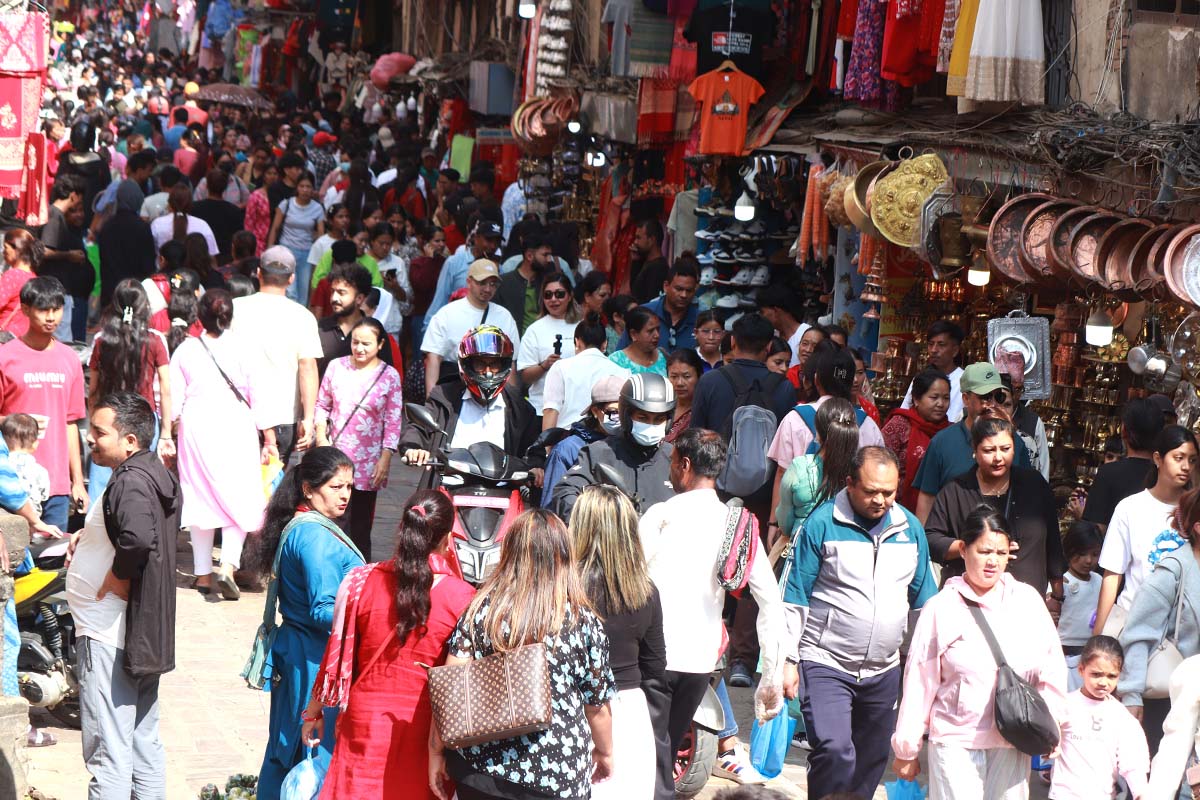
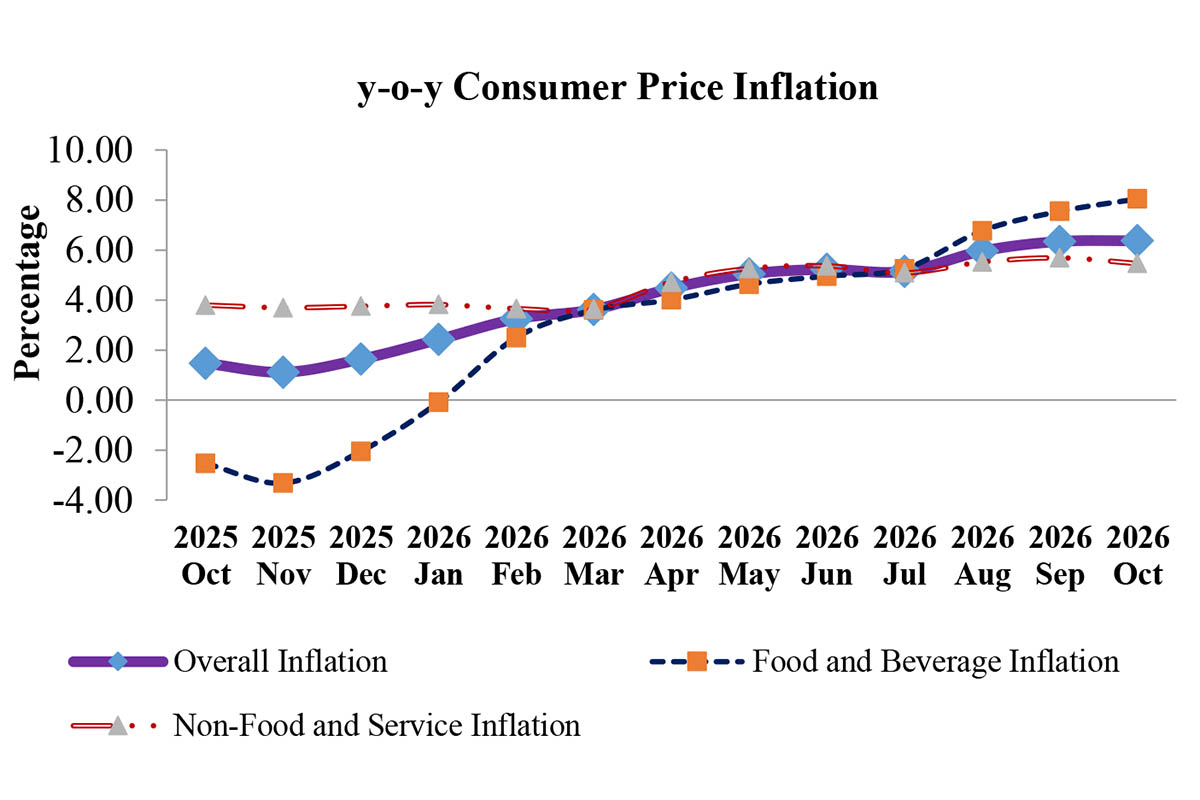
KATHMANDU: Nepal's consumer price inflation accelerated to 6.37% year-on-year in mid-October 2026, according to the 'Current Macroeconomic and Financial Situation of Nepal' report released by Nepal Rastra Bank (NRB) on Thursday.
The inflation rate stood at 1.47% during the corresponding period last year. Food and beverage inflation reached 8.04%, while non-food and services inflation stood at 5.46%.
Average inflation during the first three months of fiscal year 2026/27 stood at 6.22%, compared with 1.67% in the corresponding period of the previous fiscal year.
Meanwhile, wholesale price inflation rose to 7.29% year-on-year in mid-October 2026 from 1.32% a year earlier.
The wholesale price index for consumption goods increased 2.87%, while intermediate goods and capital goods recorded inflation of 9.98% and 6.56%, respectively. Wholesale prices of construction materials rose by 5.93% during the review month.
|
y-o-y Consumer Price Inflation |
||||
|
Mid-Month |
||||
|
Particulars |
Weight (%) |
2025/26 Sep/Oct |
2026/27 Aug/Sep |
2026/27 Sep/Oct |
|
Overall Inflation |
100 |
1.47 |
6.34 |
6.37 |
|
Food and Beverages |
35.49 |
-2.54 |
7.54 |
8.04 |
|
Non-food and service |
64.51 |
3.8 |
5.69 |
5.46 |
Within the food and beverage category, the highest year-on-year price increase was recorded in ghee and oil, which rose 16.44%. Prices of fruit increased 15.46%, followed by sugar and sugar products at 11.84%, meat and fish at 8.91%, spices at 7.71%, and vegetables at 7.28%.
Among non-food and services categories, transport costs registered the steepest increase of 12.97%. Prices of alcoholic drinks rose 8.83%, clothes and footwear 7.06%, furnishings and household equipment 6.01%, and tobacco products 5.45%.
Inflation was higher in rural areas than in urban areas during the review period. Consumer prices in rural areas increased by 6.63%, compared with 6.28% in urban areas.
Province-wise, Madhesh Province recorded the highest inflation at 7.37%, while Sudurpashchim Province reported the lowest at 5.13%. Inflation stood at 5.92% in the Kathmandu Valley, 6.88% in the Tarai region, 6.14% in the Hill region and 5.57% in the Mountain region.