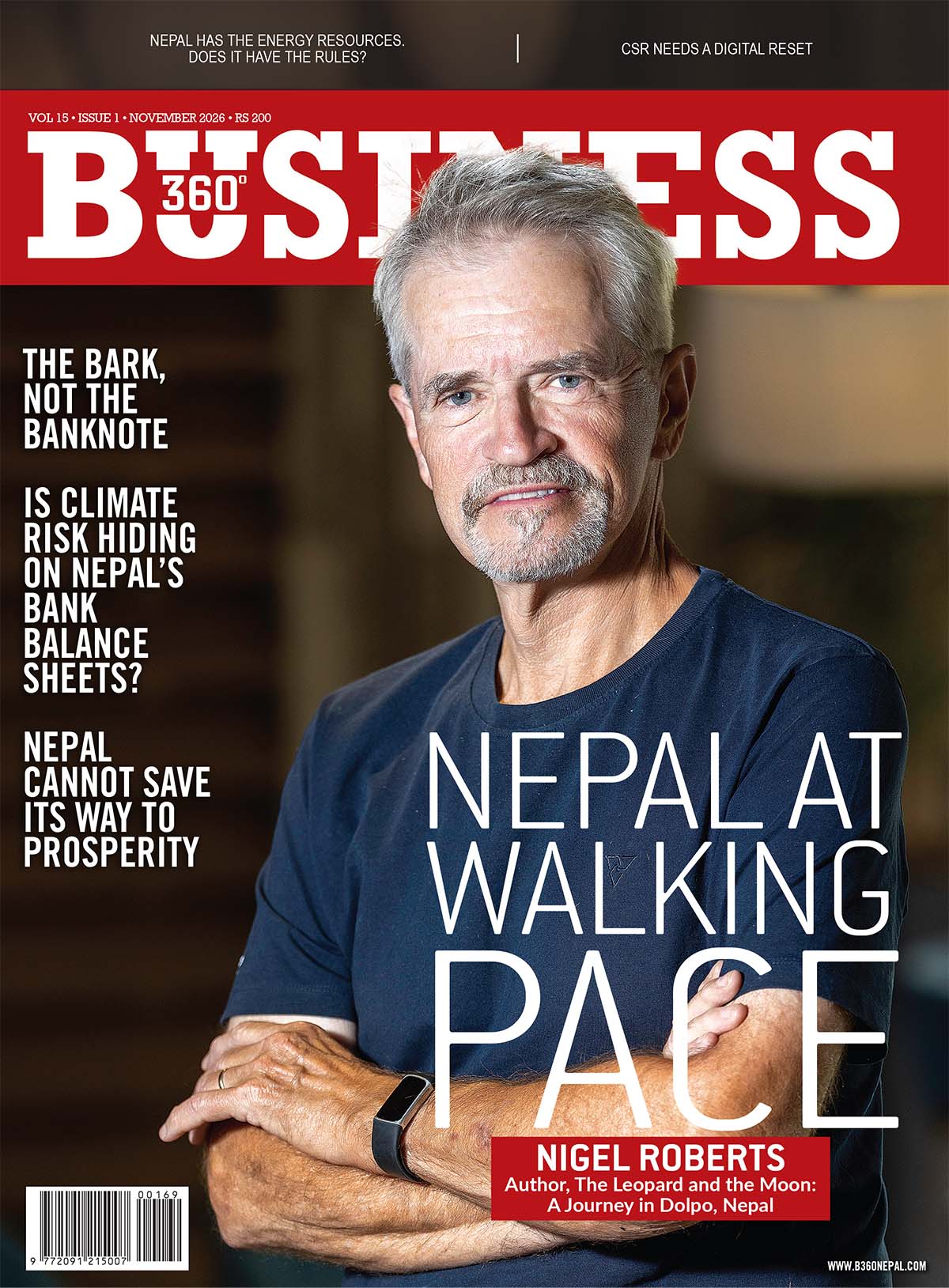
NEPAL AT WALKING PACE

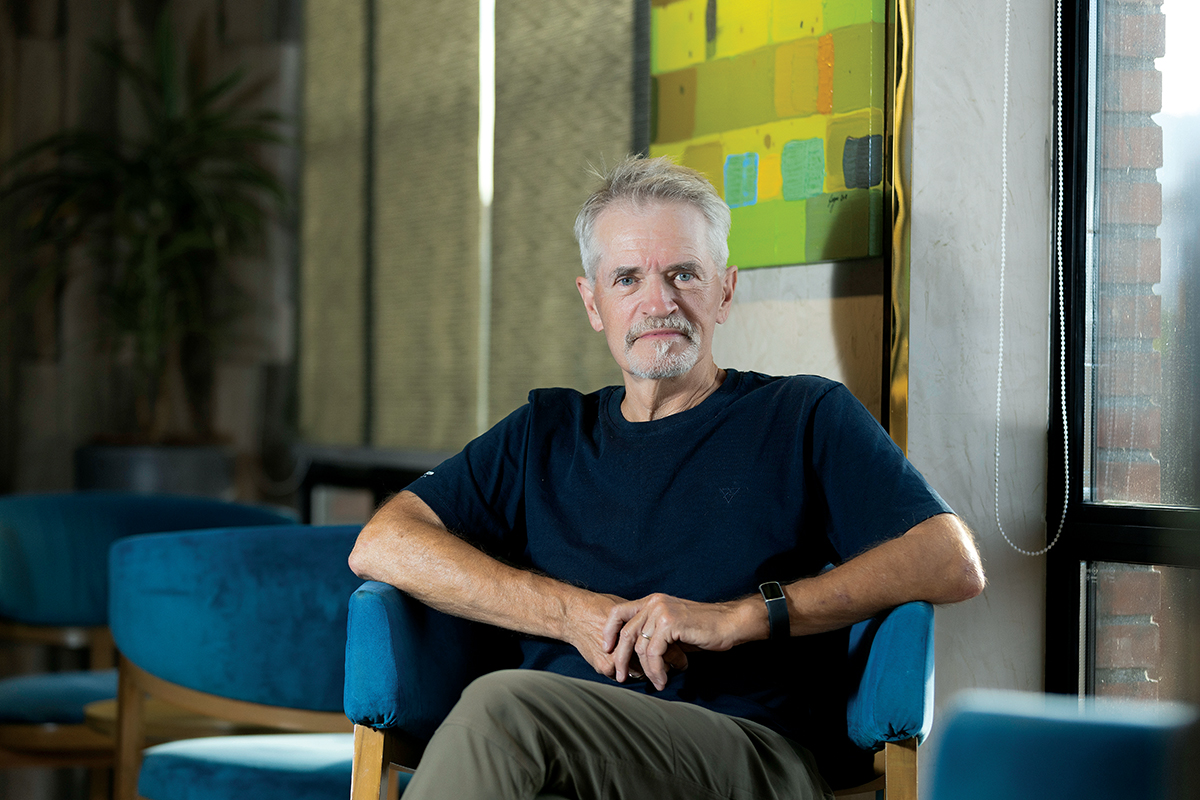
NIGEL ROBERTS
Author, The Leopard and the Moon: A Journey in Dolpo, Nepal
Across 1,500 kilometres, Nigel Roberts encounters a richer, more connected Nepal, and the economic contradictions that lie beneath its transformation.
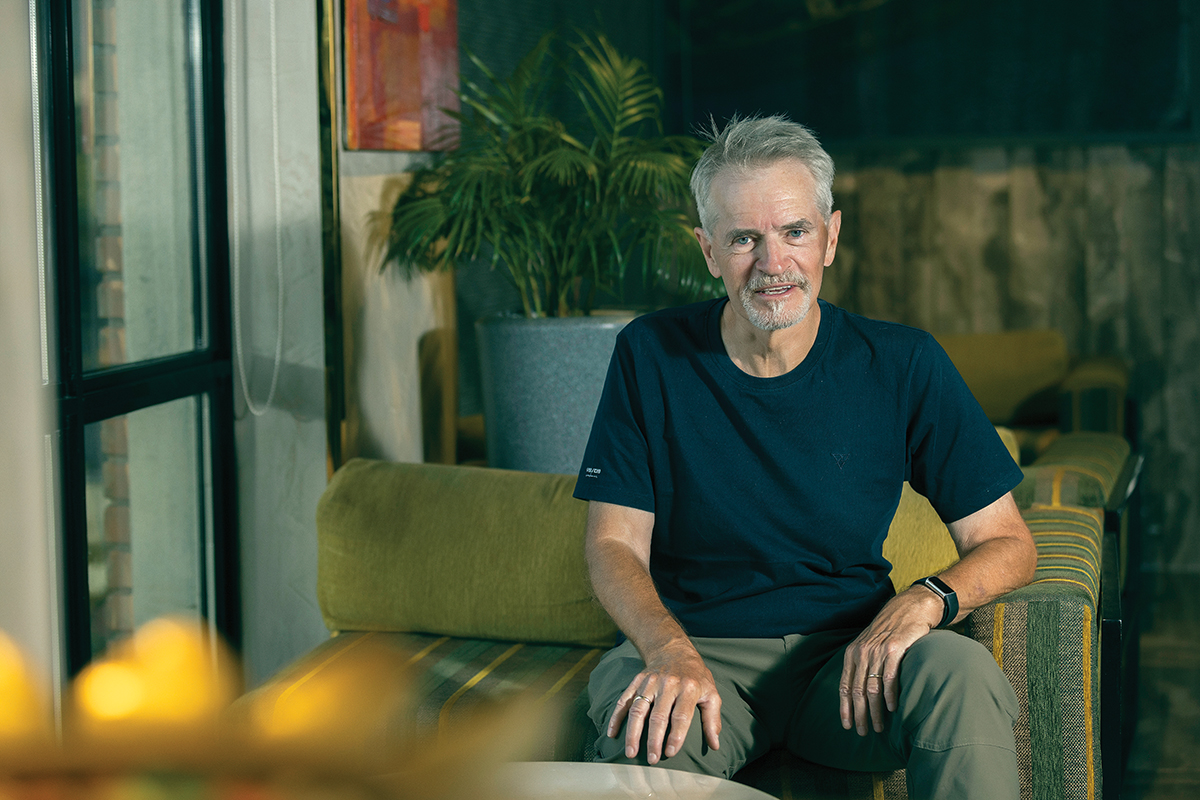
At 75, Nigel Roberts is walking 1,500 kilometres across Nepal, returning to a country he first encountered in 1974. For the former World Bank country director, the journey is more than an extraordinary test of endurance. It is a chance to take stock of five decades of development, and to ask what Nepal has gained, what it has lost, and what will drive its next chapter of growth.
The transformation is impossible to miss. Communities that Roberts remembers as desperately poor are more prosperous. Roads have opened markets, electricity and telecommunications have collapsed distances, and migration has transformed household incomes. But walking through Nepal at ground level reveals a more complicated balance sheet.
There is greater consumption, but too little productive investment. Remittances have lifted families and reduced poverty, but much of that prosperity is generated by Nepalis working outside the country. Roads connect villages to markets while sometimes dismantling the local economies that once sustained them. Public services have improved, but not at the pace of private prosperity. Nepal is richer and more connected, but has it built an economy capable of creating enough opportunity at home?
For Roberts, these contradictions are not arguments against development. They are reminders that progress carries costs rarely captured in GDP figures. He has seen traditional trading economies disappear, villages lose workers to migration and connectivity reshape cultures that once evolved in relative isolation. Yet he also sees considerable opportunity in tourism and agriculture, decentralised hydropower, focused technical skills, genuine federalism and, increasingly, private investment.
There is a personal reckoning here too. After five decades in international development, Roberts is willing to question the role played by institutions such as the one he once represented. He believes that the era when Western development assistance could determine Nepal's trajectory is largely over. The next chapter, he argues, will be written increasingly by Nepalis themselves - by entrepreneurs, investors, skilled workers, local governments and businesses capable of turning greater prosperity into productive growth.
In this conversation with Business 360, Roberts brings the long view of a development insider and the immediacy of a traveller encountering Nepal at walking pace. His journey ultimately poses a question larger than economics: can Nepal build a richer, more productive economy without hollowing out the communities, cultures and human connections that give that progress meaning? Excerpts:
At 75, you are walking roughly 1,500+ kilometres across Nepal, a country you first encountered in 1974. Having witnessed more than five decades of change, how would you assess Nepal’s progress in prosperity, economic opportunity, and quality of life? Has the country’s economic transformation delivered what it promised?
I can start with some good news. At the beginning of our walk, we were in the southern part of Taplejung, an area I knew quite well for a short time back in 1974 when I was working for a medical outfit, vaccinating against TB across all the villages in what were then the southern panchayats of the district. I have very vivid memories of how it was 52 years ago, but I had not been back since then. When you come to a place that you have not visited for such a long time, while at the same time carrying a very strong vision of how that place used to be, you really notice the change.
The area is much more prosperous than it was. In fact, I looked up some numbers on this, and in terms of the real rate of per capita growth, it compares with some of the fastest-growing areas and eras in recent economic history. It started from a very low base, of course, but average real per capita incomes seem to be four or five times what they were 52 years ago. That compares to the 'golden years' of post-World War II European growth. I don't mean there is no poverty there: but it is considerably less than it was.
A number of specific things caused this transformation. The growth in large black cardamom exports over the last 50 years has been significant. I found out, and I did not know this previously, that Nepal grows approximately half of the global supply of large black cardamom, almost all of it in the east. It almost all goes to India, driven by proximity as well as local rainfall, soils and ecological conditions. The other growth factors are the obvious ones: roads, telecommunications, and the export of labour. Previously, the average family was very short of land. You had some families who served in the Gurkhas either in India or in Britain, bringing in money from the outside, and since the end of the 19th century, there had been migration to Darjeeling, some seasonal and with many Nepalis leaving to settle there. So you always had people going abroad to work in the dry season: but not like now, when they go on long contracts to the Gulf, Malaysia or India. Put all those things together and there has been tremendous economic growth.
Now, how much of that was due to the Nepali government? Clearly, some of it was. The government had a role in providing roads, telecoms and wi-fi. But as we all know, for all of this period, the government has underperformed. We all know the history of corruption and inefficiency, both under the Panchayat system and under the more recent ‘three-party democracy’. You could argue that if Nepal had possessed a more efficient government, the growth rate would have been considerably higher.
While I was in the east, I looked at a couple of health posts (because I was familiar with them from my earlier work there). In particular, I was familiar with government drug supply: the organisation I worked for, the Britain Nepal Medical Trust, handled drug distribution for the government via Sajha Swasthya Sewa. In those days, the medicines that arrived from the government would generally run out within four or five months, usually with no alternative local supply available. These days, alternative supplies exist, but the government drugs still run out after five or six months of the year in those health posts I visited. They are better staffed and equipped than they were, but staffing vacancies remain, and if people get ill, they will try to go to Kathmandu, the Terai or a nearby big city. The provision of basic kinds of public services has not improved at the same pace as the private economy.

You spent 30 years at the World Bank working on development across several countries. Now you are experiencing Nepal at walking pace, through its villages, farms and mountain communities. What are you seeing on the ground that GDP figures, development reports and government statistics fail to capture?
One thing you do see on the ground is a significantly greater degree of consumption, coming primarily from remittances. Productive private investment, however, remains limited. As a result, much remittance income that does not go directly into consumer goods goes into construction, which does not often yield much in terms of long-term economic benefits. Agricultural processing and other forms of industrial development is scarce along the Middle Hills route that we took from Panchtar to Dhunche, where we reached a couple of days ago. So, at one level, yes, people live far better, and the dire poverty we saw frequently in the past is much less apparent. But there is a lack of non-agricultural productive activity.
We would all like to see more tourism, but for most of the trip, with the exception of a few very well-known areas like the routes funnelling up into Everest or Gosainkunda, almost nobody else is walking through - though one positive difference from before is that a more young Nepalis are beginning to explore the country. Facilities are lacking, though, and it is hard walking because, as a result of motor roads, the old mulbato (main road) trails have decayed into what are now called shortcuts through the winding motor roads. These shortcuts are not maintained, presumably because the maintenance funds that go to the village development committees are spent on the motor roads. Local people no longer walk if they don't have to: once it was a necessity, and now it is a strange thing to do - and done mostly by either foreign or domestic tourists!
I feel there is a lot of tourism potential in places that foreign and domestic tourists do not now visit, but some adjustments need to be made, such as improving trails, and paying a bit more attention to creating simple, comfortable lodges.
Tourism, specific cash crops like cardamom, herbal products for the Ayurvedic market in India, and horticulture for nearby towns remain under-exploited, compared to what could have happened with more consistent government policies and support.

Nepal has invested heavily in roads, connectivity, hydropower and tourism, yet many remote communities remain economically marginalised. As you walk west, are you seeing infrastructure create viable local economies or simply make it easier for people to leave? What does this tell us about the returns on Nepal’s development investment?
Your question touches on an old Marxist argument made in a book called Nepal in Crisis, written back in the 1970s by researchers from East Anglia University, an analysis later echoed by Nepali Maoists. The essential theory is that a road extracts labour and funnels in consumer goods. In this sense, a road extends the metropolitan capital centre out to the rural periphery but not to the ultimate benefit of the periphery: it is essentially extractive.
I don't think it's quite so simple, but roads and access to the global mainstream are a mixed blessing. While it is true that many families are divided with young men away for years at a time, local economies clearly benefit from their labour. But it is not labour in the Nepali economy, it is labour outside. While I do not have the exact numbers at my fingertips, the very significant reduction in poverty levels since the beginning of the 21st century was not primarily a function of development assistance or government policy: it came about almost entirely because of remittances. While poverty reduction is obviously something to celebrate, it is also a sign of policy failure: it is a second-best solution to how you can grow a country. Nepal is fortunate that its citizens are in high demand across many parts of the world and travel well, but this is an economy growing from the extraction of labour, which carries significant uncertainties.
Tourism is a major source of foreign exchange for Nepal but its economic benefits remain unevenly distributed. Could the Great Himalayan Trail become a meaningful engine of rural enterprise, spreading income beyond established trekking destinations? What would it take to turn that potential into a commercially viable model for local communities?
Tourism is indeed very unevenly distributed. It is concentrated in Kathmandu and in small rural pockets. There are a few people in those pockets who benefit, such as those living in the Everest area or in four or five other contained geographical pockets. In most of the other places we visited, there is always somewhere you can stay, but this is only a sideline for those families who can put you up.
There are some good ideas out there for increasing the attractiveness of hitherto unvisited areas, such as building standardised lodges with simple, basic amenities. As one example, we found nowhere where you can wash your clothes and dry them unless you stay for at least a day, and if you can't do that you end up walking around in damp clothes for days at a time. An electric dryer is not that expensive to buy and maintain, and would allow you to dry gear overnight. Little things like that matter.
It would be useful to develop a series of guidelines and standards that would make homestays and lodges more attractive. Staying with rural families in their houses is a great experience in itself, but a few details would make a big difference. But - if the Great Himalayan 'Cultural' (mid-hills) Trail is to succeed as a tourist 'draw', something must also be done about the trails themselves. The old trails are badly maintained, or not maintained at all, and local people quite often do not know where they lead to, or how long they take to walk - because they have fallen into disuse. The current alternative is to follow the motorable roads, and this can be tedious and uninviting.
Once you get away from motor roads, such as on the way to Gosainkunda, the trails are good, well-maintained and safe, even in scary places. A better hiking network would encourage people, particularly urban Nepalis, to go to fascinating places like Taplejung, Ilam and Sankhuwasabha, increasing access and spreading tourism's benefits more widely throughout the country.
Your memoir, The Leopard and the Moon: A Journey in Dolpo, Nepal, weaves together a trek through one of Nepal’s most remote regions, personal reflection, and the country’s trajectory across four tumultuous decades. What did returning to Dolpo reveal about the relationship between Nepal’s changing economy and the lives of people who inhabit its most isolated regions?
On this trip, we have not yet reached Dolpo, and it is quite likely we will not be able to get there because we will arrive at Jomosom only in December. My recollection from Dolpo in August and September 10 years ago was that the government offices and schools closed for six months in the winter, because the passes become difficult to navigate and the pathways, which are anyway dangerous, are covered in ice and snow and dangerous to navigate.
When I went to Dolpo in 2016, I was following the trail that Peter Matthiessen and George Schaller took in the 1970s, after which Matthiessen wrote The Snow Leopard. What we found then was not profoundly different from 40-something years before when they had been there, precisely because there were no roads, no telecommunications and no community traditions of labor migration to the Gulf, etc. The communities were small, with very strong cultural and religious ties to the area. With roads and telecommunications having reached Dolpo, no doubt the pace of change has accelerated .
As a brief aside, when we were in Taplejung on this trek, we were joined by Shekhar Karki, a 23-year-old Nepali filmmaker from Banepa. He was fascinated by the way that cell phones have served to create a more unified culture among young people. He was talking to a teacher and a health worker his age who were both from other rural areas, and he was struck that they thought in much the same way as he did, and shared the same reference points because of the impact of social media and access to the internet. You hear a lot about the damage social media is doing, but not so much about how it can serve as a unifying factor. Of course, we saw this in a major way last September with the Gen Z internet revolution. It was fascinating to me see how Shekhar inhabited the same communication culture as local residents did. Fifty years ago, people were much more local, and more isolated, in their frames of reference.
Your documentary, On the Trail of The Bhote Khampa, focuses on a community whose traditional economy depended on moving salt and rice between Tibet, Nepal and India using sheep and goats as pack animals. As modernisation makes this livelihood increasingly difficult to sustain, are we witnessing the inevitable evolution of an economy or the disappearance of a way of life before policymakers have understood its value?
When in 2019 my wife and I visited Ranikharka near Saipal Himal, we came across a group of Bhote Kampa. We did not really know who they were at the time but we travelled with them for a couple of days and were fascinated by their unique culture. When we got home, we looked for documentaries about them and there was nothing other than a few short clips on YouTube. Though I knew nothing about film, it was clear to me that their traditional way of life was changing very quickly, and that the best way to capture this process was on film: and this is how I was put in touch with Shyam Karki, the director of the film. The documentary is not just about the Bhote Khampa: it tells a story about globalisation and its impact on niche cultures and niche economies. As remote areas are exposed to global market forces, cultures like this tend to be swept away.
For the Bhote Kampa, it has been a gradual process. First, in 1961, the border closed; they had previously travelled to Kirong in Tibet to get salt and then came down to the Terai to buy rice. They had become masters of arbitrage, turning one mana (0.568 litres) of grain through several trades into four, five or even six manas of grain by knowing where and when to sell. Closing the border was one of several shocks to their system: the others were the arrival of iodised salt from India, then subsidised grain from the World Food Programme, then the community forestry programme (which obliged the Bhote Khampa to pay heavy fees for grazing).
All the aforementioned development programmes were good on their own merits, but like so many development initiatives, they were broad-brush in design and had unintended consequences for certain minorities. Now the Bhote Khampa have far fewer livestock, and are semi-settled, living part of the year in Bajura. They are a marginalised group and suffer considerable prejudice - and by an unfortunate irony, were encouraged in the past to register as Kshatriyas and take Kshatriya names, as a result of which they do not qualify for some of the modern social benefits that would otherwise be available to them.
The Bhote Khampa story raises a larger question: can development destroy economic value even as it creates growth? Traditional knowledge, trading networks and cultural identity rarely appear on a balance sheet. How should Nepal account for these hidden costs when roads, markets and modern supply chains transform remote communities, and is there a viable economic model for helping people transition to new livelihoods without losing their heritage?
What we focused on in this film was trying to understand how they are adapting to the challenge of modernisation. The generation in their 40’s and 50’s, many of whom are semi-literate or illiterate, are experts in livestock management and trading, but these skills are diminishing in value. In many cases they are reduced to going to the border at Hilsa to buy consumer goods from supermarkets on the Chinese side via intermediaries. They then take those items, like shoes, noodles and Chinese alcohol, up to villages that still do not have a connecting road.
This is the last gasp of their traditional business model, and in the film they reflect on how their culture is disappearing and question if they can carry on for even another 10 years. They recognise that what is good for their kids is not necessarily good for the community, but they know that those children have to adapt to survive.
They have found various ways of adapting, some of which they are comfortable with and some with which they are not. For example, as drinking chhyang (fermented grain beverage) is part of their culture, many now brew and sell chhyang as a source of income. Another adaptation that they find very distasteful, both due to their religion and to their love of animals, is selling their livestock for food.
Most are trying to get their kids educated to survive in a modern urbanizing economy, and they know that this will mean the breakup of their community and loss of much of their unique culture.
Primary or secondary school education, of course, does not guarantee anything. What makes better sense for these kids is a solid technical education. Creating public technical schools relevant to the market in situ, in remote areas, is not something that the public sector does well. There are existing private technical colleges in Kathmandu that offer relevant skills for both the domestic and foreign labor markets, as plumbers, electricians and computer programmers: but although such skills can make the difference between a subsistence and a more prosperous life, it will also mean leaving home.
Finding money to provide scholarships for children to attend these existing private technical colleges would be a useful contribution; preserving the integrity of the community, sadly, looks to me an impossible challenge.
Climate change is intensifying the risks facing Himalayan communities, from landslides and floods to pressure on traditional livelihoods. How should Nepal rethink the economics of mountain development when roads, tourism assets and settlements are increasingly exposed to climate hazards? Is the country investing enough in resilience or still paying too high a price for rebuilding after disasters?
Looking back to the period in which I was working for the World Bank here (1987-1993), one of the major developments we were promoting were large hydropower schemes like Karnali and Pancheshwar, projects that could have delivered thousands of megawatts of clean power. That, though, was in an era when we lacked today's consciousness of global warming and mountain instability. These mega projects were never built, partly due to sheer expense, but also due to the difficulty of negotiating stable power sales arrangements with India, amid mutual suspicions and Indian concerns about over-reliance on Nepali power and the security aspects of that reliance.
Looking back, I think it is just as well that those schemes weren't built. With growing river valley environmental risk, a more sensible approach involves dozens, or hundreds, of smaller schemes, some of which will probably be destroyed without you having put all your eggs in one basket. This, in effect, is what is happening, and largely though private sector initiative. By one means or another, Nepal's strategy for developing hydropower is spreading the risks, and this seems realistic under today's less stable ecological realities.
Nepal’s federal system was intended to bring governance and development closer to the people. As you pass through different regions, what would you look for to judge whether local governments are translating public spending into meaningful economic opportunity? Where is the gap between decentralising authority and delivering results?
My sense from what I have read is that federalism is still largely at the concept stage. Decisions made early in the process, especially regarding fiscal federalism, were too timid, with the World Bank offering some over-cautious advice to the government about how much fiscal power to decentralise. To me, federalism has significant potential if it can be moved forward in ways that avoid replacing centralized elite capture with decentralized elite capture. The underlying concept is solid. Nepal is a country so ethnically diverse and so geographically 'large' (in terms of travel time) that deconcentrating authority from the center has important political and economic possibilities; but it remains largely unrealised at present.

Young Nepalis continue to leave in search of jobs and higher incomes, while rural communities lose workers, skills and sometimes entire generations. Is migration primarily evidence of economic aspiration or a sign that Nepal has failed to create enough opportunity at home? What would it take to make staying a viable economic choice?
One big difference from when I was here with the World Bank in the 1990s is that the role of foreign assistance is much less significant than it was. While the absolute numbers in terms of transfers may be higher, the economy is much larger, and it is the private sector that is telling the story now.
Nepal has two very wealthy neighbours that it must constantly juggle between politically: but those neighbours are also Nepal's primary sources of investment and growth. Among other factors, India still needs the Himalayan waters; China has demonstrated capacity to effect enormous infrastructural change.
From Prithivi Narayan Shah's time, Nepal has had to balance the political interests of both these neighbors, and government misjudgments have at times brought severe repercussions: as in 1950 (the fall of the Rana regime), 1989-90 (the trade and transit dispute and the first People's Movement) and 2005-6 (the Twelve-Point Agreement and the second People's Movement. At the same time, you might argue, it is also a benefit to have superpowers on each side of you, as neither wishes to go to war over Nepal. Nepal’s vulnerability can thus be seen as a source of resilience, as long as the relationships are carefully managed. Having two huge, dynamic economies on its borders gives Nepal distinct agro-industrial advantages vis-a-vis India, as is is evident with cardamom and medicinal herbs. It is private investment coming from internal sources and from the region as a whole that can really make a difference.
The days of the 1960s and 1970s, when Western development assistance played a determinant role, are definitely over. While an institution like the World Bank can provide vital international experience, evidence-based policy advice, and judicious investment, the main investments driving future growth need to come from the private sector.
Having worked inside the international development system, what is one assumption about countries such as Nepal that you believe development institutions should reconsider? If you could redirect one major area of development spending or policy attention towards Nepal’s mountain regions, where would you place the investment and what measurable outcome would justify it?
When I last engaged with the World Bank staff about five years ago for an extended discussion on what The Bank was doing, I was struck by the high quality and large numbers of national staff. The World Bank had stated that a key strategic support priority was federalism, yet none of the staff had been posted outside Kathmandu. The amount of time they spent in the provinces seemed very limited: much of their time was consumed in dealing with World Bank staff in Washington, and with government and donor agencies in Kathmandu. While it was not my business to make such determinations, my instinct would have been to post staff to the various provincial capitals to work alongside local government staff and to help them access relevant experience from across the country and from elsewhere in the world.
Your book, documentary and current journey each offer a different window into Nepal: personal reflection, the possible disappearance of a traditional community, and a cross-country encounter with a changing nation. When you reach Darchula, what would you want this journey to have accomplished beyond the personal achievement? And what is the one economic or development reality that Nepal’s political and business leaders can no longer afford to ignore?
Ever since I worked here in my early 20s, I always wanted to walk across Nepal. When I was young and fit, I did not have the four or five months required to do it. Having lived and worked here so much, this is a place I love and where I feel very much at home, and I wanted to attempt this journey while I was still physically able to do it.
Beyond the personal journey, I want to understand how the country has changed, and what has propelled those changes. I want to reflect on the extent to which those of us who came from abroad and became attached to Nepal helped - or hindered - that process: did we help move things in the right direction, or were we were part of enabling decades of corrupt government and wasted opportunities?
Coming here now to think about this feels like an ideal time, because a government has come to power that could turn out to be genuinely different in its outlook and its ethos. While it is early days in terms of performance, there is a distinctly different feeling among young people about the possibility of meaningful political change. Coming from America, where our politics have become so divisive and self-destructive, seeing young people who are prepared to put themselves on the line to bring about political change is inspiring.
In this context of hope and continuing difficulty, undertaking this journey and talking to people about change is also a way of reflecting on my own life and career; it is, if you like, a kind of reckoning, and one which I hope will alo help me better understand my own larger journey through life.