Korala trade grows, but key infrastructure remains unbuilt four years after DPR

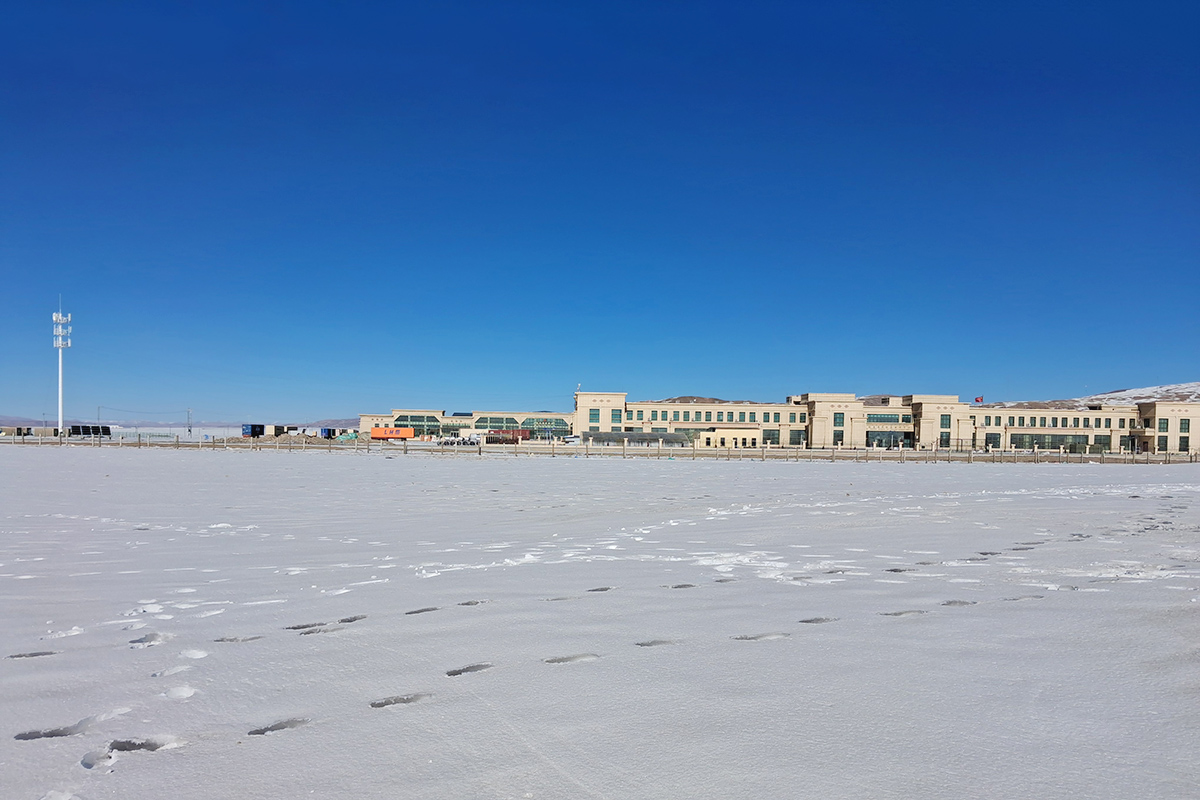
MUSTANG: Infrastructure planned for the Korala border checkpoint in Mustang remains unbuilt four years after a detailed project report (DPR) was prepared.
Yet the crossing has steadily grown in importance as a trade route between Nepal and China.
The checkpoint has gained significance in recent years. It has been three years since Nepal-China Korala border crossing was opened to residents of Upper Mustang and two years since it began operating as an alternative trade route.
Revenue collection has also risen sharply. More than Rs 6 billion was collected from the checkpoint last year. During the first four months of the current fiscal year alone, collections exceeded Rs 12 billion. Authorities say 60 to 70 containers and around 100 electric vehicles (EVs) enter Nepal through Korala each day.
Meanwhile, trade through Korala has also increased as activity at the Tatopani and Rasuwagadhi border points remains affected. Hundreds of containers and EVs now travel daily along the Beni-Jomsom-Korala road corridor linking Nepal and China.
However, the increase in traffic has exposed infrastructure shortages at the border.
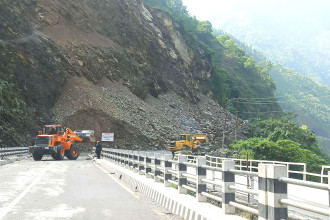
With no dedicated facilities in place, officials and businesses say border operations and traffic management have become increasingly difficult. At the customs yard in Nhechung, Lomanthang Rural Municipality-4, the number of containers and EVs has increased since the checkpoint became fully operational. Containers parked across multiple lanes have at times disrupted traffic on the road leading to Korala.
Businesses using the crossing say the lack of supporting infrastructure is creating operational challenges.
Dharmabir Mandal, a representative of vehicle importer Cimex Inc, said the absence of a dry port forces containers to be parked irregularly along roadsides, while electric vehicles are often stored in exposed locations near riverbanks and cliffs.
He added that the lack of essential facilities, including charging stations, has created further difficulties at the checkpoint.
For local leaders, the situation remains a source of concern.
Lopsang Chhomphel Bista, chairperson of Damodarkunda Rural Municipality, said it was unfortunate that infrastructure work had not started despite the report having been submitted to the government years ago.
According to Bista, Korala has already emerged as an important alternative trade gateway among Nepal's border crossings linked to China, but the absence of key facilities has limited efforts to develop the checkpoint for export trade management and smoother transit operations.
The government carried out the DPR survey in Falgun 2079 BS with plans to construct customs, immigration, quarantine, dry port and integrated security facilities at Korala. Around 1,000 ropanis of land on the Nepali side of the border had already been acquired in the name of the Government of Nepal for customs and other related structures.
The survey, conducted to support the expansion of the trade route with China, lasted two months and included geological assessments and soil testing. Under plans prepared by the then Ministry of Industry, Commerce and Supplies and the Nepal Intermodal Transport Development Committee, a DPR was completed for the required infrastructure.
Sitara Intusip-Fullerite JV carried out the study under a contract worth Rs 10 million.
Despite those preparations, construction has yet to begin.
For local authorities and businesses, Korala's growing trade volumes highlight the contrast between the crossing's rising economic significance and the absence of the infrastructure originally envisioned to support it.
By RSS