HITTING THE SWEET SPOT

-1767340083.jpg)
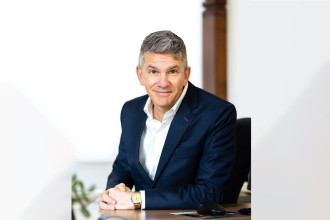
RISHAB AGRAWAL
Founder, Silk Artisanal Creamery
Rishab Agrawal represents a new wave of Nepali entrepreneurs who are reshaping the country’s food scene with fresh ideas and a commitment to quality. While many young founders follow predictable career paths, his journey took a sharp turn the moment he stepped away from the family trading business and into a kitchen. What began as a quiet curiosity for cooking soon grew into a calling strong enough to pull him across continents in search of real culinary training.
From Mumbai to Paris and across several European kitchens, he learned the discipline, precision and respect for ingredients that now define Silk Artisanal Creamery. He returned to Nepal not with a grand blueprint but with a belief that good food speaks for itself. That belief eventually evolved into a brand known for craftsmanship, honest ingredients and a style of leadership that puts people and product ahead of shortcuts.
Today, Agrawal stands out as one of the youngest founders in Nepal’s premium F&B space, leading a company that has grown steadily without losing its identity. His approach to business is grounded in patience, purpose and a clear sense of what he wants Silk to represent.
In conversation with Business 360, he talks about his journey, the entrepreneurial values that drive his business, and where he hopes to take the brand next. Excerpts:
Could you tell us about yourself?
I grew up in Nepal, like most kids, surrounded by a family where business was a part of daily life. The expectation was always clear. Finish your studies, join the family business and keep the legacy going. So, I followed that path for years. I studied commerce in high school, completed my BBA, then my MBA, and eventually stepped into the family’s trading business.
But once I was in it, I realised it did not fit me. Trading never felt like something I could give my whole life to. I kept doing it but cooking slowly became my escape. I would spend hours in the kitchen experimenting, trying new dishes and feeling a sense of joy that I did not get from the business side of things.
Around a year before Covid, that feeling became impossible to ignore. I knew I did not want to spend my life sitting in a shop, negotiating prices, chasing instalments and constantly worrying about payments. It was clear that I wanted to follow a different path, one that felt more meaningful to me.
That is when I started looking into culinary courses. A few months before Covid, I left for Mumbai and enrolled in a certificate course at IHM Dadar. I wanted to test myself in a professional kitchen because cooking at home and cooking in a real kitchen are two very different things. I spent two months there before Covid forced me to return.
But those two months were enough. I realised I genuinely enjoyed the work. Being on my feet, working with my hands, creating something that you put your heart into and then serving it to people, it felt right. Even though the hours were demanding, especially in Mumbai, it still made sense to me.
After that, I started searching for more serious training. That led me to École Ducasse in Paris. Once the first lockdown was lifted, I went to France, trained there, and worked in different kitchens across Europe. After gaining experience for some time, I eventually returned to Nepal, along with the savings I had managed to earn which was around Rs 27 lakhs.
-1767340083.jpg)
What were the early decisions that ended up shaping the direction of your company?
Honestly, very little of it was planned. When I returned from Europe, my goal was simple. I wanted to open a restaurant. Ice cream was not even on the list. Yes, I had learned how to make gelato in Italy for a couple of months but that was more out of curiosity. I never expected it to become a full-time venture.
Once I got back, I started exploring the restaurant scene in Kathmandu. I looked for spaces, suppliers and equipment. Very quickly, I realised how heavy the investment would be. Even a small space required rent that did not make sense. And the kind of food I wanted to cook needed specialised equipment, which pushed the investment into several crores. With my experience level, the risk felt too high.
One day, I was looking at a restaurant space, and the landlord mentioned that the small shop outside could be added as a kitchen extension. When I stepped into that small shop, it did not feel like a kitchen at all. It looked more like a space meant for ice cream. That thought came out of nowhere but it stayed. I left the idea of the restaurant right then.
Within weeks, I realised that an ice cream shop was actually feasible. I did not know what else to start and the idea felt refreshing. My only rule was that I did not want to make anything artificial or mass-produced. I wanted to offer the kind of ice cream I used to eat in Europe - pure, fresh and flavourful.
My family’s love for ice cream also played a role. We grew up going out for ice cream every weekend. My father especially has always been a huge ice cream fan. Even when I was in Europe studying culinary arts, he kept telling me to learn ice cream properly. So, in a way, it all came together naturally. That is really how Silk began.
One big issue is staffing. Anyone who is skilled ends up going abroad. And whenever you find someone promising and invest in training them, it becomes difficult to retain them because eventually they also leave. It creates a constant cycle of rebuilding teams, which slows down the pace of expansion.
Many young entrepreneurs struggle with confidence, how was it for you?
Not at all. I had no confidence that it would succeed. The only thing I clearly understood was that good ice cream did not exist in Nepal. Most of what was available was either imported or made using low-cost formulas. There were almost no premium products made locally and the few that existed were expensive.
I felt that if I could offer a genuinely good product, something without artificial flavours or preservatives, something with proper fat content and fresh ingredients, then people might enjoy it. That was the only logic I had.
But it was not a grand business plan. It was more of a creative pursuit that happened to become a business. I never imagined expanding. In the beginning, I imagined Silk becoming something similar to those 100-150-year-old sweet shops in India, a small place doing one thing, doing it well and staying rooted.
Today you have expanded from one outlet to six. What were the biggest operational hurdles along the way?
The first challenge will always be space. Finding the right location in Kathmandu is incredibly difficult. You need footfall, manageable rent, the right environment and a suitable layout. Getting all of that in one place is rare. This is not just a Kathmandu problem, it is the same everywhere, but it is especially tough here because the good spaces get taken fast.
The second big issue is staffing. Anyone who is skilled ends up going abroad. And whenever you find someone promising and invest in training them, it becomes difficult to retain them because eventually they also leave. It creates a constant cycle of rebuilding teams, which slows down the pace of expansion.
Those two factors, space and staff, are the biggest obstacles for any business in the F&B sector here.
What helps you stand out from the crowd?
For us, the product itself has always spoken louder than anything else. In the first two years, we did not spend anything on marketing. When we opened, I spent a month inviting people to try the ice cream for free. My friends and family helped spread the word.
We were also lucky in terms of timing. Kathmandu was bored when it came to ice cream. People had been eating the same thing for decades. When a new option appeared, they were eager to try it. Many times, people try new things out of curiosity, not loyalty. But in our case, they liked what they tasted because it genuinely felt different from what was available.
That difference comes from how we make things. We do not use shortcuts. We avoid anything mass-made. If we need vanilla, we use whole vanilla beans, not bottled extract. We import them directly. For chocolate, we use couverture chocolate instead of cocoa powder or compound chocolate. For fruits, we import whole berries and make our own jam instead of using pre-made mixes.
Every flavour involves work behind the scenes. We make our own syrups. We do not buy ready-made components unless the ingredient itself is the flavour like Oreo or Biscoff. Even with that, everything else is done from scratch.
Of course, this creates challenges. Batch-to-batch variation is normal because natural ingredients behave differently. Production becomes more complex. But our principles matter more. That training from Europe shaped how I think about food. If you are making something, you use the best and freshest ingredients you can access. Customers notice that difference. I think that is what helps us stand out, even in a crowded market.
You chose to position Silk as a premium artisanal brand. What drove that decision?
I would not say we set out to call ourselves premium. The intention from the beginning was simple. It was to serve something genuinely good. Naturally, when you choose high-quality ingredients, the cost rises. That is where most people misunderstand us. I often get comments like, “Why is it so expensive if it is made here?” But local production does not automatically mean lower cost.
If you compare ingredient prices, the numbers speak for themselves. Take pistachios for example. We just received a new batch, and it cost around Rs 1,200 per kilo. Add milk, butter, cream and everything else that goes into it, and it becomes obvious why real ice cream cannot be sold cheaply. The same goes for milk. If four litres cost nearly Rs 500, you cannot magically turn it into a litre of ice cream and sell it for Rs 1,200 without compromising something along the way.
We are not trying to be luxury. The goal is fairness, fair pricing for the quality we offer. When you compare our product to international brands like Mövenpick or Häagen-Dazs, our quality is right there with them. We use the same ingredients they use in their home markets. We have not taken shortcuts. Yet, we are selling at a fraction of their price.
In India, a scoop of Häagen-Dazs is around INR 270 or more. In Europe, it is close to seven euros. In the US, over six dollars. We sell a scoop for roughly two dollars. Considering the ingredients we use, we are not expensive at all. If anything, we are making premium quality accessible.
Young entrepreneurs often face financial pressure in the early stages. How did you manage your startup investment?
The total initial investment was Rs 27 lakhs. That covered the two pieces of machinery we absolutely needed, the rent, deposit, basic interiors and furniture. After that, I made a conscious decision not to borrow more. I felt that if my business required additional borrowing right from the start, something was fundamentally off in the model.
Ice cream is a cash-heavy business. You buy fresh ingredients, you produce and you sell. If I needed loans just to keep that cycle running, then the model was not viable. So, we chose to bootstrap. I used only the money I already had and tried to make it work within that boundary.
The first few months were nerve-wracking. Sales were slow because nobody knew us. There was barely any money left with me. But the one thing that gave me hope was the reaction from the customers who did walk in. They genuinely loved the product. That small reassurance kept me going.
Slowly, word spread. People started telling their friends and family. Then after about six or seven months, we started getting calls from different parts of the city. People were asking us to open new outlets, saying they could not always come to our location. That is when confidence started to build. From two people running a tiny operation, we slowly reached where we are today.
Even our pricing reflects simplicity and fairness. Many ice cream brands have cheap flavours, medium flavours, premium flavours, separate charges for cones, different scoop sizes. It is complicated. We do not want customers thinking about anything except what they want to eat. So, every flavour is the same price. Cup or cone, the same price. Vanilla or chocolate, the same price.
What leadership lessons have you learned while managing teams across several outlets?
Trust is the foundation. That is something I realised early on. I grew up watching how my father managed his business. He built it well but the entire system depended on his presence. If he was not at the shop, the shop was not really open. I knew I did not want to run a business like that.
For me, leadership starts with building a team and teaching them properly. If the business opens at 10:30 in the morning and closes at 10:30 at night, I cannot stroll in at one and leave at four. I have to lead by example. When you train your team well and genuinely trust them, you start noticing who has potential, who takes initiative and who wants to grow. Those people deserve space. If you do not give them responsibility, they will not build confidence in themselves.
I do not believe in the mindset that employees will never care as much as the founder. Their livelihood also depends on the business. If the company does well, they do well. That is why it is important to build a culture where people feel like they have a stake, even if it is not in the literal sense. When employees feel connected, their effort naturally increases.
Fair pay is another non-negotiable part of this. You cannot expect someone to work long hours if they cannot live a comfortable life. We follow industry standards, and in some ways, we go further. For example, we could easily run the entire outlet with one shift but we do not. Not because we love spending more on HR but because we do not want anyone working 12 hours a day. We split it into shifts. Yes, it doubles our HR cost but it improves morale and performance.
And that matters because today, I am not the one serving customers. My team is the face of the brand. If they are unhappy or tired, the service suffers, no matter how great the product is.
We also pay close attention to ambience. At Silk, everything is designed to make people feel good the moment they walk in. We invest heavily in our outlets because we want the experience to match the product. A good product alone will not bring people back. The service, the space, the consistency, everything has to work together.
Even our pricing reflects simplicity and fairness. Many ice cream brands have cheap flavours, medium flavours, premium flavours, separate charges for cones, different scoop sizes. It is complicated. We do not want customers thinking about anything except what they want to eat. So, every flavour is the same price. Cup or cone, the same price. Vanilla or chocolate, the same price.
I develop all our flavours and we treat each one with the same level of effort. That is part of the culture we have built. Keep it simple, honest and consistent.
-1767340083.jpg)
The economy is slow. Has this affected your expansion plans and how are you navigating this period?
People often think we are expanding aggressively but that is not really the case. Most of what we have done happened naturally. Opportunities showed up and we stepped into them only when they felt right. I always ask myself a simple question before taking on anything new: Are we ready for it? If the kitchen is ready and the team can handle it, we go ahead. If not, we do not force it.
The slower economy has had an impact. You can see it in consumption patterns. When regular customers who used to enjoy four scoops now choose two, you know they are being cautious. It tells you a lot about how people are feeling. But every economy goes through cycles. You cannot really fight it. You just learn how to move through it.
Right now, I am not running the company by spreadsheets. I am following my gut and at this stage it works. But as we grow, I know I will need to shift toward a more data-driven approach. For now, we are trying to focus on the bigger picture. We are letting smaller issues slide, even if it costs us some margin. My priority is building a strong company with a product people genuinely love and understanding who we are as a brand before chasing numbers.
What role can startups like yours play in the country’s economy?
Large companies make big contributions, of course, but small businesses like ours carry a huge share of the load. We employ 45 people right now and there are many others in the same category doing the same. These small companies generate a lot of jobs and keep money circulating within the country.
We also try to buy local whenever the quality matches our needs. Our milk comes from a small dairy in Naxal. Before we started working with them, they were selling around 100 litres a day. After we came in, their daily sales increased. That is growth for them, made possible by what we do. It is a simple chain: we buy local, add value, sell it and the income stays here.
If you look at the numbers, a significant percentage of GDP comes from enterprises like ours. And many of these small companies eventually grow into larger ones. Still, despite being the backbone of the economy, we often get caught in bureaucracy and regulations. Bigger companies have teams dedicated to handling that. We face it alone.
Many startups talk about regulatory hurdles. What changes would make the business environment more supportive?
Regulations and policies are part of doing business anywhere. But navigating them is not something you learn in business school. You are taught marketing, HR, strategy but no one teaches you how to deal with local laws or shuffle between government offices.
Everyone accepts that navigating the system is part of the job but it does not make it any easier. Just recently, a friend told me he spent three hours going from one room to another just to get an official stamp at the office. In the end, he paid Rs 4000 for something that could easily be done through a simple process. These things slow businesses down.
There is also the issue of multiple numbers and registrations. We already have a unique VAT number. Why do we need separate manager numbers or company data numbers? If everything could be handled through a single portal, we would save a lot of time and money. I personally could save four to five lakhs a year in legal fees alone. That is money I could invest in improving the company.
The biggest challenge for us as a brand is import duties. Some of them just do not make sense. Chocolate, for example, is one of our main ingredients. Something that costs a thousand rupees abroad becomes thirty-five to forty thousand by the time it reaches us. People talk about boosting exports but how are we supposed to export when the raw material itself is taxed so heavily? The same goes for pistachios. If it costs twelve thousand but seven thousand of that is duty, it becomes almost impossible to keep prices reasonable.
These are the kinds of issues that hold small businesses back. Fixing them would make a huge difference for companies like ours that genuinely want to grow, hire more people and contribute to the economy.
You are preparing to go global, which is a big leap. What gives you that confidence?
A lot of that confidence comes from our Thamel outlet. The Nepali share of customers there is quite small, maybe fifteen to eighteen percent. Most of our sales come from tourists and they are the ones who compare us with what they get back home. When someone from Europe or the US tells us our ice cream is as good as, or sometimes better than, what they are used to, it gives us a real sense of where we stand.
Tourists do not have any emotional connection to our brand. They are not being polite. They just taste the product and react. So, when they get excited about it, it tells me that, at the very least, we can survive in an international market. We might not become a giant brand overnight but we can hold our ground and adapt.
And that adaptability is important. What works in Nepal may not work exactly the same elsewhere. We know how to make good ice cream and we are confident about that. If the model needs to shift a little depending on the country, then we will shift. That is what a business should do. If we are not willing to adjust, we should not be thinking about growing at all.
It is still a long-term dream, not something we are chasing tomorrow morning. Like I have said before, our expansion has never been aggressive. We are still figuring out who we are as a company. But once we feel ready and see that the foundation is strong, why should not we try?
-1767340083.jpg)
Looking ahead, which food trends do you think will influence your next round of products or innovations?
Today’s customers are far more informed than they used to be. If you want to run a good food and beverage business, the first rule is delivering a product that meets real standards. You cannot take shortcuts anymore because people notice. And with how globalised everything has become, Nepali consumers are exposed to food from all over the world.
Think about how things have changed. We have moved from simple local cheeses to customers asking for blue cheese, parmesan, mozzarella and all sorts of specialised products. The bar keeps rising. So, anyone in F&B needs to stay connected to what is happening globally and bring that quality home. If you can do that well, customers stay with you.
On the other hand, businesses that focus only on cutting costs or squeezing margins eventually lose their edge. Customers might visit once or twice but they will not return. We have seen it in the last decade, restaurants that invested heavily in ambience and hype but did not give enough attention to the food itself. People caught on quickly. You need balance across everything from product, place, training to understanding what good food actually means.
Another challenge is that many business owners get stuck on what they already know. They master one thing and stay there. That does not work anymore. You have to keep moving. Even if a product is selling well, you cannot rely on that comfort zone for long.
For us, last year was all about improving our kitchen instead of opening new outlets. We invested eighty to ninety lakhs in equipment and production processes alone. We bought better machines, including Silverson mixers, which cost lakhs, just to get a smoother texture in our ice cream. These are small details from the outside but they matter to us.
At the end of the day, customers come back regularly, and that loyalty deserves effort from our side. We cannot serve the same thing forever just because it worked once. If there is a chance to make it better, it is our responsibility to do that. Staying comfortable might work for a few years but it will not take us forward. And moving forward is the only option if we want to stay relevant.