WWF Nepal and SPCC Launch Project for Sustainable Waste Management in Sagarmatha

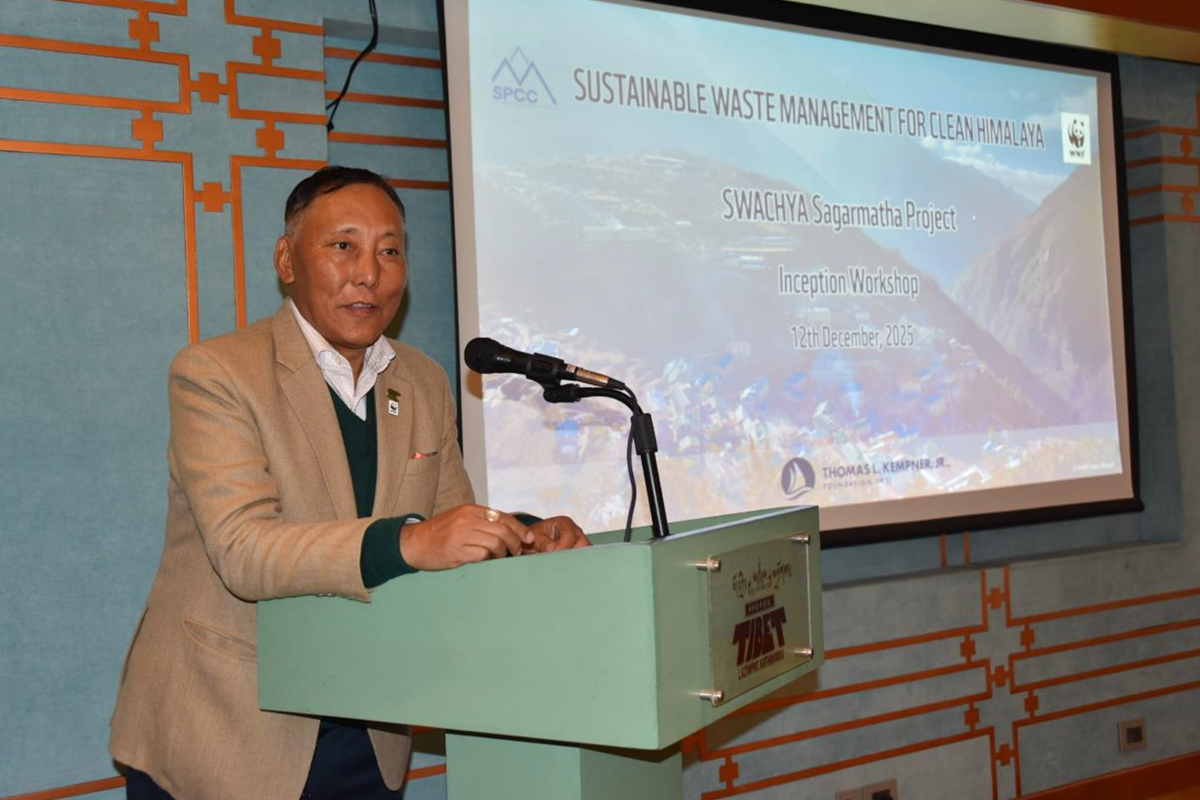
Kathmandu: WWF Nepal and the Sagarmatha Pollution Control Committee (SPCC) today held an inception workshop to kick off the Swachya Sagarmatha: Sustainable Waste Management for Clean Himalaya Project, a three-year initiative aimed at improving waste management, including e-waste handling, across Sagarmatha National Park (SNP) and its Buffer Zone.
The project will be implemented by WWF Nepal in partnership with SPCC, Khumbu Pasang Lhamu Rural Municipality, the Sagarmatha National Park Office, the Buffer Zone Management Committee, and local waste management groups. Funded by the Thomas L. Kempner, Jr. Foundation, the initiative aligns with the Environmental Pollution Control and Sustainable Waste Management Plan 2023 of the rural municipality.
Honourable Sonam Geljen Sherpa, Chairperson of the Federalism Enablement and National Concerns Committee, highlighted the project’s significance, saying, “Everest is more than a mountain; it is our national pride and a shared responsibility. Lasting conservation is only possible when communities, government, and partners work together.”
Tourism in the Khumbu region has grown from roughly 20,000 visitors in 1998 to over 50,000 in 2023, making waste management a pressing environmental concern. The workshop provided a platform for stakeholders—including federal ministries, development organisations, park authorities, the private sector, and media to discuss project priorities, share insights, and plan community-driven solutions.
Tshering Sherpa, CEO of SPCC, said the initiative will strengthen the existing community-led waste management model by improving infrastructure, advancing recycling practices, and equipping locals with skills and knowledge to manage growing volumes of waste, including electronic waste.
Dr Ghana Shyam Gurung, Country Representative of WWF Nepal, added, “The Everest region is not only a symbol of Nepal’s natural heritage but also a global icon of environmental stewardship. This project brings together all key actors to build a sustainable and locally owned waste management system.”
The workshop concluded with commitments to strengthen coordination among government agencies, conservation partners, and community institutions, ensuring that activities under the Swachya Sagarmatha Project are inclusive, practical, and effective.

-1791309830.jpeg)