Built to Withstand: How Nepal’s Young Entrepreneurs are Building Through Crisis

Being an entrepreneur or owning a business is widely regarded as the most lucrative career path, often suggesting a quick financial windfall, the business equivalent of winning a hustle lottery. However, for those starting ventures in Nepal, this dream is constantly tested by significant headwinds. Political instability, constant economic crises, and periods of civil unrest have historically eroded the foundation for many businesses, often forcing dedicated entrepreneurs to shut down their operations, seek conventional employment, or relocate abroad. Despite these systemic challenges, a resilient group of young Nepali entrepreneurs has successfully established themselves and is thriving against the odds.
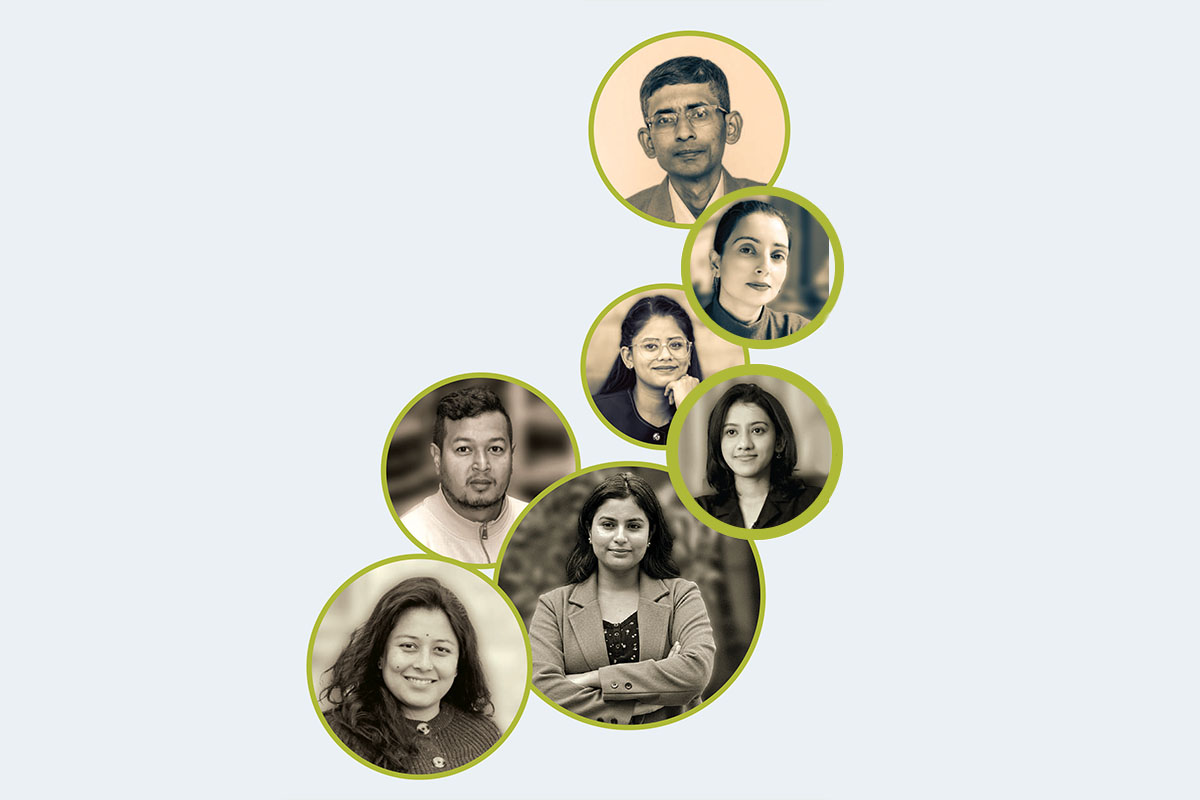
This Opinion segment gathers insights from seven notable entrepreneurs who are actively navigating the complexities of the Nepali business landscape. They are: Pankaj Panjiyar of Doko Recyclers; Prakritee Dhungel of Bamboo Bazar; Sabrina Shrestha of Spices PnC; Shreya Katuwal of BiheNepal; Bibek Thapa of Abiral Dairy; Ankita Bhagat of Renaee Reborn by Choice; and Sweta Pandey of Bhola Foods. They share their candid experiences and operational philosophies on building sustainable businesses, especially focusing on how they manage limited funding, adapt to technological transformations within traditional limitations, and maintain momentum amidst Nepal’s ever-changing political and economic scenario.
The discussion centres around pivotal questions concerning the entrepreneurial journey in Nepal like identifying the moment a business idea becomes a viable reality, understanding how being a Nepali shapes their business purpose, overcoming the ubiquitous barrier of funding, leveraging unique Nepali traits like ‘jugaad’ (resourceful problem-solving) for a competitive edge, and developing strategies to make critical decisions during national instability. Their collective experiences illuminate a path forward, proving that with resilience, resourcefulness, and a strong sense of community purpose, innovative businesses can not only survive but also significantly contribute to shaping Nepal’s next decade of economic and social innovation.
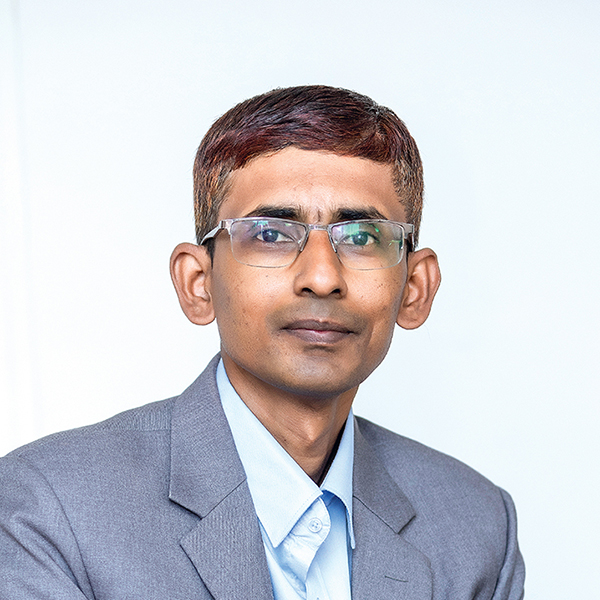
Learning by doing is one of the key principles I adopted while operating Doko. We failed, learned and implemented our learnings. Learning from those failures acts as a catalyst for shaping thoughts into a business case.
Pankaj Panjiyar
Doko Recyclers
When did you realise your business idea could grow into a real business? And, how did you approach setting up a business?
Pankaj Panjiyar: We realised the business potential behind Doko Recyclers early on. The strong feedback we received during our early client meetings made it clear that the waste management sector lacked innovation, professionalism and reliable service. As founders, we personally engaged with and learned every aspect of the business to ensure we were laying a strong foundation. Turning Doko into a viable business was possible because we continuously adapted, pivoting the model until we found what worked. Despite financial constraints and navigating entrenched syndicates, we pushed forward by strengthening our company culture around values, transparency and accountability. As a social enterprise, our guiding principle has always been clear: create positive environmental, social, and economic impact while building a resilient, long-term business.
Prakritee Dhungel: The realisation was not a sudden flash. It was a gradual process driven by market validation. We started very humbly with a college stall and an initial investment of only Rs 10,000. The turning point was launching our Instagram page. I personally handled all the initial deliveries and spoke to every customer. This direct interaction gave us immense confidence in our personalised bamboo products and provided invaluable ideas for our next product launches. That is how a simple college idea organically evolved into a business. Regarding setting up, it has been an ongoing journey of scaling based on need. I initially operated from my room, then moved to a coworking space, then a series of flats, and eventually a dedicated building. We are now already seeking a larger studio and factory space. Our approach is to only scale our physical footprint when the customer demand absolutely requires it, ensuring our growth is always grounded and necessary.
Sabrina Shrestha: I think the belief was there since the beginning but it was shaken a little bit somewhere along the journey when we were not seeing the results. But when we kept on going and trying to succeed, when our social media kind of blew up, and we started getting the recognition, we thought this could be it. We thought of a very different idea of delivering Panipuri and Chatpate, and people were immediately drawn towards this idea. Along with customers coming into our shop, we also started delivering our products, and it gave us immense attraction and validation through our audience and customers. That is when we realised that this could grow into something bigger and better for us.
Shreya Katuwal: We sort of knew that the idea of BiheNepal, a dating/matrimonial app, could grow into a business right from the start. Nepalis are living all over the world now but no platform could help them find a match, and traditional methods weren’t going to work for everyone anymore. There was an apparent gap in the market, and no established players. We started by building and releasing the first version through our software company, Rawa Software. Once we saw real traction and the idea was really validated after the launch, we went on to establish it as a separate entity, incorporating it as BiheNepal.
Bibek Thapa: We always planned to keep our product line small and focus mainly on B2B to build a stable business. But when we studied the global demand for Churpi dog chews, we were surprised to see how fast the market was growing.
Once we built our factory and entered the market, the demand from the USA, Canada, and the UK was far higher than expected. Later, we realised flavoured chews would be the next big breakthrough, and only a few companies globally were capable of producing them. So, we focused fully on flavours, and today our demand is higher than our production capacity. That is when I truly saw how big the opportunity was.
Ankita Bhagat: It became real when I realised the extent of the silent suffering. I saw women dealing with recurring hormonal issues and infections linked directly to the products they were using, yet no one was connecting the dots because of the stigma. It was not a ‘lightbulb moment’ about making money, it was a realisation of duty. We saw a health crisis that was being ignored. The business became real when we decided we were not just selling pads, we were fighting for the right to a safe period. We built the business backward from there, focusing on advocacy first and sales second.
Sweta Pandey: There was not a single moment of realisation for me. I simply worked with consistency and belief, trusting that if I put in the effort every day, Bhola Foods would eventually grow into a large, impactful Nepali brand. That mindset still drives me. My approach to setting up the business was intentional from the start. Along with kitchen staff, my first major hires were in accounts and legal to build a strong foundation. The growth was organic but backed by structured systems, disciplined operations and a commitment to quality from day one.
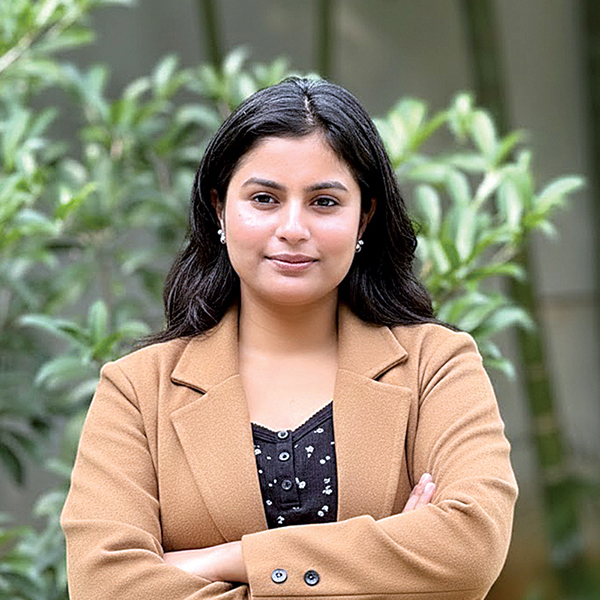
For us, being a Nepali entrepreneur shapes our purpose by enforcing an acute focus on service excellence and adaptability to stand out in a competitive market.
Prakritee Dhungel
Bamboo Bazar
How does being a Nepali entrepreneur shape your purpose in doing your business?
Pankaj Panjiyar: Growing up in Nepal, I have experienced both gaps and opportunities in the most pressing yet ignored waste management sector. We talk a lot about problems but very few dare to act on solutions. We observed, understood and acted on one of those everlasting problems of waste management, which has a dual purpose, serving society and environment, and making it a business case for us.
Learning by doing is one of the key principles I adopted while operating Doko. We failed, learned and implemented our learnings. Learning from those failures acts as a catalyst for shaping thoughts into a business case. We choose to take a different path with a long-term goal of changing the present landscape of waste management, which will take years to realise. Knowing a long journey, yet we step in for a cause. Being a Nepali also backs us with a strong sense of responsibility, where we are helping to shape the future of sustainability and are committed towards long-term change.
Prakritee Dhungel: For us, being a Nepali entrepreneur shapes our purpose by enforcing an acute focus on service excellence and adaptability to stand out in a competitive market. Operating in an environment with frequent logistical and infrastructural challenges means we must excel where traditional businesses often lag.
Our core purpose is defined by two pillars:
Unwavering Customer Satisfaction: We treat fast delivery, constant updates, and transparency not as a bonus, but as the foundation of our operations. In our market, exceptional speed and reliable communication build the trust that differentiates us from the competition.
Product Newness and Innovation: To maintain a competitive edge, we are constantly innovating, especially in the customisation and design aspect, to ensure there is always newness in our products.
Sabrina Shrestha: Being a Nepali entrepreneur shapes our purpose in a way that we need to be a source of inspiration or motivation for the youth of our generation to believe in their idea, no matter how small or out of the box it feels, and go for it. We feel like we need to set an example to the people that you can start small and along the way make it grow into a bigger and better venture through hard work, patience, perseverance and consistent efforts.
Shreya Katuwal: Being a Nepali entrepreneur definitely shapes the way I approach my work. Living here, you become very aware of the gaps in systems, the missed opportunities, and the things people simply learn to ‘adjust’ to. So, wanting to fix those pain points can give you a lot of purpose, and push you to build something that actually changes things for the better here.
Bibek Thapa: Being a Nepali entrepreneur gives me a strong sense of responsibility to uplift the communities that depend on the dairy sector, especially farmers. I grew up seeing how limited opportunities are in rural areas, so building a business that protects farmers from price fluctuations and milk wastage has become a central part of my purpose.
At the same time, Nepal’s challenges like unpredictable supply, weak infrastructure, complex regulations, have taught me resilience. These experiences shaped my mission to build a globally competitive product from Nepal and prove that world-class quality can come from our local resources.
Ankita Bhagat: It grounds everything in duty. Being a Nepali entrepreneur means you are not just looking at a spreadsheet; you are looking at your community. Our purpose is shaped by the need to solve a local crisis. We are not trying to be a global giant just yet; we are trying to set a national standard. It is about proving that a Nepali brand can offer world-class health safety.
Sweta Pandey: Being a Nepali entrepreneur makes me deeply rooted in community, resilience and service. We come from a culture where food is emotional, personal, and central to everyday life. That shapes how I run Bhola Foods, with warmth, reliability and a sense of responsibility. I want to build something that creates jobs locally and makes Nepali taste world-famous besides our dog chews.
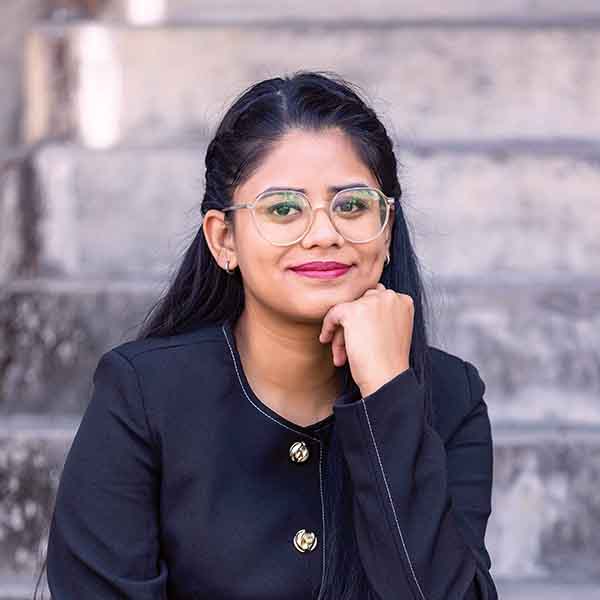
We need to set an example to the people that you can start small and along the way make it grow into a bigger and better venture through hard work, patience, perseverance and consistent efforts.
Sabrina Shrestha
Spices PnC
Funding is often called the main barrier when setting up or scaling a business. What was your experience?
Pankaj Panjiyar: Funding certainly remains one of the major challenges, but not the biggest barrier for setting up in the initial stage and scaling up in the later stage for business. We took a lean and pragmatic approach to funding in the initial days based on the priority of business need. We injected initial capital just enough to kick off the business capital injection was not as planned before business inception. The business keeps on demanding money, which we have to manage from other sources like short-term borrowings, credit purchases. That was another learning for us that teaches us to optimise the use of limited funds. The funding crunch starts easing up once trading begins after 6-7 months of operation. The business generated enough money just to keep Doko alive. Being founder members, we often cut our pay so that the money can bring more business. With support from development agencies, projects, strong customer relationships and a solid business case, we keep a steady track of growth, and without any external investment, we are able to stabilise and scale at a slow pace.
One major learning during those crunch days was unable to plan for an emergency fund and not able to track money movement in the initial days of operations, which I suggest new entrepreneurs build upon a good finance tracking system from the first day.
Prakritee Dhungel: We started with pure bootstrapping using personal savings. This forced us to be hyper-efficient and validate demand with minimal capital. We remain a strategically bootstrapped company today, as we feel we are not ready for external investor pressure yet. For scaling, we used banking support for capital expenditure, primarily to upgrade our core competitive technology, our laser engravers.
Our clear, profitable model allowed us to focus bank conversations on growth potential, not survival. Ultimately, we found the biggest barrier was not a lack of money, but ensuring we had the operational expertise to manage the rapid scale.
Sabrina Shrestha: Capital is something that was always limited for us since the start. It was because we were young and all we had was a little bit of savings from jobs that we had done in the past. And as we mentioned earlier, we never sought funding from other investors. But it never stopped us from achieving what we wanted to. We had to change our ways or adjust according to the resources, but it is always the thought process and idea that matter the most, rather than money. And that is exactly what we did in the past and do even now. Even if we have to slow down our scaling process, we want to take it slow and do things
Shreya Katuwal: Given that Nepal’s startup ecosystem is still developing, we encountered multiple challenges, from gaps in startup awareness to regulatory processes that were not yet growth-friendly. For example, when we set out to use convertible notes to bring in Foreign Direct Investment, a process that is meant to take one day internationally, it stretched over nine months for us here due to regulatory ambiguity. It was alarming to realise the level of unprecedented impact that the regulatory ecosystem can have on businesses.
Securing funding was also challenging back around 2023, because most investors were still focused on investing in traditional physical sectors like manufacturing. Explaining the vision of a digital matrimonial platform was difficult simply because it was a sector that many investors were not used to. And since we were incorporated in Nepal, raising funding from abroad was also a challenge. Nepal is not usually a market where foreign investors put early-stage capital into and our own experience with the long FDI approval timeline explained exactly why.
Bibek Thapa: Funding was definitely a challenge, especially during the nine-month milk overflow crisis when we faced heavy losses and delayed receivables. Fortunately, I had strong support from my father and brother. Our family’s stable carpet business provided a financial backbone that helped sustain the new venture during difficult times. Even with that support, we made a deliberate choice to reinvest everything we had into the business. Partnering with the bank during the toughest period also played a crucial role, enabling us to build our Churpi factory when it seemed most difficult to do so. That decision became a turning point. It allowed us to stabilise cash flow, convert surplus milk into value-added products, and eventually tap into international markets. So, while funding was a barrier, it also forced us to innovate, stay disciplined, and build a stronger, more resilient business model.
Ankita Bhagat: It is tough. Traditional banks and investors in Nepal usually look for low-risk, quick-return models. We are in a niche that requires ‘patient capital’, money that understands we need time to educate the market before we see massive scale. We have to be creative with our cash flow because the traditional financial instruments are not really designed for mission-driven, long-term brands like ours.
Sweta Pandey: For me, funding has not been the main barrier yet because I am still operating at a relatively small scale. Maybe I’ll be able to answer this differently a few years from now when I need larger investments.
For now, I have been fortunate, getting shortlisted for Shark Tank Nepal, pitching in front of the sharks, and receiving an all-shark deal. So, in my experience, funding was not the biggest obstacle. I believe mindset can be a bigger barrier than money. With the right mindset, clarity and consistency, opportunities eventually open up.

There are times when you need to pivot entire ideas to adapt to market needs, sudden political changes, or new regulations, so adapting quickly and embracing change is a real advantage.
Shreya Katuwal
BiheNepal
One Nepali trait or quality that gives an entrepreneur a natural advantage?
Pankaj Panjiyar: We Nepali are resilient, be it the present corrupt system, socio-economic issues or political issues. These traits also show us the path to challenge the present rudimentary system of collection and dumping to divert waste for resource recovery and break the stereotype.
Let us start and slowly we can build up a formal requirement is another trait of being Nepali, which translates us as an entrepreneur. The next advantage is the use of personal connections to bring business. This helps a lot in the Nepali context.
Resilient Nepalis do not give up easily, and that’s the spirit that keeps us from pushing for thriving business in tough days. We failed in our several experiments of diversifying revenue streams we still did not stop trying new avenues. Our ability to preserve, improvise and collaborate becomes a powerful tool for us to sustain, scale and thrive.
Prakritee Dhungel: The most powerful Nepali quality is ‘jugaad’, or resourceful, flexible and innovative problem-solving. Nepali entrepreneurs operate in an environment where infrastructure, policy and utilities are often unpredictable. This necessity for constant adaptation means we are naturally adept at doing more with less, pivoting quickly and finding ingenious, low-cost solutions to complex problems. This resourcefulness translates into a tremendous advantage in managing costs and creating unique, locally-tailored supply chains.
Sabrina Shrestha: There are a few Nepali traits that help an entrepreneur but if we have to name one, it would be making things work one way or the other. In Nepali, we say ‘jugaad garne’. When starting a business from scratch and with little to no money, it’s the primary trait to makes you keep going. If things don’t work out a certain way, why don’t we try another way rather than giving up completely? As middle-class Nepalis, we were brought up like this which is why it was already ingrained in us.
Shreya Katuwal: I think one trait that Nepalis naturally have is adaptability. Any new technology or app tends to be embraced very quickly. As an example, Nepal was among the top countries using ChatGPT when it first came out. I think this trait is extremely valuable for entrepreneurs because building a startup involves navigating uncertainty and overcoming unexpected challenges. There are times when you need to pivot entire ideas to adapt to market needs, sudden political changes, or new regulations, so adapting quickly and embracing change is a real advantage.
Bibek Thapa: A key Nepali trait that gives entrepreneurs an advantage is the ability to work under uncertainty. In Nepal, nothing is predictable, whether it’s electricity, demand, regulations, or logistics. This teaches us to think fast, adjust quickly, and find solutions even with limited resources.
Another strength is our community-driven mindset. Trust-based relationships with farmers, partners, and workers help build strong, reliable supply chains, something essential for agriculture and manufacturing businesses.
Ankita Bhagat: It is resilience mixed with jugaad or resourceful adaptability. Nepal is unstable. Whether it’s politics, economics, or infrastructure, things go wrong here constantly. But that instability is a training ground. It forces you to be incredibly tough. You learn to make sophisticated decisions with zero resources. We don’t give up when the market pushes back; we just find a smarter, more localised way to get around the obstacle. That ability to pivot instantly is our biggest asset.
Sweta Pandey: Resourcefulness and resilience. Nepalis know how to make things work even when resources are limited. We can adjust, improvise, find alternatives, and keep moving. This ability to operate efficiently, creatively, and patiently gives Nepali entrepreneurs a natural advantage, especially in unpredictable environments.
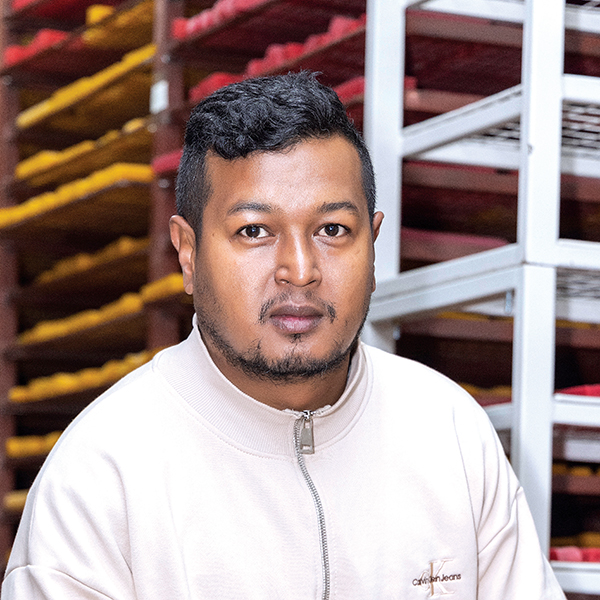
In Nepal, nothing is predictable, whether it’s electricity, demand, regulations, or logistics. This teaches us to think fast, adjust quickly, and find solutions even with limited resources.
Bibek Thapa
Abiral Dairy
How do you make decisions under pressure or during political and economic instability in the country?
Pankaj Panjiyar: Situation analysis is the first step I take before making a decision. Decision under pressure demands a balanced approach between situation and intuition. Though I am considered a quick decision taker but I termed it as adaptability according to time and situation, backed by past data, experience, information and metrics.
During tough situations like the Covid 19 pandemic, unfavourable market conditions due to economic crisis and political instability, we keep on focusing on core business, cutting down expenses, and adding new services based on shifting market dynamics. For example, during the Covid 19 pandemic, we chose to operate in small pockets, did not lay off a single employee, utilised resources to process old inventory without compromising health protocol and were able to survive Doko along with the team with bare minimum salary.
Clarity of purpose to create environmental impact and serve society and clients gives us confidence in tough times to align our decisions with our long-term vision.
Prakritee Dhungel: We manage instability through strategic diversification and transparent communication.
- Diversification: We avoid relying on a single point of failure. We maintain reserves of raw materials and pre-plan alternative logistics. Crucially, we maintain sales channel flexibility. If the hotel market is down, we immediately shift focus to the marriage or personal gifting markets. If raw material for one product is scarce (like bamboo bottles), we pivot production to other items like bamboo structures, hay roofing, etc.
Communication: We are proactively honest with both our customers and our team. We immediately inform customers of any delivery delays with contingency options. I
Internally, we halt all non-essential expansion and focus only on core, mission-critical tasks until the environment stabilises. Instability forces us to be opportunistic; we use our flexibility to turn local market disruptions into competitive advantages.
Sabrina Shrestha: During pressure situations, patience is our main mantra. We do everything that is in our power to make it smooth, and have patience after that. Many situations that occur in life are out of our control. We can only control what we do. We have no control over political or economic instability. When uncontrollable problems arise, like the recent instability after the Genz protest, we try to stay calm and wait for things to calm down as well. After that protest, everything was very uncertain and risky. So, we ensured our and our team members’ safety, which is a responsibility and priority to us. Only after a few days resumed operating the business. We don’t force things to happen; we see what we can do and let time do the rest.
Shreya Katuwal: In Nepal, we have seen, especially recently, how things can politically change in just 24 hours. The same instability exists economically, and even with regulations. When that happens, I think it’s important to stay focused on the core purpose of the business and analyse what is best in the given situation. I talk with my team, weigh the options, and make the decision that keeps us moving forward. I believe the key is staying flexible and not letting unexpected changes shake our bigger vision.
Bibek Thapa: To date, I have not felt significant pressure due to political instability. In fact, the nine-month surplus we experienced was more a result of the country’s economic instability than politics. Road blockades, however, do create pressure because during those times we cannot transport milk to any destination. Apart from such situations, no matter what is happening in the country, people generally make way for milk vehicles. Milk is considered essential, so it almost always reaches where it needs to go.
Ankita Bhagat: We prioritise survival and sustainability over speed. We know the shocks are coming, so we operate with a focus on cash flow security and agility. Our mission is non-negotiable but our timeline is flexible. We do not chase growth metrics that would make us vulnerable to a sudden economic downturn. We grow at a pace that ensures we will still be here tomorrow.
Sweta Pandey: I focus on what I can control: operations, quality, customer trust and financial discipline. Instability is not new to us; it is almost the default environment for entrepreneurs here. So, I take a layered approach to decision-making:
Short term: protect cash flow and keep operations stable
Medium term: diversify revenue streams
Long term: continue building capacity and brand strength
I avoid panic decisions. Data, experience and intuition all play a role, but clarity comes when you keep the core purpose stable.
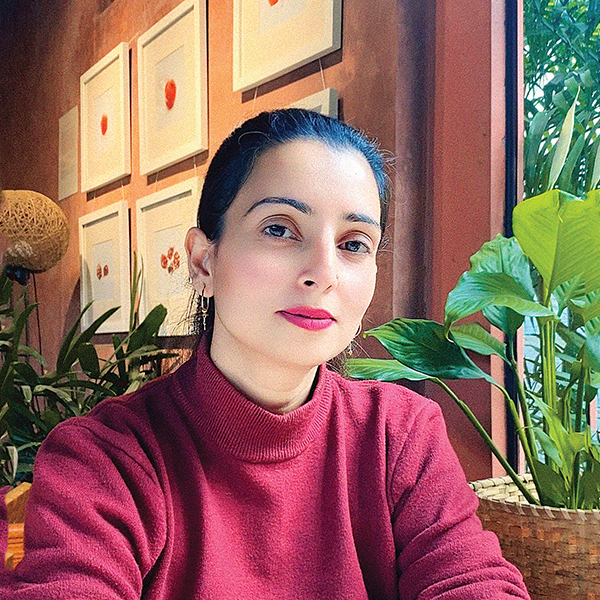
Our mission is non-negotiable but our timeline is flexible. We do not chase growth metrics that would make us vulnerable to a sudden economic downturn.
Ankita Bhagat
Renaee Reborn by Choice
How do you use technology or digital transformation to leapfrog traditional limitations?
Pankaj Panjiyar: We understand the importance of digital transformation and the introduction of technology for waste management during inception and initial days. We introduced an IT-based system to track our pickups, inwards, clients’ data, and impact records from day one. For the processing side in our Material Recovery Facility (MRF), we keep on adding machines based on need and availability of funds. The waste management sector has to be changed and modernised as time changes. The gradual introduction of a few processing machines of lower capacity to a scaled mechanised sorting facility at our Sallaghari plant, capable of handling 15-20 tons per day, aligns with our vision of changing the waste management landscape in Nepal. The waste sector, which is still in a traditional system with fragmented operations, needs paradigm shift from just collection and dumping to operate more efficiently with technology, processing, resource recovery and minimal disposal (Zero Landfill Concept) and to achieve this, we have to break the boundary with the introduction of Technology.
Prakritee Dhungel: Technology is the engine of Bamboo Bazar. Our entire customisation process is digital. A traditional limitation is the manual labour and time involved in creating a personalised gift. We leapfrog this by:
E-commerce Platform: Allowing customers to upload designs and preview them online before production begins. This reduces errors and turnaround time.
Laser Engraving: Using precision digital technology (our laser engravers) bypasses the limitation of traditional, slow hand-carving, allowing us to produce high-volume, highly complex designs quickly.
Digital Marketing: Using social media and targeted ads to reach a global diaspora who want to send a meaningful, personalised gift back home or abroad, eliminating the need for expensive physical retail space.
Sabrina Shrestha: There is an influential saying, “If your business isn’t digital or can’t be integrated with digital, it’s going to go out of trend soon”. We have come to the digital era. We were very clear about this since the beginning because the era grew with us. In a normal setting, selling panipuri was in a thela on the road. What we do is, first, we promote ourselves in the digital world through social media because through which we can reach people all across the country. Second, we collaborated with food delivery apps to get our products to the doorsteps of customers in our own way of packing, which keeps the food fresh and crisp. Soon, there are going to be more outlets and cloud kitchens of the Spices PnC through which we can reach even more people. Now we are not limited to just a small shop in Lalitpur. There are no limitations to how much digital transformation can help a business grow.
Shreya Katuwal: Technology allows us to overcome traditional limitations, whether societal or in business, by creating solutions that are faster, scalable and more inclusive. For example, BiheNepal, a digital platform, serves as a bridge connecting Nepali singles globally, providing privacy and verification, while removing the barriers of traditional matchmaking. Digital tools let us reach users directly, innovate, and offer services that wouldn’t be possible in a world without tech.
Bibek Thapa: In the milk sector, our work is heavily relationship-driven, so we still rely on traditional methods - visiting farmers, cooperatives, and dairies in person to build trust and finalise agreements. But even within this traditional model, technology plays a growing role. We regularly introduce farmers to modern tools such as milking machines, chaff cutters, and basic automation that reduce their workload and improve hygiene. We also collaborate with organisations to train them on new technologies so that the entire supply chain becomes more efficient and reliable.
However, our churpi business requires a completely different approach. Since it is a global product, staying updated with technology is not optional, it is necessary for survival. We closely monitor global market trends, new production technologies, and digital marketing tools to stay competitive. We use digital platforms to communicate with international clients, track shipments, ensure traceability, and maintain quality standards. Automation in drying, cutting, and flavouring has also helped us scale consistently while meeting global expectations.
Technology allows us to bridge Nepal’s local challenges like geographical limitations, inconsistent supply, and limited market access and connect directly with global buyers. By blending traditional relationship-based systems with modern digital tools, we’ve been able to move faster, reduce inefficiencies, and ensure that our products compete internationally despite being manufactured in a rural context.
Ankita Bhagat: Technology is our classroom. It allows us to leapfrog the gatekeepers. We don’t need expensive TV ads or sceptical retailers to reach women. We use social media to deliver critical reproductive health information directly to the consumer’s phone. We are bypassing the silence of traditional media. Furthermore, our D2C platform allows us to gather instant feedback. We don’t have to wait for a quarterly report to know if a product is working; we know by the afternoon. Digital transformation isn’t just a buzzword for us; it’s the only reason a niche, health-focused brand can survive against the giants.
Sweta Pandey: Technology has helped us scale far beyond what a traditional kitchen could manage. We use digital systems for inventory tracking, customer communication, route planning, and production forecasting. Even our move into ready-to-eat meals is guided by technology, from retort processing to shelf-life testing. I see tech as an equaliser. With the right tools, a Nepali business can meet international standards, even with limited infrastructure.
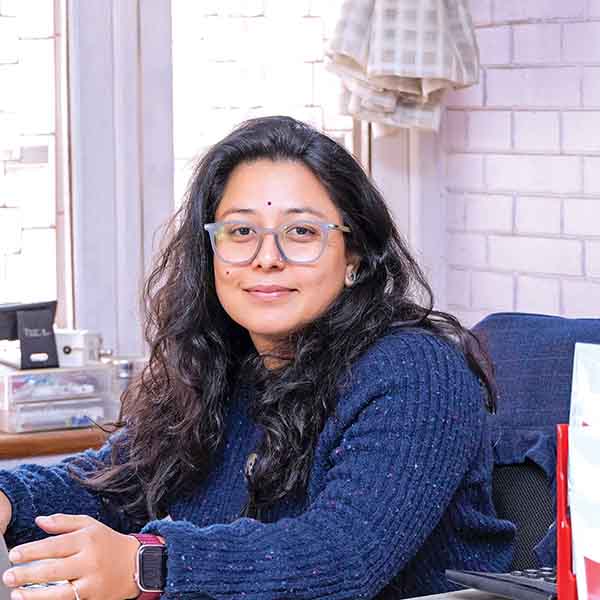
I believe the next decade will be defined by Nepali businesses that blend tradition with innovation. I see Nepal becoming a hub for niche manufacturing, sustainable products, agro-processing and digital services.
Sweta Pandey
Bhola Foods
How do you see Nepali entrepreneurship shape the next decade of innovation?
Pankaj Panjiyar: It is mixed scenarios for now. There are two schools of thought prevailing among the young generation. One category is those who are feeling it’s hard to survive and better life in Nepal due to the unstable political situation and problematic bureaucratic system. At the same time, some people believe things will change, and Nepal can be a better place to start and thrive in business. This feeling of positive change has been fueled by the recent Gen Z revolution where entrepreneurs feel there is scope for innovative business ideas.
Entrepreneurship shape over the next decade will have excited and thriving landscape. I see it evolving from small-scale and survival business to impact-focused, scalable, tech-oriented and export-based ventures. The major thriving industries will be those that think of going beyond the Nepal boundary. Nepal’s market is limited. Exporting of services, products and consulting will be new avenues that will be shaping the dynamics of entrepreneurship in the next decades.
Prakritee Dhungel: I see the next decade of Nepali entrepreneurship being shaped by the rise of Value-Added Sustainability. We will move beyond just raw production and focus on creating high-quality, finished goods with a clear ethical and environmental story. The focus will shift to Digital Native SMEs (Small and Medium Enterprises) who leverage technology to access global markets, bypassing geographical barriers. I believe sectors like sustainable agro-processing, tech-enabled tourism, and artisanal goods that marry traditional craft with modern design will lead the charge, turning Nepal’s rich natural and cultural resources into world-class, innovative brands.
Sabrina Shrestha: There has been a trend recently of documenting the initial days of business. This showed us that many youth are actively trying to build something in our own country. A massive number of Nepalis are indeed leaving the country, but keeping that aside, those who choose to stay here are trying to do something on their own rather than just follow the traditional path. However, we don’t see a lot of innovative businesses arising, but we are hopeful that there are going to be innovations and innovative businesses in the near future.
A decade is a long time. With the help of AI, technology, many innovative businesses are going to arise if this wave of starting businesses, while you are young, when you have a creative and innovative mind, instead of huge capital, continues. Probably, we could have more innovative businesses. We are hopeful.
Shreya Katuwal: I am extremely positive about Nepali entrepreneurs and really looking forward to seeing what the next decade holds. I have witnessed brilliant minds of the upcoming generation who are not only skilled with technology but also can think globally and creatively about solving problems. I think this comes from a combination of technical skills, global connectivity, and a deep understanding of local challenges.
Over the next ten years, I hope to see Nepali startups innovate in ways that address both local and global issues, expand beyond Nepal, and become global players in different industries. As they grow and succeed internationally, the effects will eventually circle back, strengthening the local ecosystem, inspiring more young entrepreneurs, and attracting investment and knowledge back to Nepal.
I believe that ultimately, Nepali entrepreneurship is going to be the main cause of innovation, economic growth, and social impact in our country. But in order to allow this to happen sooner rather than later, our ecosystem has to develop at a quick pace to enable growth rather than prevent it. I am sure Nepali entrepreneurs will thrive in the next decade whether in Nepal or outside, and I am excited to see how the community continues to push boundaries.
Bibek Thapa: Nepali entrepreneurship is entering a new era led by a generation that is globally aware, digitally connected and unafraid to take risks. Young people today are choosing to build their own brands rather than follow traditional office jobs, and this shift is creating a surge of creativity across every sector. We are seeing new ideas every day, from agriculture processing to technology, branding, and export-focused manufacturing. As a result, Nepali consumers now have more choices than ever before, and this healthy competition is pushing entrepreneurs to think smarter, innovate faster, and maintain higher quality.
Value-added industries are especially gaining momentum. Products like churpi, tea, herbs, pickles and handicrafts, once limited to domestic markets are now reaching shelves in the USA, Europe, Japan and beyond. Entrepreneurs are improving packaging, adopting global standards, and building more efficient supply chains. The mindset is shifting from raw-product export to finished, premium goods that carry a Nepali identity.
Over the next decade, I believe Nepali entrepreneurs will play a major role in solving local problems through modern solutions: stronger cold-chain systems, smart logistics, sustainable agriculture, digital marketplaces, and export-oriented production. If the government supports this momentum with clear policies, easier financing and better infrastructure, Nepal has the potential to become a global hub for niche, high-quality products. The next wave of innovation will be driven by entrepreneurs who transform our natural resources and cultural craftsmanship into world-class brands, showing that Nepal can compete on quality, not just cost.
Ankita Bhagat: I believe we are entering an era of ‘Impact-Driven Innovation’. The next decade won’t be about copying Silicon Valley; it will be about solving Nepal’s specific problems with world-class standards. Renaee is just one example. You are going to see more entrepreneurs who refuse to compromise on ethics for profit. We will see businesses that prioritise job creation, quality and the well-being of the Nepali people. The future of Nepali business is brands that make money by actually fixing things.
Sweta Pandey: I believe the next decade will be defined by Nepali businesses that blend tradition with innovation. We have rich cultural knowledge, from food to crafts to hospitality, and when paired with technology and global thinking, it becomes powerful. Young entrepreneurs are more confident, globally aware and impact-driven than ever before.
I see Nepal becoming a hub for niche manufacturing, sustainable products, agro-processing and digital services. Our constraints will actually push us to innovate faster, smarter, and more creatively. Nepali entrepreneurship is moving from survival mode to scale mode and that shift will define the country’s economic story for the next ten years.
-1789293497.jpg)