NEPAL’S TECH ECONOMY MISPRICED, NOT HIGH RISK


In an era where global capital prioritises scale and speed, Nepal presents a paradox. Despite strong technical talent, growing digital capabilities and founders already serving international markets, the country remains undercapitalised. This disconnect raises a critical question: is Nepal genuinely a high-risk frontier market, or is it mispriced due to outdated perceptions that fail to reflect the resilience and global exposure of today’s entrepreneurs?
To examine this, Business 360 spoke with four leaders from Nepal’s technology ecosystem: Bipin Budhathoki, Founder of Tech Bato; Biraj Singh Thapa, Associate Professor at Kathmandu University; Saroj Adhikari, CEO of Cloud Mandap; and Saroj Raut, CTO of Trackon Nepal. Their insights suggest that what investors often categorise as “risk” is, in reality, evidence of adaptability and execution under constraint. Nepali founders have built globally competitive products with limited capital, navigating policy gaps and structural challenges, conditions that traditional investment frameworks struggle to assess accurately.
As Nepal reaches a pivotal moment, the discussion shifts from survival to scale. In an economy no longer bounded by domestic market size, participants emphasise the role of patient, informed capital in building a self-sustaining innovation ecosystem, one that supports inclusion, resilience and long-term national competitiveness.
Is Nepal genuinely a high-risk frontier market, or simply mispriced due to outdated perceptions?
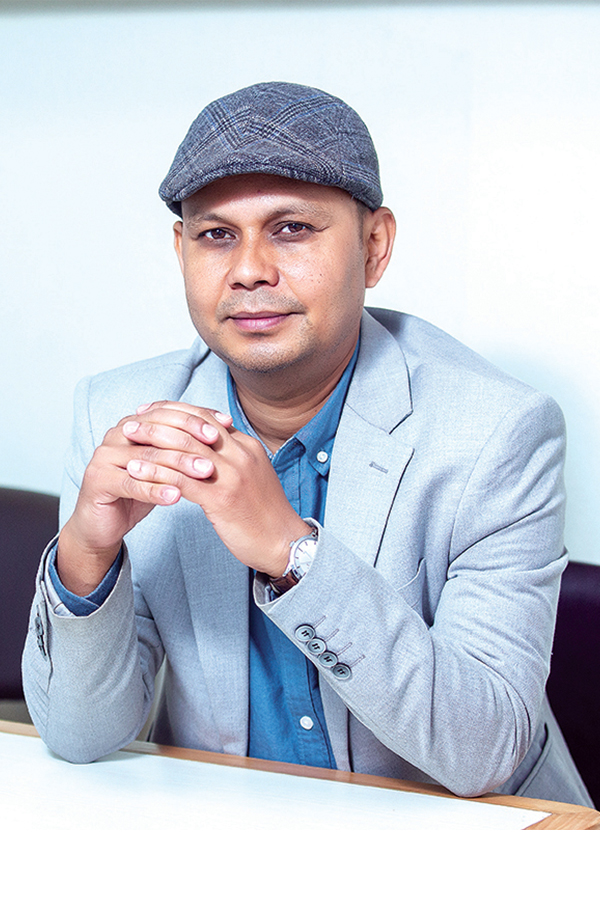
BIRAJ SINGH THAPA Associate Professor, Kathmandu University
Biraj Singh Thapa: Nepal is often labelled a high-risk market, and to some extent that perception is understandable. However, the risk here is contextual rather than unmanageable. Much of this view is rooted in outdated narratives that no longer reflect current realities. Today’s Nepali entrepreneurs are digitally capable, globally exposed and highly resourceful. They have built resilient businesses despite capital scarcity, weak policy support and structural constraints. That, in itself, demonstrates that while risk exists, it is measurable and reducible. In many cases, Nepal is less “high-risk” and more mispriced.
Bipin Budhathoki: Nepal is frequently described as a high-risk frontier market, but that assessment is increasingly irrelevant. The country is not risk-prone; it is incorrectly priced. Entrepreneurs here are internationally networked, technically strong and highly resourceful. They build products with limited budgets, infrastructure and government support. What is perceived as risk is often resilience and agility.
Saroj Raut: Nepal is mispriced, not inherently high risk. The frontier-market label reflects an outdated reality defined by political instability, infrastructure gaps and limited capital. Today, founders are building to global standards, operating on cloud infrastructure and serving international clients. Many have trained or worked in major tech hubs before returning or starting businesses here. The digital revolution has changed where and how innovation happens, but traditional risk frameworks have not caught up. What investors often see as risk is largely information asymmetry.
Saroj Adhikari: The “high-risk” label attached to Nepal is increasingly a legacy perception. During my time at Success Academies in New York, we demonstrated that rigorous systems and high standards can deliver world-class outcomes regardless of geography. That experience informs my work at Cloud Mandap, where we are building an innovation hub focused not only on technical skills but also on corporate readiness for global markets.
Nepal is no longer a frontier; it is emerging as a sub-hub. Global firms operate capability centres just one time zone away, and companies like SecurityPal manage Silicon Valley clients from Kathmandu. The risk lies not in talent capability, but in the lag between global perception and the level of innovation already happening locally.
What kind of scale and innovation becomes possible when smart, patient capital enters the ecosystem?
Biraj Singh Thapa: Nepal requires stronger coordination to build a functioning ecosystem where stakeholders grow collectively rather than competing for survival. When patient capital enters such an environment, founders gain the freedom to think long term investing in research, talent development, institutional strength and scalable products. Capital that combines patience with purpose can help shape the ecosystem through mentorship, academia–industry linkages and policy engagement. In Nepal, smart investment is about enabling systemic growth, not just generating returns.

Bipin Budhathoki, Founder, Tech Bato
Bipin Budhathoki: Through products like WPLekhak and Tech Bato, I have seen what innovation is possible even with limited capital. With access to smart capital, such innovation can scale faster and compete regionally or globally. However, capital must come with responsibility. Investors should go beyond financial returns to focus on governance, mentorship and long-term value creation. Nepal’s ecosystem needs partners, not extractors.
Saroj Raut: Founders in Nepal have already proven they can build sustainable businesses under severe constraints. When capital scarcity is no longer the primary bottleneck, the transformation potential is significant. Good capital enables long-term thinking, investment in R&D, stronger infrastructure and better talent retention. Investors are not just funding companies; they are shaping the country’s economic future. The goal must extend beyond returns to building a self-sustaining innovation economy that creates jobs and retains talent.
Saroj Adhikari: Operating in capital-constrained environments builds resilience, but moving from resilience to scale requires capital that understands long-term engineering fundamentals. At Cloud Mandap, we focus on automation and scalable architecture that deliver long-term efficiency. Smart capital should help institutionalise excellence by bringing global governance and technical mentorship, transforming startups into reliable enterprises capable of competing internationally.
Is Nepal early for investors, or already late?
Biraj Singh Thapa: Nepal is at a critical inflection point. Talent migration and missed opportunities are real concerns, but the market remains early enough for first movers to shape sectors and governance structures. In a global economy shaped by climate priorities and AI-driven change, Nepal’s strategic location and renewable energy resources offer long-term, high-return opportunities for investors who act now.
Bipin Budhathoki: Nepal remains in an early stage, particularly in sectors such as edtech, fintech, AI and climate technology. The greater risk lies not in entering too early, but in entering too late, after the most capable talent has already moved on.
Saroj Raut: Nepal is both early and running out of time. The first-mover advantage is real, but the window is narrowing. Each year of delayed investment accelerates brain drain and undervalued exits. The upside exists because proven founders and viable models are already present, while infrastructure is still evolving. Investors who act now stand to gain outsized returns.

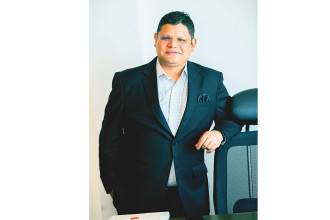
Saroj Adhikari, CEO, Cloud Mandap
Saroj Adhikari: Nepal is in a “golden window”- early enough for asymmetric upside, yet mature enough to demonstrate proof of concept. Talent migration should be seen as global circulation rather than pure loss. At Cloud Mandap, we are building systems that make staying in Nepal intellectually and financially competitive by aligning education with global industry standards.
Do traditional concerns about Nepal’s small domestic market still apply?
Biraj Singh Thapa: The distinction between local and global markets is increasingly blurred. What matters is the cost-quality equation, not domestic market size. Nepal offers cost efficiency, rapid digital adoption and openness to innovation. Diaspora capital and regional funds can play a catalytic role by connecting local capability with global demand.
Bipin Budhathoki: Concerns about market size are no longer decisive. Startups can operate globally from inception. Diaspora and regional investors should act as ecosystem partners, helping bridge trust and access to global markets.
Saroj Raut: The small-market argument is outdated. Cloud infrastructure, digital payments and global distribution allow Nepali startups to serve international customers from day one. The domestic market becomes a testing ground, not a ceiling. Nepal’s geographic position between two major economies further strengthens its strategic value.
What does responsible investment look like in Nepal?
Biraj Singh Thapa:Responsible investment should align profit with inclusion, resilience and long-term societal benefit. Nepal already has talent, resources and market access, but lacks coordination. Investors should prioritise capacity building and ecosystem development, while governments must move beyond regulation toward facilitation and partnership.
Bipin Budhathoki:Responsible investment can help reduce inequality and expand access to technology, supporting sustainable national growth.

Saroj Raut, CTO, Trackon Nepal
Saroj Raut: Technology amplifies existing systems. Responsible capital must actively support ventures that expand access - whether through fintech, edtech, agritech or healthtech - and invest in ecosystem infrastructure such as accelerators and mentorship. Success should be measured not only in returns, but in jobs created, skills developed and long-term economic sovereignty.
Saroj Adhikari: Responsible investment should focus on equitable automation, technology that elevates rather than replaces people. At Cloud Mandap, our aim is to build infrastructure that enables businesses across Nepal to compete globally. This is about more than technical skills; it is about resilience, inclusion and national capability.
-1789293497.jpg)